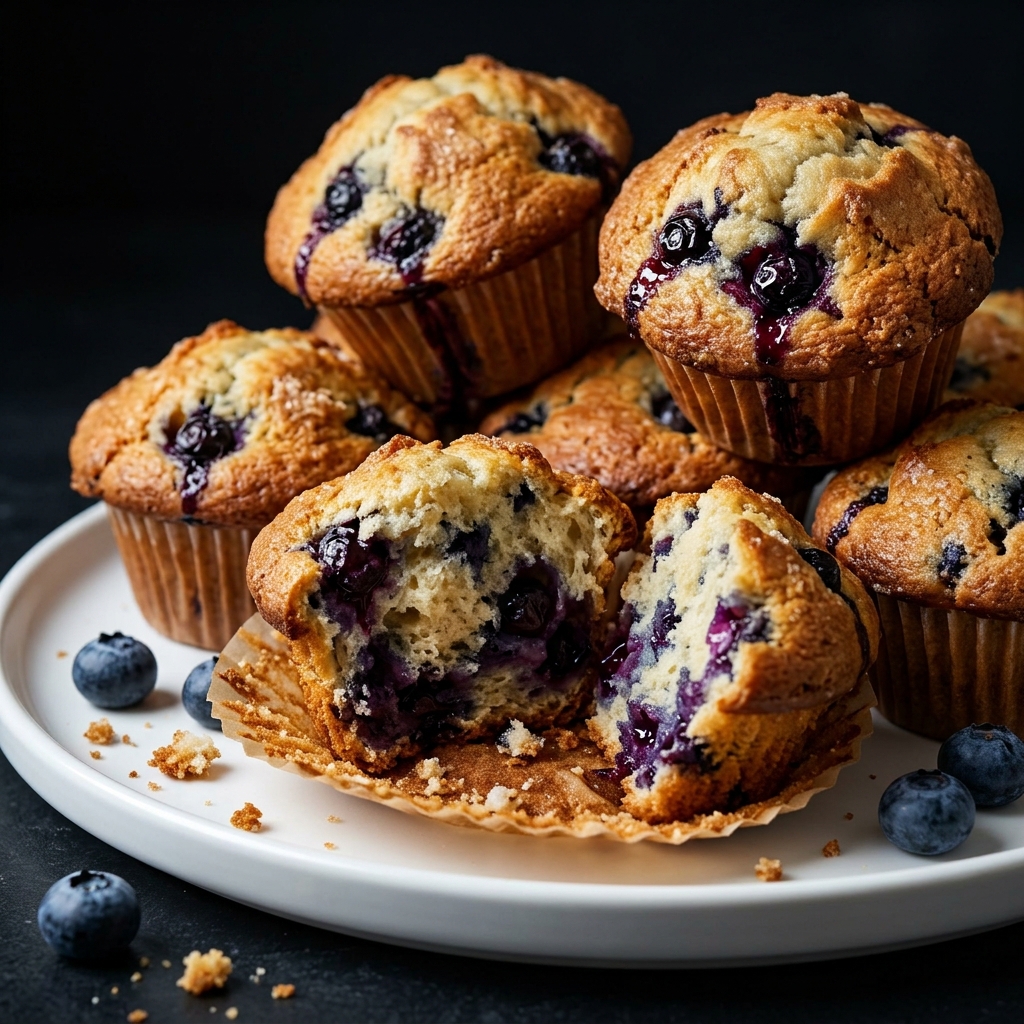
Imagine biting into a freshly baked blueberry muffin with a beautifully golden, slightly crisp top, a soft and fluffy center, and juicy blueberries bursting with sweetness in every bite. These homemade blueberry muffins are easy to prepare, wonderfully delicious, and perfect for breakfast, brunch, or whenever you crave a sweet homemade treat!
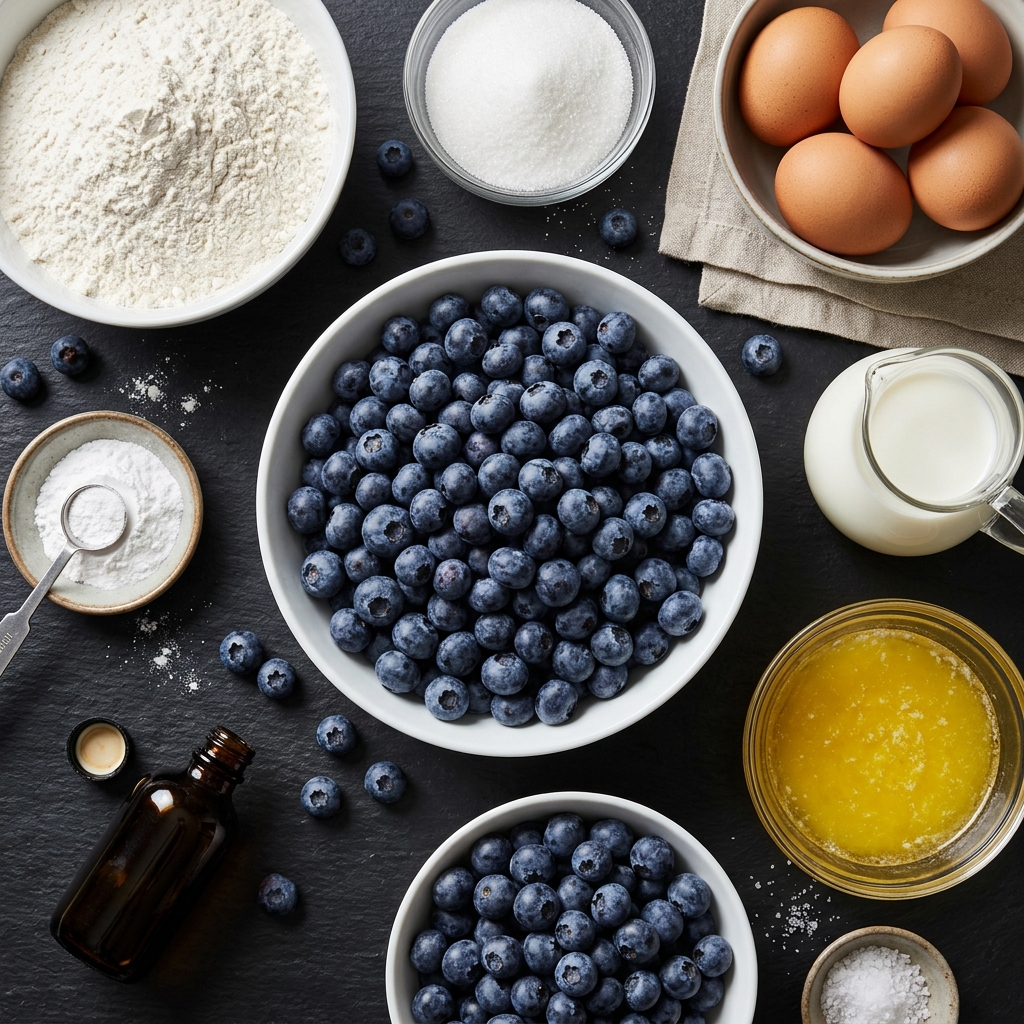
Ingredients for Homemade Blueberry Muffins
The secret to delicious blueberry muffins is using simple ingredients in the right proportions. Each ingredient contributes to the muffins’ flavor, texture, moisture, or beautiful golden appearance.
Dry Ingredients
-
2 cups (250g) all-purpose flour: Provides structure and creates a soft, tender muffin crumb. Measure accurately to prevent dense muffins.
-
¾ cup (150g) granulated sugar: Adds sweetness and helps the muffin tops develop a beautiful golden color.
-
2 teaspoons baking powder: Helps the muffins rise and creates a light, fluffy texture.
-
½ teaspoon baking soda: Works with the acidity in the wet ingredients to improve the rise and tenderness.
-
½ teaspoon salt: Balances the sweetness and brings out the flavor of the blueberries and vanilla.
Wet Ingredients
-
2 large eggs: Help bind the ingredients together and provide structure.
-
½ cup (120ml) whole milk: Adds moisture and contributes to a tender muffin texture.
-
½ cup (113g) unsalted butter, melted and slightly cooled: Gives the muffins a rich buttery flavor and soft texture.
-
2 teaspoons pure vanilla extract: Adds a warm, sweet aroma that complements the blueberries.
-
¼ cup (60g) sour cream or plain Greek yogurt: Adds moisture and a slight tanginess, helping produce a soft, tender crumb.
The Blueberries
– 1½ cups (225g) fresh blueberries: The star ingredient. Choose firm, plump blueberries for the best flavor and appearance. Frozen blueberries can also be used without thawing.
Optional Topping
-
2 tablespoons coarse sugar: Sprinkled over the muffin tops before baking for a delicate, crunchy bakery-style finish.
-
1 teaspoon lemon zest: Adds a fresh citrus aroma that complements the blueberries beautifully.
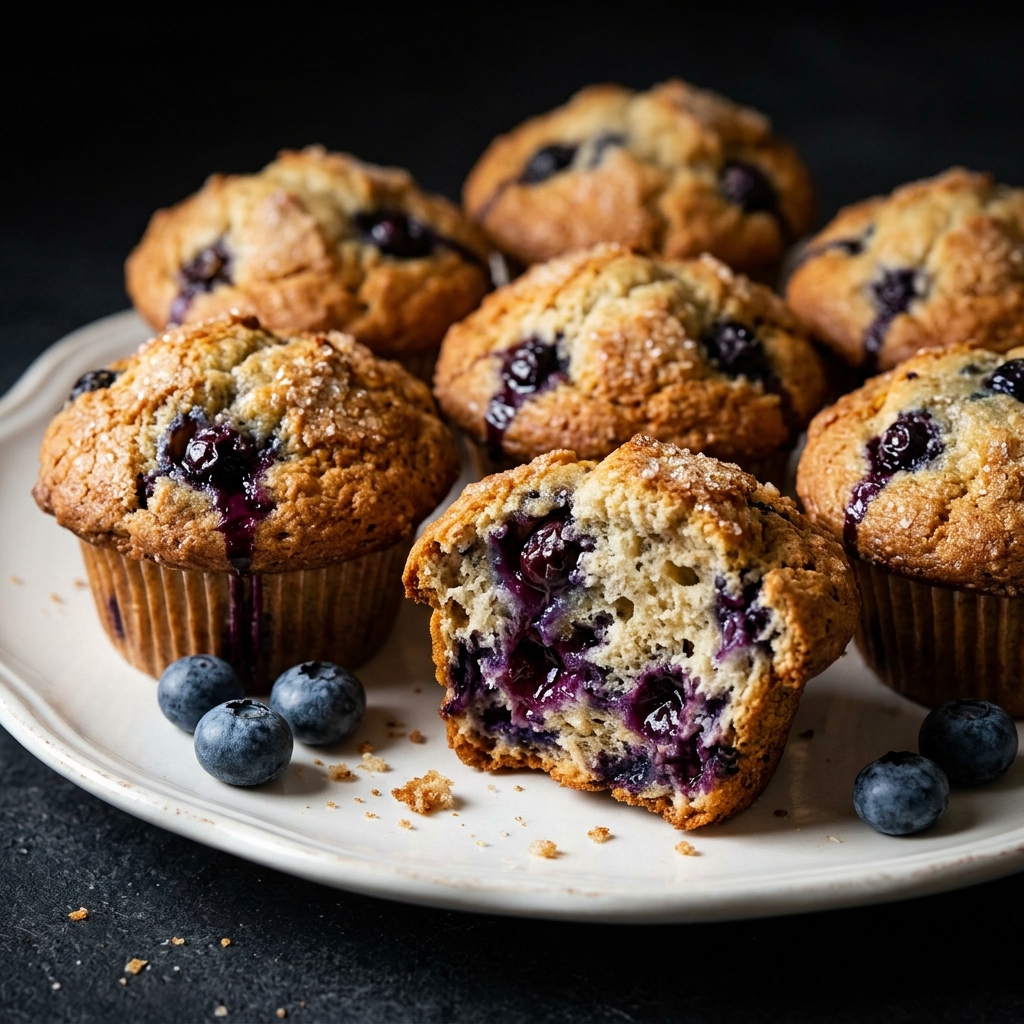
How to Make Blueberry Muffins Step by Step
Making homemade blueberry muffins does not require complicated baking techniques or expensive equipment. With a few simple steps and careful attention to the mixing process, you can achieve muffins that are beautifully risen, golden on top, and wonderfully soft inside.
Step 1: Prepare Your Oven and Muffin Pan
Start by preheating your oven to 400°F (200°C). Allow the oven to reach the correct temperature before placing the muffins inside.
Prepare a standard 12-cup muffin pan by lining it with paper muffin liners. Alternatively, lightly grease each muffin cup with butter or nonstick cooking spray.
Preparing the pan beforehand makes the baking process easier and helps prevent the muffins from sticking.
If you want muffins with attractive bakery-style tops, make sure the oven is fully preheated. A properly heated oven helps the batter begin rising as soon as it starts baking.
Step 2: Combine the Dry Ingredients
Take a large mixing bowl and add the all-purpose flour, granulated sugar, baking powder, baking soda, and salt.
Whisk everything together until the ingredients are evenly distributed.
This step is important because baking powder and baking soda need to be spread throughout the flour mixture. Unevenly distributed leavening agents can cause inconsistent rising, leaving some muffins taller than others.
If your flour contains small lumps, sift it before combining it with the other ingredients.
Set the dry mixture aside while you prepare the wet ingredients.
Step 3: Prepare the Wet Ingredients
In a separate medium-sized mixing bowl, crack in the two eggs.
Add the milk, melted butter, sour cream or Greek yogurt, and vanilla extract.
Whisk everything together until the mixture looks smooth and creamy.
Make sure the melted butter has cooled slightly before adding it to the eggs. Very hot butter can partially cook the eggs, creating an undesirable texture.
The sour cream or Greek yogurt is particularly helpful because it adds moisture and a slight tanginess that balances the sweetness of the muffins.
You should have a smooth, evenly combined mixture without visible streaks of egg white.
Step 4: Combine the Wet and Dry Ingredients
Pour the wet ingredients into the bowl containing the dry ingredients.
Using a rubber spatula or wooden spoon, gently fold the mixture together until the flour is mostly incorporated.
Avoid vigorous stirring or overmixing.
This is one of the most important steps in making soft blueberry muffins. Once flour comes into contact with liquid, gluten begins developing. Excessive mixing can make the muffins tough, chewy, and dense rather than light and tender.
It is perfectly fine if the batter contains a few small lumps. A slightly lumpy muffin batter is often better than one that has been mixed until completely smooth.
Stop mixing as soon as there are no large pockets of dry flour.
Step 5: Prepare the Blueberries
Place the fresh blueberries in a small bowl and gently inspect them, removing any damaged berries or unwanted stems.
If you are using fresh blueberries, rinse them under cool running water and dry them thoroughly with a clean kitchen towel or paper towels. Excess moisture can affect the consistency of your muffin batter.
Take approximately one tablespoon of the measured flour and toss the blueberries gently in it. This light coating can help distribute the berries throughout the batter and reduce the chances of them sinking, although it does not guarantee that every berry will stay suspended.
If you are using frozen blueberries, there is no need to thaw them. Add them directly from the freezer to help prevent excess moisture and purple streaking in the batter.
Step 6: Fold the Blueberries Into the Batter
Add the prepared blueberries to the muffin batter.
Using a rubber spatula, gently fold them into the mixture with a few slow movements. Try to distribute the blueberries evenly without crushing them.
Be especially gentle at this stage. Crushed blueberries can release their juice into the batter, creating purple streaks and changing the overall appearance of the muffins.
A few blueberries may naturally break during mixing, but keeping most of them whole will give you beautiful pockets of fruit throughout the finished muffins.
If you love muffins with plenty of blueberries in every bite, you can reserve a small handful to place on top of each muffin before baking.
Step 7: Fill the Muffin Cups
Spoon the prepared batter into your lined muffin pan.
Divide the batter evenly among the 12 muffin cups, filling each approximately three-quarters full. For slightly taller bakery-style muffins, you can fill them a little higher, provided you leave enough room for the batter to rise without overflowing.
Use an ice cream scoop or large cookie scoop if you want evenly sized muffins. This makes portioning easier and helps the muffins bake at approximately the same rate.
If you reserved some blueberries, gently press a few onto the surface of each muffin. This creates an attractive appearance and makes the blueberries more visible after baking.
For an extra bakery-style finish, sprinkle a little coarse sugar over the tops.
The sugar creates a delicate crunch that contrasts beautifully with the soft interior.
Step 8: Bake Until Golden and Fluffy
Place the muffin pan in your preheated oven and bake at 400°F (200°C) for approximately 18–22 minutes.
Keep an eye on the muffins as they bake. Their tops should become beautifully golden, slightly domed, and firm to the touch.
The exact baking time may vary depending on your oven, the size of your muffins, and the temperature of your ingredients.
To check whether they are ready, insert a toothpick into the center of one muffin. It should come out clean or with a few moist crumbs attached. Avoid inserting it directly into a blueberry, as the fruit juice can make the toothpick appear wet even when the muffin is fully baked.
If the tops are browning too quickly while the centers remain undercooked, loosely cover the pan with aluminum foil for the remaining baking time.
Avoid opening the oven repeatedly because sudden temperature changes can affect how the muffins rise.
Step 9: Cool the Muffins Properly
Once the muffins are fully baked, remove the pan from the oven and allow them to rest for approximately 5 minutes.
This short resting period allows the muffins to settle and makes them easier to remove without breaking.
Carefully transfer them to a wire cooling rack and allow them to cool for another 10–15 minutes.
Although freshly baked muffins are tempting, giving them a little time to cool helps the interior finish setting.
When you break one open, you should see a soft, fluffy crumb with juicy blueberries distributed throughout.
The tops should be slightly crisp, while the centers remain tender and moist.
Your homemade blueberry muffins are now ready to enjoy!
Expert Tips for Perfect Homemade Blueberry Muffins
Even though blueberry muffins are relatively easy to prepare, a few professional baking techniques can make a noticeable difference in their final texture, appearance, and flavor.
Measure Your Flour Correctly
One of the most common reasons homemade muffins turn out dry or dense is using too much flour.
Avoid scooping flour directly from the container with your measuring cup. This can pack the flour tightly and result in using more than the recipe requires.
Instead, lightly spoon the flour into your measuring cup and level the top with a straight edge.
For the most accurate results, use a kitchen scale and measure 250 grams of flour.
Avoid Overmixing the Batter
This is perhaps the most important rule for making tender muffins.
Once the wet and dry ingredients are combined, mix only until the flour disappears.
Overmixing develops too much gluten, which can make your muffins tough and rubbery.
Remember, a few small lumps in the batter are perfectly acceptable.
Use Fresh, Good-Quality Blueberries
The quality of your blueberries directly affects the taste of your muffins.
Choose berries that are plump, firm, and naturally sweet. Avoid berries that look shriveled, bruised, or excessively soft.
Fresh blueberries provide beautiful pockets of fruit and a naturally sweet flavor.
However, frozen blueberries are also an excellent alternative, especially when fresh blueberries are expensive or unavailable.
Do Not Skip the Sour Cream or Greek Yogurt
Sour cream and Greek yogurt contribute moisture and tenderness to the muffin crumb.
Their slight acidity also complements the baking soda, helping the batter rise.
If you do not have either ingredient, you can use plain yogurt as a substitute.
Fill the Muffin Cups Evenly
Unevenly filled muffin cups can cause some muffins to bake faster than others.
Use an ice cream scoop or measuring cup to divide the batter evenly.
This also gives your muffins a more professional appearance.
Start With a Properly Preheated Oven
A fully preheated oven helps the muffins begin rising immediately.
Avoid placing the muffin pan in an oven that is still heating up because inconsistent temperatures can affect the final texture and shape.
An oven thermometer can be helpful if your oven does not heat accurately.
Do Not Overbake
Overbaking is one of the easiest ways to turn soft muffins into dry ones.
Start checking for doneness around the 18-minute mark.
Remove the muffins once the centers are cooked and the tops are golden.
The muffins will continue to settle slightly as they cool.
Add Blueberries to the Tops
For a beautiful bakery-style appearance, reserve a few blueberries before mixing them into the batter.
Press them gently onto the tops of the muffins before baking.
This small detail makes the finished muffins look more attractive and immediately tells everyone what flavor they are enjoying.
How to Store Homemade Blueberry Muffins
Proper storage helps preserve the muffins’ moisture, flavor, and texture.
Storing at Room Temperature
Allow the muffins to cool completely before storing them.
Place them in an airtight container lined with a paper towel. You can place another paper towel over the muffins before closing the container to help absorb excess moisture.
Keep the container in a cool, dry place away from direct sunlight.
For the best quality, enjoy the muffins within 2–3 days.
Avoid storing warm muffins in an airtight container because trapped steam can make their tops sticky and encourage spoilage.
Storing in the Refrigerator
If your kitchen is particularly warm or humid, refrigeration may be useful.
Place completely cooled muffins in an airtight container and refrigerate them.
They can generally be kept for approximately 4–5 days, although refrigeration may make the texture slightly firmer.
Warm them briefly before serving to restore some of their softness.
Freezing Blueberry Muffins
Blueberry muffins freeze beautifully, making them a convenient make-ahead breakfast.
Allow the muffins to cool completely, then arrange them in a single layer on a baking sheet and freeze until firm.
Transfer the frozen muffins to a freezer-safe airtight container or resealable freezer bag.
Remove as much excess air as possible before sealing.
For the best quality, use them within approximately 2–3 months.
To enjoy, thaw individual muffins at room temperature or warm them in a microwave for short intervals until heated through.
You can also reheat frozen muffins directly in an oven at approximately 300°F (150°C) until warmed through.
Frequently Asked Questions About Blueberry Muffins
1. Can I Use Frozen Blueberries Instead of Fresh Blueberries?
Yes! Frozen blueberries work very well in homemade blueberry muffins.
You do not need to thaw them before adding them to the batter. Add them directly from the freezer and fold gently to prevent excessive color streaking.
Frozen blueberries may slightly increase the baking time, so check the centers before removing the muffins from the oven.
2. Why Are My Blueberry Muffins Dense Instead of Fluffy?
Dense muffins are often caused by overmixing the batter, using too much flour, or using baking powder that has lost its effectiveness.
To achieve a light and fluffy texture, measure your ingredients accurately, use fresh leavening agents, and gently combine the wet and dry ingredients.
Do not worry about a few lumps in the batter.
3. How Do I Stop Blueberries From Sinking to the Bottom?
Tossing the blueberries with a small amount of the measured flour before adding them to the batter can help.
Also, make sure your batter is not excessively thin and avoid adding too much liquid.
However, blueberries may still move during baking, so this technique cannot guarantee perfectly even distribution.
4. Can I Make Blueberry Muffin Batter Ahead of Time?
For the best rise and texture, it is preferable to bake the muffins shortly after preparing the batter.
Once the wet and dry ingredients are combined, the leavening agents begin working.
Extended storage can reduce their effectiveness and affect how well the muffins rise.
A better option is to measure your dry ingredients and wet ingredients separately in advance, refrigerating the appropriate ingredients where necessary, and combining them shortly before baking.
5. How Do I Know When Blueberry Muffins Are Fully Baked?
Look for golden-brown muffin tops that have risen and feel set.
Insert a toothpick into the center of a muffin, avoiding the blueberries. If it comes out clean or with a few moist crumbs, the muffins are ready.
If you notice wet batter sticking to the toothpick, continue baking for a few more minutes and check again.
6. Can I Make Blueberry Muffins Without Sour Cream?
Absolutely!
You can replace the sour cream with plain Greek yogurt or regular plain yogurt.
These ingredients provide moisture and acidity, helping produce a tender muffin texture.
If you do not have yogurt or sour cream, you can use an additional ¼ cup of milk, although the finished muffins may have a slightly different texture.
7. Why Did My Blueberry Muffins Turn Purple?
Purple or blue streaks usually occur when blueberries break during mixing and release their natural juices into the batter.
This is particularly common when using frozen blueberries that have been thawed.
To minimize discoloration, use fresh or frozen berries without thawing, dry fresh berries thoroughly, and fold them gently into the batter.
8. Can I Make Mini Blueberry Muffins With This Recipe?
Yes! This recipe can be adapted to make mini blueberry muffins.
Divide the batter among a greased or lined mini muffin pan, filling each cup approximately three-quarters full.
Because mini muffins are smaller, they require less baking time. Begin checking them after approximately 10–12 minutes at 400°F (200°C), adjusting as needed.
9. Can I Reduce the Sugar in Blueberry Muffins?
Yes. You can reduce the sugar slightly if you prefer a less-sweet muffin.
However, sugar does more than sweeten the batter. It also contributes to moisture, tenderness, browning, and overall texture.
Reducing it too much may produce muffins that are drier or less tender.
10. Are Homemade Blueberry Muffins Suitable for Breakfast?
Yes! Homemade blueberry muffins can be enjoyed as part of a breakfast or brunch.
They provide carbohydrates for energy and contain blueberries, which contribute naturally occurring fiber and beneficial plant compounds.
For a more balanced breakfast, pair a muffin with Greek yogurt, eggs, or another protein-rich food.
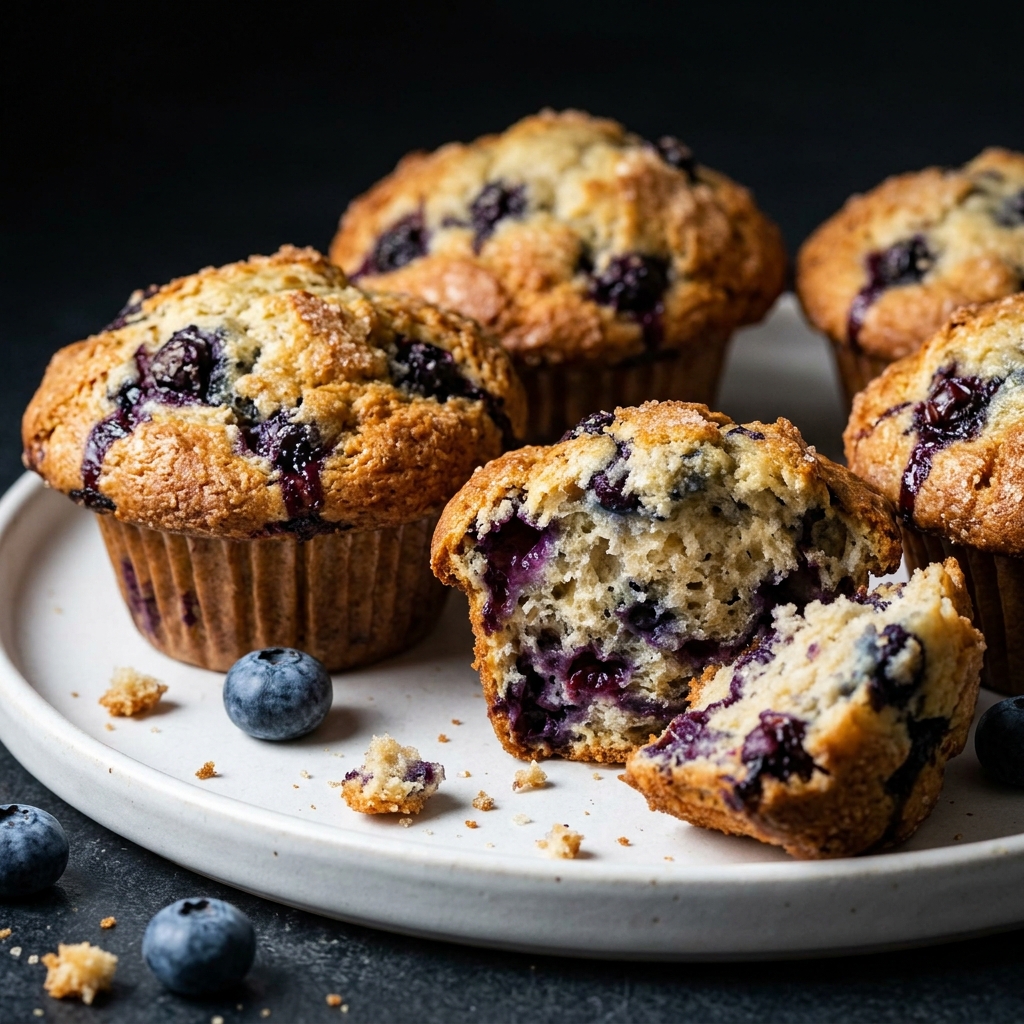
Homemade Blueberry Muffins
Ingredients
Equipment
Method
- Preheat the oven to 400°F (200°C). Line a 12-cup muffin pan with paper liners or lightly grease the muffin cups.
- In a large mixing bowl, whisk together the flour, granulated sugar, baking powder, baking soda, and salt until evenly combined.
- In a separate bowl, whisk together the eggs, milk, melted butter, sour cream or Greek yogurt, and vanilla extract until smooth.
- Pour the wet ingredients into the dry ingredients. Gently fold with a spatula until just combined. Do not overmix; a few small lumps are perfectly fine.
- If using fresh blueberries, wash and dry them thoroughly. Toss them gently with approximately one tablespoon of the measured flour to help distribute them throughout the batter.
- Add the blueberries to the batter and gently fold until evenly distributed, taking care not to crush them.
- Divide the batter evenly among the prepared muffin cups, filling each approximately three-quarters full. Add a few reserved blueberries on top if desired.
- Sprinkle coarse sugar over the muffin tops for a lightly crunchy bakery-style finish.
- Bake for 18–22 minutes, or until the muffins are golden brown and a toothpick inserted into the center comes out clean or with a few moist crumbs.
- Remove from the oven and allow the muffins to cool in the pan for 5 minutes.
- Transfer to a wire rack and cool for another 10–15 minutes before serving.
- Enjoy warm or at room temperature.
Notes
- Avoid overmixing the batter to maintain a soft, fluffy texture.
- Use room-temperature eggs and milk for easier mixing.
- Do not overbake, as this can make the muffins dry.
- For extra flavor, add lemon zest or a little ground cinnamon.
- Store completely cooled muffins in an airtight container at room temperature for 2–3 days.
- Refrigerate for approximately 4–5 days or freeze for 2–3 months for longer storage.
- For a gluten-free variation, use a suitable gluten-free baking flour blend.
- Nutrition values are estimates and may vary depending on ingredient brands and portion sizes.


Emma Carter is a passionate home cook and recipe creator who loves making delicious, simple meals everyone can enjoy. She shares easy recipes, helpful cooking tips, and inspiring food ideas to make everyday cooking more enjoyable.