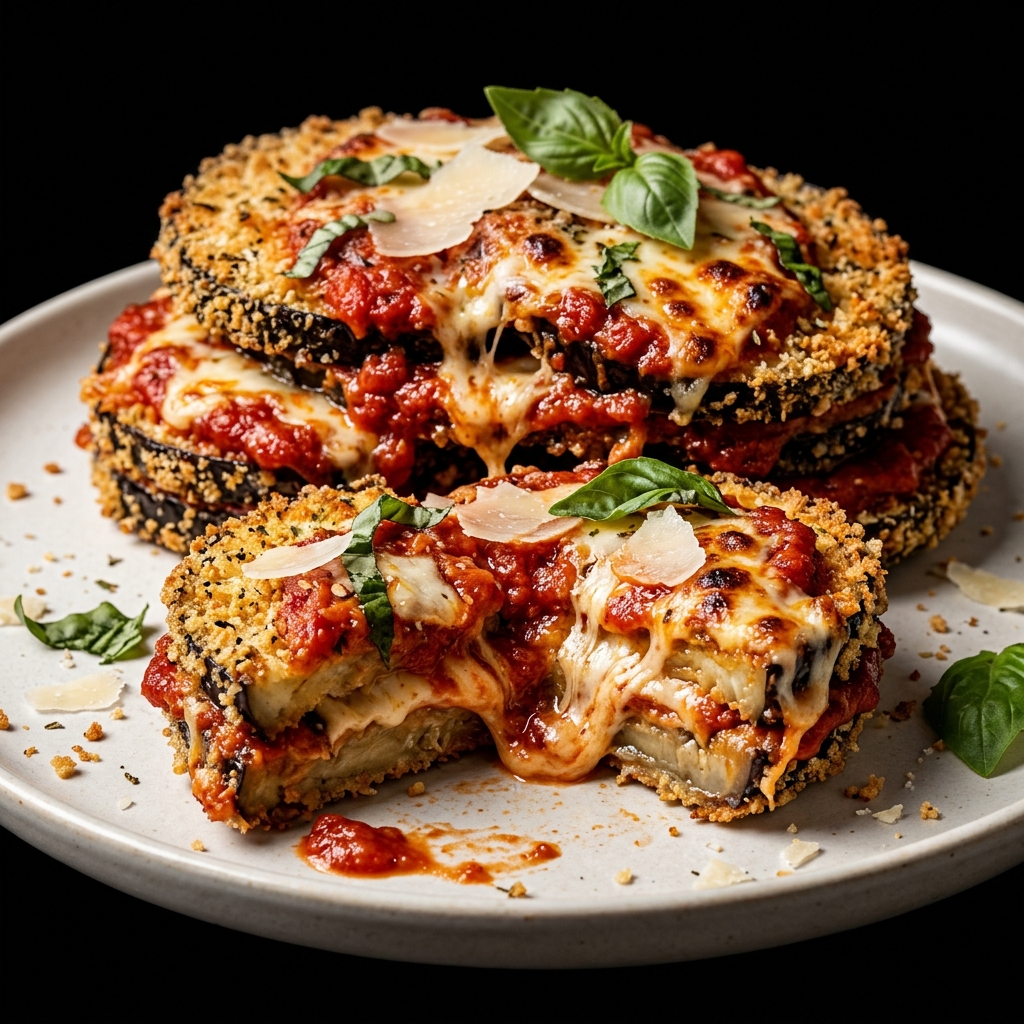
If you love crispy, cheesy, Italian-inspired comfort food, this Crispy Baked Eggplant Parmesan deserves a place on your dinner table! Tender eggplant slices are coated in golden, seasoned breadcrumbs, baked until beautifully crisp, and layered with rich marinara sauce, melted mozzarella, and savory Parmesan cheese for a satisfying vegetarian meal that tastes wonderfully indulgent without requiring deep-frying.
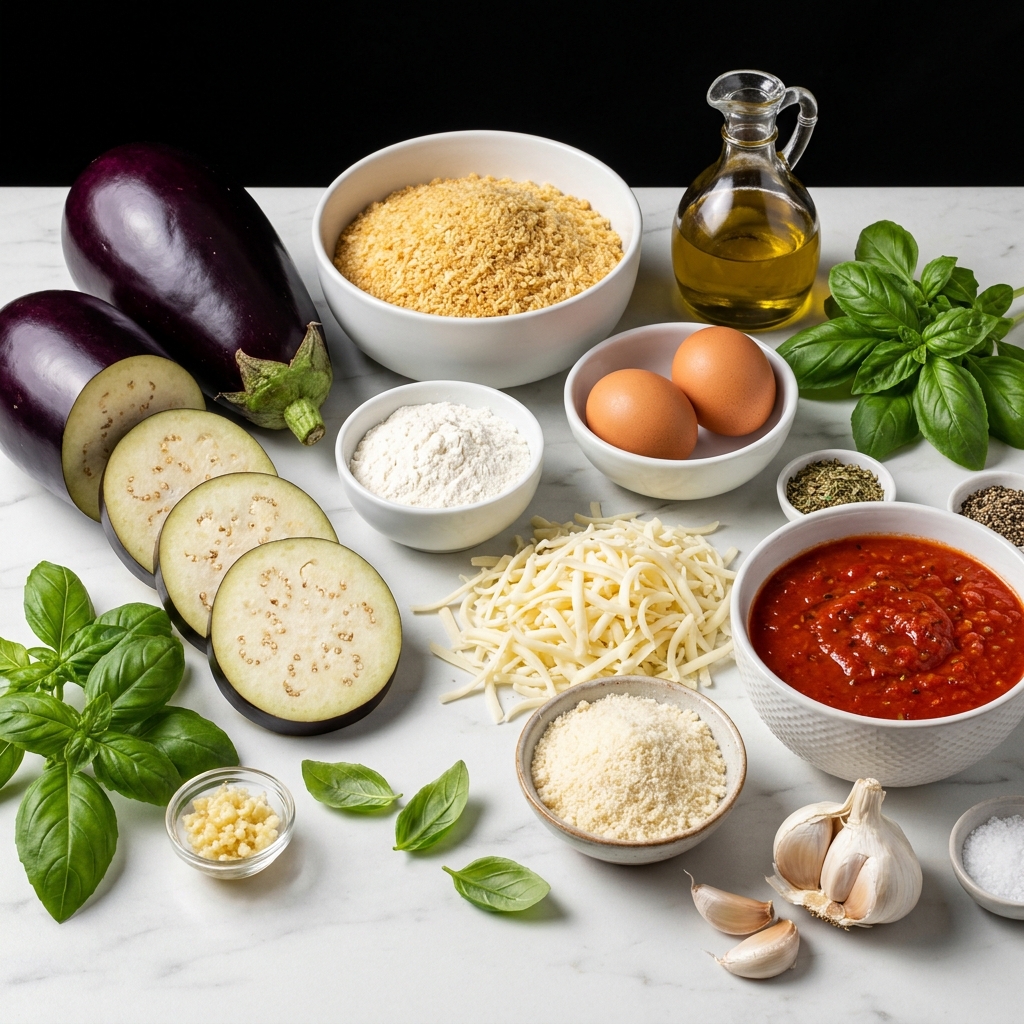
Ingredients for Crispy Baked Eggplant Parmesan
The secret to excellent eggplant Parmesan is choosing fresh ingredients and preparing each layer carefully. Every ingredient contributes to the crisp coating, tender interior, rich tomato flavor, or irresistible cheesy topping.
Main Ingredients
- 2 medium eggplants: Choose firm eggplants with smooth, glossy, deep-purple skin and no soft spots. They should feel heavy for their size and have fresh-looking green stems.
- 1 teaspoon salt: Helps season the eggplant and can be used to draw out some surface moisture if needed.
- 1 cup all-purpose flour: Creates the first layer of the breading, helping the egg wash and breadcrumbs adhere to the eggplant.
- 2 large eggs: Beaten eggs act as a binding layer between the flour and breadcrumbs.
- 2 tablespoons milk or water: Whisked into the eggs, this helps create a thinner, more even coating.
- 1½ cups Italian-seasoned breadcrumbs: Provide the crisp, golden exterior. Plain breadcrumbs can also be used with additional herbs and seasoning.
- ½ cup finely grated Parmesan cheese: Adds a salty, nutty flavor to the breadcrumb coating. For a vegetarian recipe, select Parmesan-style cheese made with vegetarian-friendly ingredients.
- 1 teaspoon garlic powder: Gives the crispy coating a savory garlic flavor.
- 1 teaspoon dried Italian seasoning: Adds familiar Italian herb flavors, including oregano, basil, and other herbs depending on the blend.
- ½ teaspoon freshly ground black pepper: Provides gentle warmth and balances the richness of the cheese.
- ½ teaspoon paprika: Adds a subtle earthy flavor and helps give the coating an appealing golden color.
- Olive oil spray or 2–3 tablespoons olive oil: Helps the breadcrumb coating brown and crisp in the oven.
For the Sauce and Cheese Layers
- 2 cups marinara sauce: Use a good-quality tomato marinara with a rich, savory flavor. Choose a thick sauce rather than a watery one to help prevent soggy eggplant.
- 1½ cups shredded low-moisture mozzarella cheese: Melts beautifully and creates the creamy, stretchy cheese layer.
- ¼ cup additional grated Parmesan cheese: Sprinkled over the top for a savory finish and lightly golden appearance.
- Fresh basil leaves: Adds freshness, fragrance, and a beautiful green contrast to the red sauce and melted cheese.
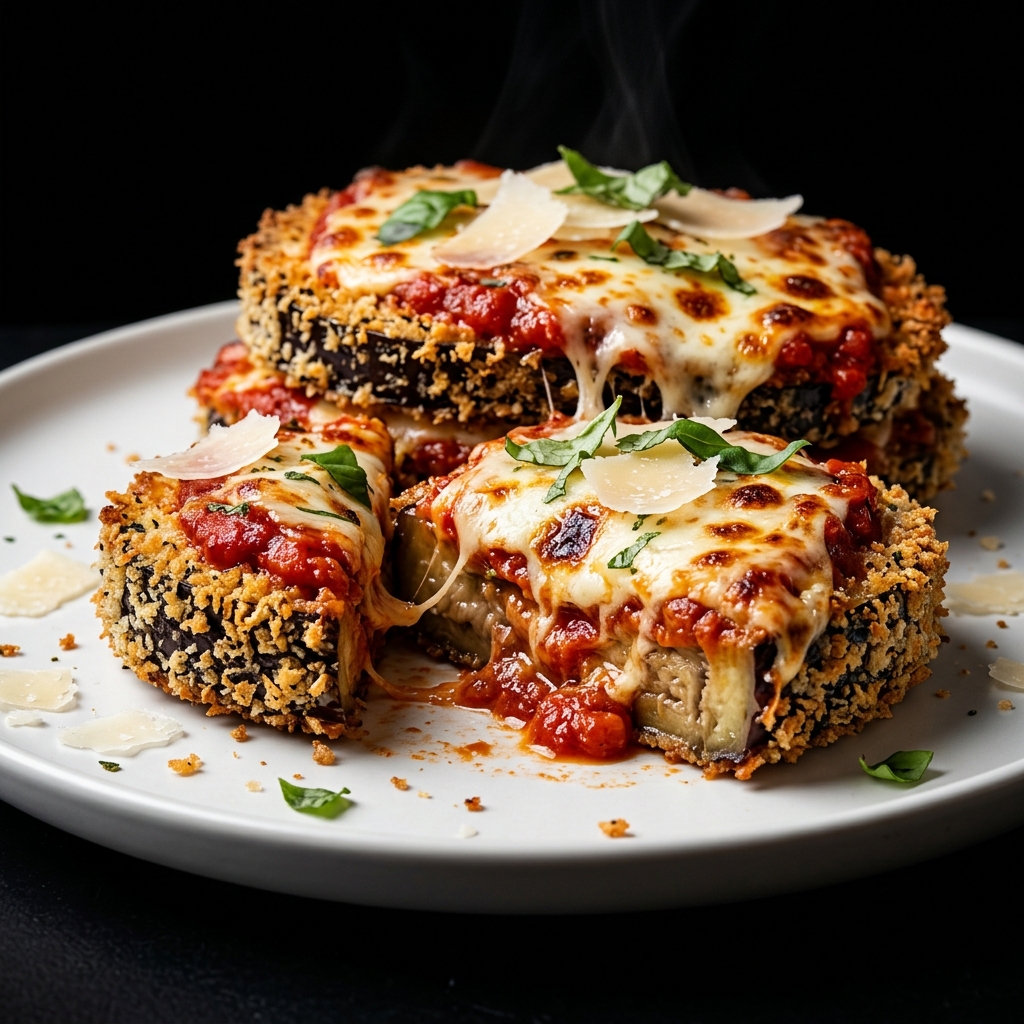
How to Make Crispy Baked Eggplant Parmesan
Follow these steps to create eggplant Parmesan with a crunchy coating, tender center, rich tomato sauce, and beautifully melted cheese. The most important details are preparing the eggplant properly, creating a well-adhered breadcrumb crust, and adding the sauce strategically so the finished dish stays crisp.
Step 1: Prepare the Eggplant
Preheat your oven to 425°F (220°C). Line two large baking sheets with parchment paper or use suitable nonstick baking sheets. If using parchment, ensure it is rated for the temperature required by the manufacturer.
Wash the eggplants thoroughly and dry them with a clean kitchen towel. Trim off the stem ends and slice the eggplants into rounds approximately ½ inch thick.
Try to keep the slices as uniform as possible. Even slices cook at a similar rate, helping prevent some pieces from becoming mushy while others remain firm.
Arrange the slices on a clean tray and sprinkle both sides lightly with salt. Leave them for approximately 20–30 minutes if your eggplants are particularly watery or if you want to follow the traditional salting method.
You may notice moisture appearing on the surface. Blot the slices thoroughly with paper towels before breading.
Salting is optional for many modern eggplants because they are often less bitter than older varieties. However, removing excess surface moisture can help the coating adhere more effectively.
Step 2: Set Up the Breading Station
Prepare three shallow bowls or dishes.
Place the flour in the first bowl. In the second, whisk the eggs with the milk or water until the mixture is smooth. In the third, combine the breadcrumbs, ½ cup grated Parmesan, garlic powder, Italian seasoning, black pepper, and paprika.
Mix the breadcrumb ingredients thoroughly so the herbs and seasonings are distributed evenly throughout the coating.
Arrange the bowls in order: flour, egg mixture, then seasoned breadcrumbs. Keep the prepared baking sheets nearby so the breaded eggplant can be transferred easily.
This organized setup makes the process faster and helps keep the coating consistent.
Step 3: Coat the Eggplant Slices
Take one dry eggplant slice and coat it lightly in flour. Shake off any excess flour, as a thick layer can become pasty instead of crisp.
Dip the floured slice into the egg mixture, allowing the excess to drip back into the bowl. Then press it gently into the seasoned breadcrumbs, coating both sides and the edges.
Use clean hands or separate utensils for the wet and dry ingredients to keep the breadcrumb mixture from becoming clumpy.
Transfer the coated slice to the prepared baking sheet. Repeat with the remaining eggplant, arranging the slices in a single layer without overlapping them.
Avoid pressing the slices too tightly together. Air needs to circulate around the coating for it to brown properly.
For an especially crisp crust, gently press the breadcrumbs onto each slice so they adhere well. A thick coating that falls away during baking will not deliver the same satisfying crunch.
Step 4: Add Oil and Bake Until Golden
Lightly spray the tops of the breaded eggplant slices with olive oil, or carefully drizzle a small amount of oil over them.
Bake for approximately 20–25 minutes, turning the slices halfway through cooking. The exact time will depend on their thickness, your oven, and how efficiently the baking sheets conduct heat.
Watch for a golden-brown crust and a tender interior. The eggplant should be soft enough to pierce easily with a fork without collapsing into mush.
If the bottoms brown faster than the tops, move the baking sheet to a different oven rack or rotate the tray. If you are baking two sheets at once, switch their positions halfway through cooking.
Do not rush this step by adding sauce too early. The dry oven heat is what helps develop the crisp coating before the eggplant is exposed to moisture.
Step 5: Prepare the Marinara Sauce
While the eggplant bakes, warm the marinara sauce in a small saucepan over medium-low heat.
Stir occasionally until it is heated through. If the sauce seems watery, allow it to simmer gently for a few minutes so some excess moisture evaporates.
Taste the sauce before using it. Depending on the brand or homemade recipe, it may already contain sufficient salt, garlic, herbs, and seasoning.
A flavorful sauce makes a noticeable difference in the finished dish, but it should complement the eggplant rather than overwhelm its delicate flavor.
Step 6: Assemble the Eggplant Parmesan
Reduce the oven temperature to 400°F (205°C).
Spread a thin layer of warm marinara sauce across the bottom of a baking dish. Arrange a single layer of baked eggplant slices over the sauce.
Spoon a small amount of marinara over each slice, spreading it gently without completely drowning the crispy coating. Sprinkle with shredded mozzarella and a little additional Parmesan.
If you have enough eggplant for another layer, repeat the arrangement, keeping the sauce and cheese portions balanced.
Finish with mozzarella and the remaining Parmesan cheese.
For the crispiest result, avoid building too many thick layers. A shallow arrangement allows the heat to reach the eggplant more evenly and reduces the amount of moisture trapped between the slices.
Step 7: Bake Until the Cheese Is Melted
Place the assembled dish in the oven and bake for approximately 10–15 minutes, or until the mozzarella has melted and the sauce is bubbling around the edges.
For a more golden top, switch to the broiler briefly at the end of cooking. Watch it continuously because cheese can go from lightly browned to burnt very quickly.
Remove the dish when the cheese is melted, the sauce is hot, and the layers are heated through.
Allow the eggplant Parmesan to rest for about 5 minutes before serving. This short resting period helps the sauce settle and makes individual portions easier to lift onto plates.
Finish with freshly torn basil leaves and, if desired, a light dusting of Parmesan.
Step 8: Serve and Enjoy
Serve the eggplant Parmesan while it is hot, with the cheese still soft and stretchy and the tomato sauce fragrant.
Use a broad spatula to lift the portions carefully from the dish. A little sauce may spread onto the plate, but the eggplant should retain enough structure to make each serving satisfying.
For the best texture, serve it soon after assembly and baking. The breadcrumb coating will gradually soften as it absorbs moisture from the sauce, especially during storage.
Recipe Variations
Crispy Baked Eggplant Parmesan is easy to customize. These variations allow you to adjust the flavor, ingredients, and texture to suit different preferences while preserving the essential combination of eggplant, tomato sauce, and cheese.
1. Extra-Crispy Eggplant Parmesan
For a crunchier crust, use panko breadcrumbs instead of fine breadcrumbs, or combine the two. Panko has larger flakes that create a lighter, more textured coating.
Bake the slices on a wire rack set over a baking sheet if your equipment allows it and the rack is oven-safe. This encourages hot air to circulate underneath the slices.
Apply a light, even coating of oil before baking. Too little oil can leave breadcrumbs dry and pale, while excessive oil can make the coating greasy.
Keep the sauce layer modest to protect the crust.
2. Gluten-Free Eggplant Parmesan
To make this recipe gluten-free, replace the all-purpose flour with a suitable gluten-free flour blend and use certified gluten-free breadcrumbs.
Check the labels on the marinara sauce, seasonings, and other packaged ingredients to confirm they meet your dietary requirements.
The preparation method remains essentially the same. The coating may brown differently depending on the gluten-free ingredients, so begin checking for doneness a little earlier.
3. Low-Carb Eggplant Parmesan
For a lower-carbohydrate variation, replace traditional breadcrumbs with a mixture of finely ground almond flour, grated Parmesan, and seasonings.
You can also reduce the amount of flour used in the breading process or choose a coating designed specifically for low-carbohydrate cooking.
Keep in mind that eggplant and tomato sauce still contribute carbohydrates. The final nutritional values will depend on the quantities, brands, and substitutions used.
4. Keto-Friendly Eggplant Parmesan
A keto-style version needs more substantial changes than simply removing regular breadcrumbs. Use a low-carbohydrate coating, such as finely ground almond flour mixed with Parmesan, and select a tomato sauce with no added sugar and a carbohydrate level that fits your daily targets.
Measure the ingredients carefully and calculate the nutrition for the actual recipe. A dish made with eggplant, tomato sauce, and cheese is not automatically keto-friendly just because it contains no meat.
5. Spicy Eggplant Parmesan
If you enjoy a little heat, add crushed red pepper flakes to the breadcrumb mixture or stir a small pinch into the marinara sauce.
You can also add a little cayenne pepper to the coating. Begin with a small quantity so the spice enhances the tomato and cheese flavors without overpowering them.
6. Vegan Eggplant Parmesan
For a vegan variation, replace the eggs with a suitable plant-based binder, such as unsweetened plant milk mixed with a little flour or another egg-free coating mixture.
Use dairy-free mozzarella and a plant-based Parmesan alternative. Confirm that the breadcrumbs and marinara sauce contain no animal-derived ingredients.
The result will have a different melting quality and flavor from the traditional version, but it can still deliver a satisfying combination of crispy eggplant, tomato sauce, and savory topping.
7. Eggplant Parmesan with Homemade Marinara
If you prefer a homemade sauce, gently cook crushed tomatoes with olive oil, minced garlic, dried oregano, basil, black pepper, and a little salt.
Simmer until the sauce thickens and the flavors become well blended. Taste before adding more seasoning.
A thick homemade marinara is particularly useful in this recipe because it delivers fresh tomato flavor without adding too much liquid to the crispy eggplant.
8. Individual Eggplant Parmesan Stacks
For an attractive dinner-party presentation, assemble individual portions instead of layering everything in one baking dish.
Place a baked eggplant round on a lined baking sheet, add a small spoonful of marinara and some cheese, then top with another round. Repeat with additional layers if desired, finishing each stack with mozzarella and Parmesan.
Bake until the cheese melts and the stacks are heated through. Garnish with fresh basil before serving.
These individual stacks are easy to portion and make the dish look elegant on the dinner table.
Expert Tips for the Best Results
Choose the Right Eggplant
Look for firm, glossy eggplants with smooth skin and fresh stems. Avoid specimens with soft spots, extensive bruising, or wrinkled skin.
Medium-sized eggplants are often easier to slice evenly and arrange on baking sheets. Very large eggplants may contain more noticeable seeds, although this varies by variety and maturity.
Keep the Slices Uniform
Aim for slices around ½ inch thick. Thin slices can become fragile or overcook before the coating develops enough color, while very thick slices may require longer baking to become tender.
Uniform thickness makes the cooking process more predictable.
Dry the Eggplant Before Breading
Excess moisture can interfere with the coating and make it slide off during cooking.
After washing, dry the eggplant thoroughly. If you salt the slices, blot away the released moisture before dipping them in flour.
Do Not Skip the Flour Layer
The flour helps the egg mixture cling to the eggplant, and the egg mixture helps the breadcrumbs stick.
If you skip the flour, the coating may be patchy or more likely to detach. Shake off excess flour so the layers remain thin and even.
Avoid Overcrowding the Baking Sheet
Give each slice a little breathing room. Crowded slices trap moisture and can steam rather than crisp.
Use two baking sheets if necessary, and rotate them during baking to encourage even browning.
Use a Thick Marinara Sauce
Watery sauce is one of the biggest threats to crispy eggplant Parmesan.
If your sauce contains excess liquid, simmer it briefly before assembly. Spread a thin layer over the eggplant rather than pouring large amounts over the crust.
Choose the Right Mozzarella
Low-moisture mozzarella is generally the easiest option for a baked dish because it melts well without releasing as much liquid as fresh mozzarella.
Fresh mozzarella can also be used, but drain it thoroughly and pat it dry before adding it to the dish.
Let the Cheese Melt Without Overbaking
The eggplant is already baked before assembly, so the final oven stage mainly needs to heat the layers and melt the cheese.
Leaving it in the oven too long can soften the breadcrumb crust and dry out the cheese. Remove it when the sauce bubbles and the topping looks melted and lightly golden.
Store and Reheat Leftovers Properly
Allow leftovers to cool, then refrigerate them in a covered container within two hours of cooking. Store at 40°F (4°C) or below and use within three to four days.
For better texture, reheat portions in an oven or air fryer until heated through. Microwaving works when convenience matters, but it usually softens the coating.
For longer storage, freeze cooled portions in suitable airtight containers. Thaw them in the refrigerator before reheating for more even results.
What to Serve with Crispy Baked Eggplant Parmesan
Eggplant Parmesan is rich, savory, and satisfying, so it pairs particularly well with fresh vegetables, light salads, and simple Italian-inspired sides.
1. Garlic Bread
Warm garlic bread is a natural companion to marinara sauce. Its crisp edges and buttery garlic flavor complement the tender eggplant and melted cheese.
2. Fresh Garden Salad
A salad of crisp lettuce, tomatoes, cucumber, and red onion adds freshness to the meal. Dress it with olive oil, lemon juice, or a light vinaigrette to balance the richness of the cheese.
3. Spaghetti with Marinara
For a more substantial Italian-inspired dinner, serve the eggplant Parmesan with a modest portion of spaghetti tossed in marinara sauce.
Keep the pasta seasoning simple so the eggplant remains the star of the meal.
4. Roasted Vegetables
Roasted zucchini, bell peppers, asparagus, or broccoli make colorful sides that complement the tomato and cheese flavors.
Season them with olive oil, black pepper, and Italian herbs for a cohesive meal.
5. Steamed Green Beans
Tender-crisp green beans add a fresh, light contrast to the rich baked dish. Finish them with a little olive oil, lemon zest, or minced garlic.
6. Lemon-Parmesan Broccoli
Roasted or steamed broccoli tossed with lemon juice and a small amount of Parmesan offers a savory side with a bright citrus finish.
7. Creamy Polenta
Soft polenta provides a comforting base for the tomato sauce. Its gentle corn flavor pairs well with the savory eggplant and melted cheese.
8. Roasted Potatoes
Crispy roasted potatoes make the meal more filling and add another appealing texture. Season them with rosemary, garlic, and black pepper.
Frequently Asked Questions
1. Do I need to peel eggplant before making eggplant Parmesan?
No. The skin of most medium-sized eggplants is edible and helps the slices hold their shape during baking. Simply wash the eggplant thoroughly and trim the stem. If the skin is unusually tough or the eggplant is very mature, you may choose to peel it partially or completely.
2. Why is my baked eggplant Parmesan soggy?
Sogginess can result from excess moisture in the eggplant, a watery tomato sauce, overcrowded baking sheets, or too much sauce added during assembly. Dry the slices thoroughly, bake them in a single layer, use a thick marinara, and apply the sauce sparingly.
3. How do I make eggplant Parmesan crispy without frying?
Use a flour, egg, and breadcrumb coating, then bake the slices at a relatively high temperature with a light coating of oil. Panko breadcrumbs can add extra crunch. Baking the slices separately before adding sauce and cheese is particularly important for developing a crisp exterior.
4. Can I make eggplant Parmesan ahead of time?
Yes. You can prepare the sauce, slice the eggplant, and mix the breadcrumb seasoning ahead of time. For the best texture, bread and bake the eggplant shortly before assembly. If you assemble the entire dish in advance, expect the coating to soften as it absorbs moisture.
5. Can I freeze Crispy Baked Eggplant Parmesan?
Yes. Cooked portions can be frozen in airtight, freezer-safe containers. Cool the food promptly before freezing, and separate portions with suitable parchment if needed. Thaw in the refrigerator and reheat in the oven until thoroughly hot. The texture may be softer than when freshly baked.
6. What temperature should I use to bake eggplant Parmesan?
Bake the breaded eggplant slices at approximately 425°F (220°C) until golden and tender. After adding the sauce and cheese, reduce the oven temperature to around 400°F (205°C) and bake until the cheese melts and the dish bubbles.
7. Is eggplant Parmesan vegetarian?
Yes, a typical eggplant Parmesan is vegetarian when the sauce contains no meat and the cheeses use suitable vegetarian ingredients. Traditional Parmesan may be made with animal rennet, so check the label if strict vegetarian suitability matters to you.
8. Is Crispy Baked Eggplant Parmesan gluten-free?
The traditional version is not usually gluten-free because all-purpose flour and ordinary breadcrumbs contain wheat. To adapt it, use certified gluten-free flour and breadcrumbs, and check the labels of packaged ingredients.
9. Can I make eggplant Parmesan without eggs?
Yes. For an egg-free version, use a suitable plant-based binder, such as unsweetened plant milk combined with a little flour, or a commercial egg substitute suitable for breading. The coating may adhere differently, so press the breadcrumbs gently onto each slice.
10. How can I tell when the eggplant is fully cooked?
The eggplant should be tender when pierced with a fork, while the breadcrumb coating should be golden and crisp. After assembly, the cheese should be melted and the sauce bubbling. Avoid relying on browning alone, since a dark crust does not necessarily mean the center is tender.
11. Can I use homemade tomato sauce?
Absolutely. Homemade marinara can give the dish a fresher flavor. Cook the sauce until it is thick enough to cling to a spoon, and avoid adding it to the eggplant while it is excessively watery.
12. What is the best way to reheat eggplant Parmesan?
Reheat leftovers in a preheated oven at approximately 350°F (175°C) until hot throughout. An air fryer can also restore some crispness to individual portions. The microwave is convenient, but the breadcrumb coating will generally become softer.
13. Can I make this recipe in an air fryer?
Yes. Bread the eggplant as directed, lightly coat the slices with oil, and cook them in a single layer in an air fryer at approximately 375–400°F (190–205°C), checking frequently and turning as needed. Cooking time depends on the appliance and slice thickness. Assemble with sauce and cheese afterward, then return the portions to the air fryer briefly until the cheese melts.
14. What kind of breadcrumbs works best?
Panko breadcrumbs are excellent for a lighter, crunchier crust, while traditional Italian-seasoned breadcrumbs create a finer, more uniform coating. You can also combine both to balance crunch and even coverage.
15. Can I serve eggplant Parmesan as a main dish?
Definitely. With generous portions of eggplant, marinara, and cheese, it makes a satisfying vegetarian main course. Serve it with a fresh salad, vegetables, pasta, or garlic bread depending on how substantial you want the meal to be.
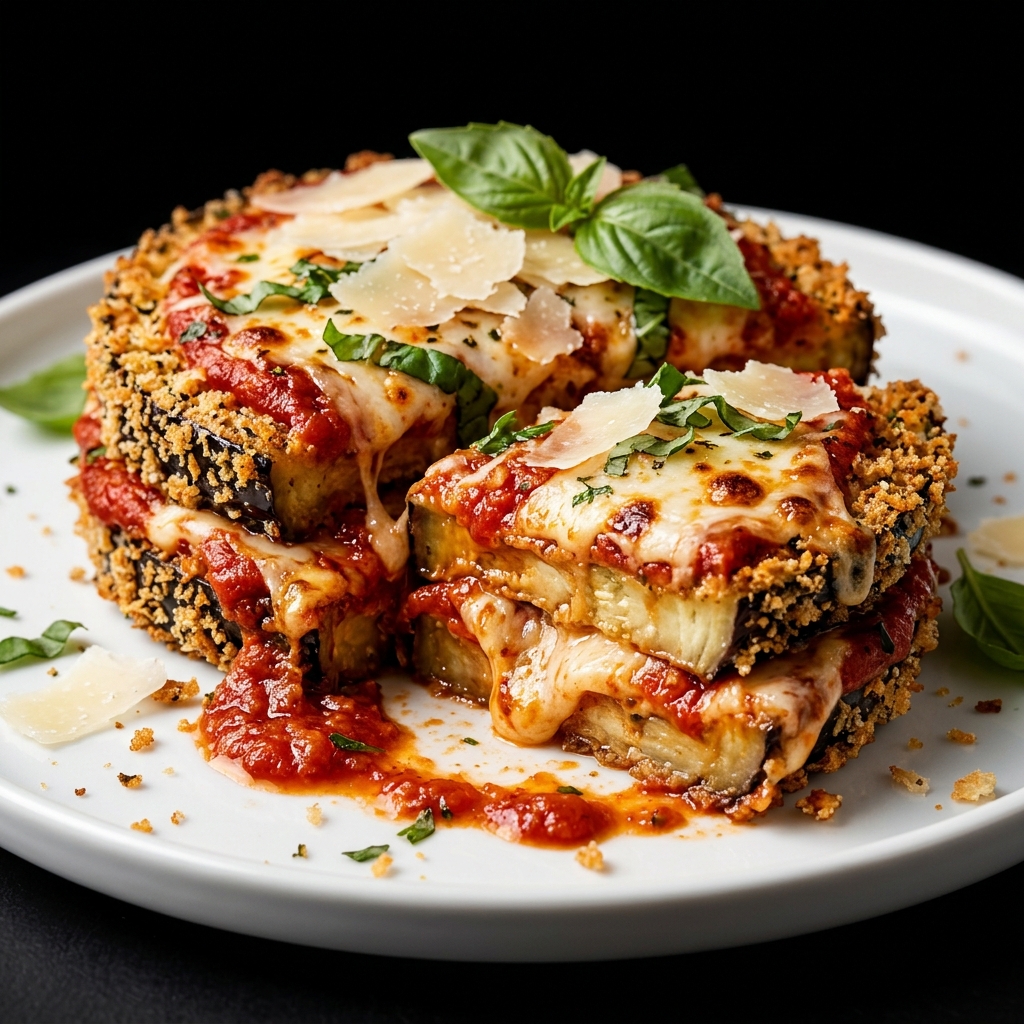
Crispy Baked Eggplant Parmesan
Ingredients
Equipment
Method
- Preheat the oven: Preheat to 425°F (220°C). Line two baking sheets with parchment paper.
- Prepare the eggplant: Wash and dry the eggplants, trim the ends, and cut into uniform ½-inch rounds. Optionally sprinkle with salt and let stand for 20–30 minutes. Blot away excess moisture.
- Prepare the breading station: Place the flour in one shallow bowl. Whisk the eggs with milk or water in a second bowl. In a third bowl, combine the breadcrumbs, ½ cup Parmesan, garlic powder, Italian seasoning, black pepper, and paprika.
- Bread the eggplant: Coat each slice lightly in flour, dip it into the egg mixture, and press it into the seasoned breadcrumbs until both sides are evenly coated.
- Bake until crispy: Arrange the slices in a single layer on the prepared baking sheets. Lightly coat with olive oil. Bake for 20–25 minutes, turning halfway through, until golden brown and tender.
- Warm the marinara: While the eggplant bakes, heat the marinara sauce in a saucepan over medium-low heat until warmed through. Simmer briefly if it needs thickening.
- Assemble the dish: Reduce the oven temperature to 400°F (205°C). Spread a thin layer of marinara in a baking dish. Arrange the baked eggplant over the sauce, spoon a little marinara over each slice, and top with mozzarella and the remaining Parmesan.
- Bake with cheese: Bake for 10–15 minutes, until the cheese is melted and the sauce bubbles around the edges. Broil briefly if a more golden cheese topping is desired, watching carefully.
- Rest and garnish: Let the dish rest for 5 minutes. Garnish with fresh basil leaves and serve warm.
Notes


Emma Carter is a passionate home cook and recipe creator who loves making delicious, simple meals everyone can enjoy. She shares easy recipes, helpful cooking tips, and inspiring food ideas to make everyday cooking more enjoyable.