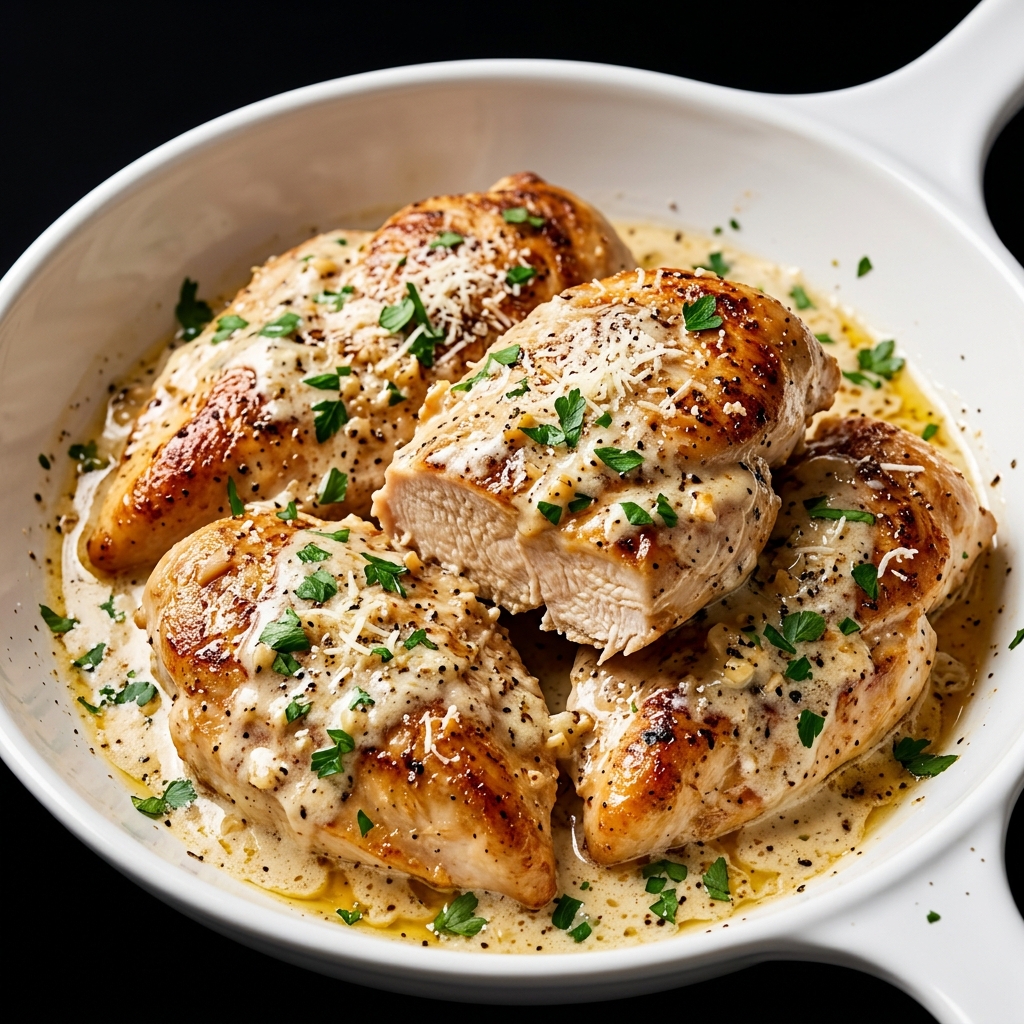
Creamy, cheesy, and packed with irresistible garlic flavor, this Creamy Garlic Parmesan Chicken transforms simple chicken breasts into a restaurant-quality dinner you can make right in your own kitchen. With golden-seared chicken smothered in a rich Parmesan cream sauce, this comforting dish is perfect for busy weeknights, cozy family dinners, or whenever you want something delicious without spending hours at the stove.
Ingredients for Creamy Garlic Parmesan Chicken
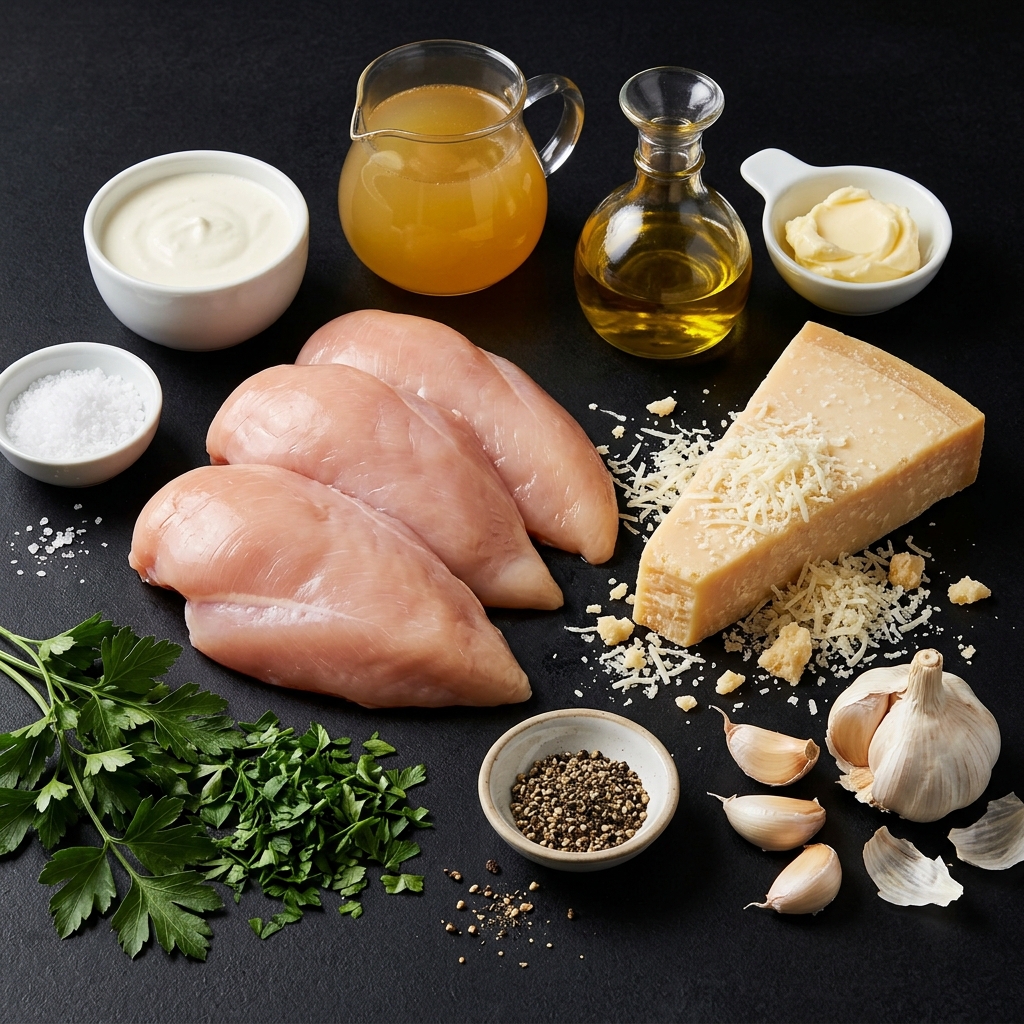
The secret to an outstanding creamy garlic Parmesan chicken recipe is using simple, flavorful ingredients and preparing each one properly. Every ingredient contributes to the tenderness of the chicken, the richness of the sauce, or the beautiful balance of flavors that makes this dish so satisfying.
For the chicken:
- 4 boneless, skinless chicken breasts: Choose medium-sized chicken breasts that are similar in thickness so they cook evenly. If the breasts are particularly thick, slice them horizontally into thinner cutlets.
- 1 teaspoon salt: Enhances the natural flavor of the chicken.
- 1/2 teaspoon freshly ground black pepper: Adds gentle warmth and balances the richness of the cream sauce.
- 1 teaspoon Italian seasoning: Provides a fragrant blend of herbs that complements the garlic and Parmesan.
- 1/2 teaspoon paprika: Adds a subtle earthy flavor and helps give the chicken an attractive golden-brown color.
- 2 tablespoons olive oil: Helps the chicken develop a flavorful seared crust.
- 1 tablespoon unsalted butter: Adds richness and helps build flavor in the pan.
For the creamy garlic Parmesan sauce:
- 4 tablespoons unsalted butter: Creates a rich base for the sauce and helps soften the garlic without burning it.
- 5–6 garlic cloves, finely minced: Fresh garlic delivers the bold, aromatic flavor that makes this recipe special. Adjust the quantity to suit your preference.
- 1 tablespoon all-purpose flour (optional): Helps thicken the sauce slightly. For a low-carb or keto-friendly version, omit the flour and allow the cream and cheese to thicken the sauce naturally.
- 1 cup chicken broth: Adds savory depth and helps deglaze the pan, lifting the browned bits left behind by the chicken.
- 1 cup heavy cream: Gives the sauce its smooth, velvety texture. Use heavy cream rather than a low-fat milk substitute for the richest result.
- 3/4 cup freshly grated Parmesan cheese: Provides a salty, nutty, savory flavor and helps thicken the sauce. Freshly grated cheese generally melts more smoothly than many pre-shredded varieties.
- 1 teaspoon Italian seasoning: Reinforces the herb flavor throughout the sauce.
- 1/4 teaspoon freshly ground black pepper: Adds a gentle peppery finish.
- Salt, to taste: Add cautiously because Parmesan and chicken broth may already contain plenty of salt.
- 2 tablespoons fresh parsley, chopped: Adds a bright green finish and a fresh herbal contrast to the creamy sauce.
- 1 teaspoon lemon juice (optional): Brightens the sauce and balances its richness without making it noticeably sour.
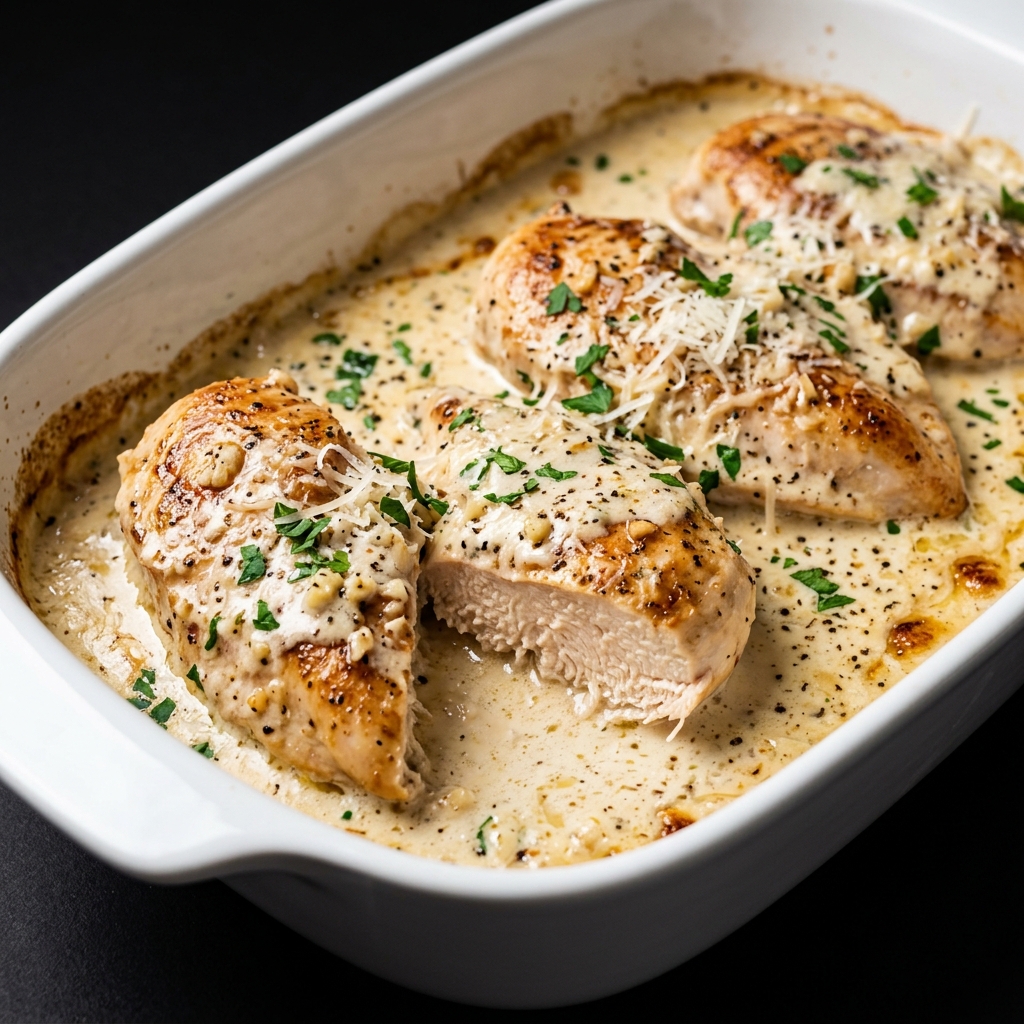
How to Make Creamy Garlic Parmesan Chicken
This recipe comes together in one skillet, making it practical for home cooks who want a satisfying meal without a sink full of dishes. The most important steps are getting a beautiful sear on the chicken, gently cooking the garlic, and allowing the sauce to develop a smooth, creamy consistency.
Step 1: Prepare the chicken breasts
Pat the chicken breasts dry with paper towels. This simple step helps remove excess surface moisture, allowing the chicken to brown properly instead of steaming in the skillet.
If the chicken breasts are thick, slice them horizontally into cutlets or gently pound them to an even thickness. Aim for pieces that are reasonably uniform so the thinner sections do not dry out before the thicker sections finish cooking.
Season both sides with salt, black pepper, paprika, and Italian seasoning. Press the seasonings gently onto the surface to help them adhere.
Allow the seasoned chicken to rest briefly while you prepare the remaining ingredients. Measure the broth, cream, Parmesan, and seasonings before you start cooking. Having everything ready makes it easier to control the heat and prevents the garlic from burning while you search for another ingredient.
Step 2: Sear the chicken until golden brown
Place a large skillet over medium-high heat and add the olive oil and one tablespoon of butter. Allow the fat to heat until the butter has melted and the skillet is hot, but not smoking heavily.
Arrange the chicken breasts in a single layer. If your skillet is too small to hold them comfortably, cook in batches rather than crowding the pan.
Let the chicken cook undisturbed for approximately 4–6 minutes on the first side, depending on thickness. When the underside develops a deep golden-brown crust, turn the chicken over and cook for another 3–5 minutes, or until nearly cooked through.
The exact cooking time depends on the size and thickness of the pieces. For food safety, chicken should reach an internal temperature of 165°F (74°C) at its thickest point, measured with a food thermometer.
Transfer the cooked chicken to a clean plate and cover loosely to keep it warm. If the chicken needs a little more cooking, it can finish gently in the sauce later, provided you verify that it reaches the safe internal temperature.
Do not wash or discard the skillet. The browned bits left on the bottom contain concentrated flavor that will make your Parmesan cream sauce taste much richer.
Step 3: Melt the butter and sauté the garlic
Reduce the heat to medium-low and add the four tablespoons of butter to the same skillet.
Once the butter has melted, add the minced garlic. Stir continuously for approximately 30–60 seconds, just until the garlic becomes fragrant.
Watch the garlic carefully. It should soften and release its aroma without turning dark brown. Burnt garlic can introduce a bitter flavor that is difficult to correct in a cream sauce.
If you enjoy a particularly pronounced garlic flavor, you can add an extra clove or two. However, keep the heat controlled so the garlic remains fragrant rather than harsh.
Step 4: Build the flavorful sauce base
If you are using the optional flour, sprinkle it over the butter and garlic. Stir for about 30–60 seconds to combine everything into a smooth paste. Cooking the flour briefly helps remove its raw taste.
Gradually pour in the chicken broth while whisking or stirring continuously. Scrape the bottom of the skillet with a wooden spoon or heat-resistant spatula to loosen the browned bits left by the chicken.
Allow the broth to simmer gently for 2–3 minutes. It should reduce slightly and develop a deeper savory aroma.
If you are making the low-carb version without flour, simply add the broth directly to the garlic butter and let it simmer briefly. The cream and Parmesan will help thicken the finished sauce.
Step 5: Add the heavy cream
Lower the heat and slowly pour in the heavy cream, stirring until it blends evenly with the broth.
Add the Italian seasoning and black pepper. Allow the sauce to simmer gently for 3–5 minutes, stirring occasionally.
Avoid letting the sauce boil vigorously. High heat can cause dairy-based sauces to separate, especially after cheese is added. A gentle simmer gives the ingredients time to combine while the sauce gradually thickens.
At this stage, the sauce should look smooth and creamy, with a pale golden color from the butter and seasonings.
If it appears too thin, continue simmering gently for another minute or two. Remember that the Parmesan will add further thickness, so there is no need to reduce it excessively.
Step 6: Stir in the Parmesan cheese
Reduce the heat to low before adding the freshly grated Parmesan cheese.
Sprinkle the cheese into the sauce gradually, stirring after each addition until it melts. Adding it in small amounts encourages a smooth texture and helps prevent clumping.
Freshly grated Parmesan is particularly useful here because it generally melts more evenly than pre-shredded cheese coated with anti-caking ingredients.
Taste the sauce before adding any extra salt. Parmesan is naturally salty, and some chicken broths contain substantial sodium.
If the sauce tastes too rich or heavy, stir in the optional teaspoon of lemon juice. This small addition can brighten the flavor and balance the cream without overpowering the garlic and cheese.
The finished sauce should coat the back of a spoon and look glossy rather than greasy or grainy.
Step 7: Return the chicken to the skillet
Place the seared chicken breasts back into the skillet, nestling them into the creamy Parmesan sauce.
Spoon some of the sauce over each piece so the chicken absorbs the flavor as it finishes cooking.
Let everything simmer gently for approximately 2–5 minutes, depending on how much additional cooking the chicken needs. If the chicken is already fully cooked, simply warm it through without prolonged simmering.
Check the thickest part of each breast with a food thermometer to confirm it has reached 165°F (74°C). Avoid relying on color alone to determine whether the chicken is safe to eat.
If the sauce becomes too thick, add a small splash of chicken broth and stir gently. If it is too thin, remove the chicken temporarily and simmer the sauce for another minute or two before returning the chicken to the skillet.
Step 8: Garnish and serve
Remove the skillet from the heat and sprinkle the chopped fresh parsley over the chicken.
For an especially appealing presentation, finish with a little additional freshly grated Parmesan and a light dusting of black pepper.
Allow the dish to rest for a minute or two before serving. The sauce may thicken slightly as it cools, creating a luxurious coating around the chicken.
Serve the creamy garlic Parmesan chicken while it is warm, with plenty of sauce spooned over each portion. Make sure your chosen side dish is ready beforehand so the chicken can go straight from the skillet to the table at its best.
Delicious Variations of Creamy Garlic Parmesan Chicken
One of the best things about this recipe is how easily you can adapt it to different tastes and dietary preferences. The creamy garlic Parmesan sauce provides a versatile foundation for several delicious variations.
Creamy Garlic Parmesan Chicken with Spinach
For a colorful variation, add two large handfuls of fresh baby spinach to the sauce after stirring in the Parmesan.
Allow the spinach to wilt for approximately 1–2 minutes before returning the chicken to the skillet. Its mild flavor complements the creamy sauce, while the green leaves add freshness and color.
You can also add a few halved cherry tomatoes for a slightly sweet, tangy contrast. Cook them briefly in the sauce until they begin to soften.
Creamy Garlic Parmesan Mushroom Chicken
Mushrooms are an excellent addition if you enjoy a deeper, earthier flavor.
Slice approximately 8 ounces of cremini or button mushrooms. After searing the chicken, cook the mushrooms in the skillet until they release their moisture and develop golden-brown edges. Transfer them to a plate if needed, then prepare the garlic cream sauce as directed.
Return the mushrooms to the skillet with the chicken and allow them to simmer in the sauce. Their savory flavor complements the Parmesan and makes the dish particularly satisfying.
Spicy Creamy Garlic Parmesan Chicken
If you prefer a little heat, add 1/4–1/2 teaspoon of red pepper flakes to the garlic butter before adding the broth.
The pepper flakes infuse the sauce with gentle warmth without overwhelming its creamy, cheesy character. You can also add a small pinch of cayenne pepper to the chicken seasoning before searing.
Adjust the heat gradually, especially if you are serving the dish to children or anyone who prefers milder meals.
Creamy Garlic Parmesan Chicken with Sun-Dried Tomatoes
Sun-dried tomatoes add concentrated sweetness and a pleasant tang that balances the richness of the cream.
Chop approximately 1/3 cup of drained sun-dried tomatoes and stir them into the sauce after adding the chicken broth. Let them simmer briefly before adding the cream and Parmesan.
This variation works especially well with fresh spinach and Italian seasoning, giving the dish a Mediterranean-inspired flavor.
Low-Carb and Keto Creamy Garlic Parmesan Chicken
The basic combination of chicken, heavy cream, butter, garlic, and Parmesan is naturally compatible with many low-carb and ketogenic eating plans.
To keep the dish lower in carbohydrates, omit the optional flour and allow the sauce to reduce gently. Choose a chicken broth without added sugar or unnecessary carbohydrate-rich ingredients, and check the labels on all packaged products.
Serve with cauliflower mash, roasted broccoli, sautéed zucchini, or cauliflower rice instead of traditional pasta or regular mashed potatoes.
The precise carbohydrate content depends on the ingredients and serving sizes, so calculate the nutrition for your actual recipe before assigning a specific keto or low-carb claim.
Gluten-Free Creamy Garlic Parmesan Chicken
For a gluten-free version, omit the all-purpose flour or replace it with a suitable gluten-free thickener used according to its package directions.
Check that the chicken broth, seasonings, and Parmesan are suitable for your dietary needs. Avoid cross-contact with wheat flour or other gluten-containing ingredients during preparation.
The sauce can still become creamy and flavorful without traditional flour, especially when prepared with heavy cream and freshly grated Parmesan.
Creamy Garlic Parmesan Chicken with Chicken Thighs
Boneless, skinless chicken thighs are a good alternative if you prefer darker meat with a richer flavor.
Season and sear them as you would chicken breasts, adjusting the cooking time for their thickness. Allow them to finish cooking in the sauce until they reach a safe internal temperature of 165°F (74°C).
Thighs may remain juicy and tender even when cooked slightly longer than lean breast meat, making them a useful choice for cooks who prefer a more forgiving cut.
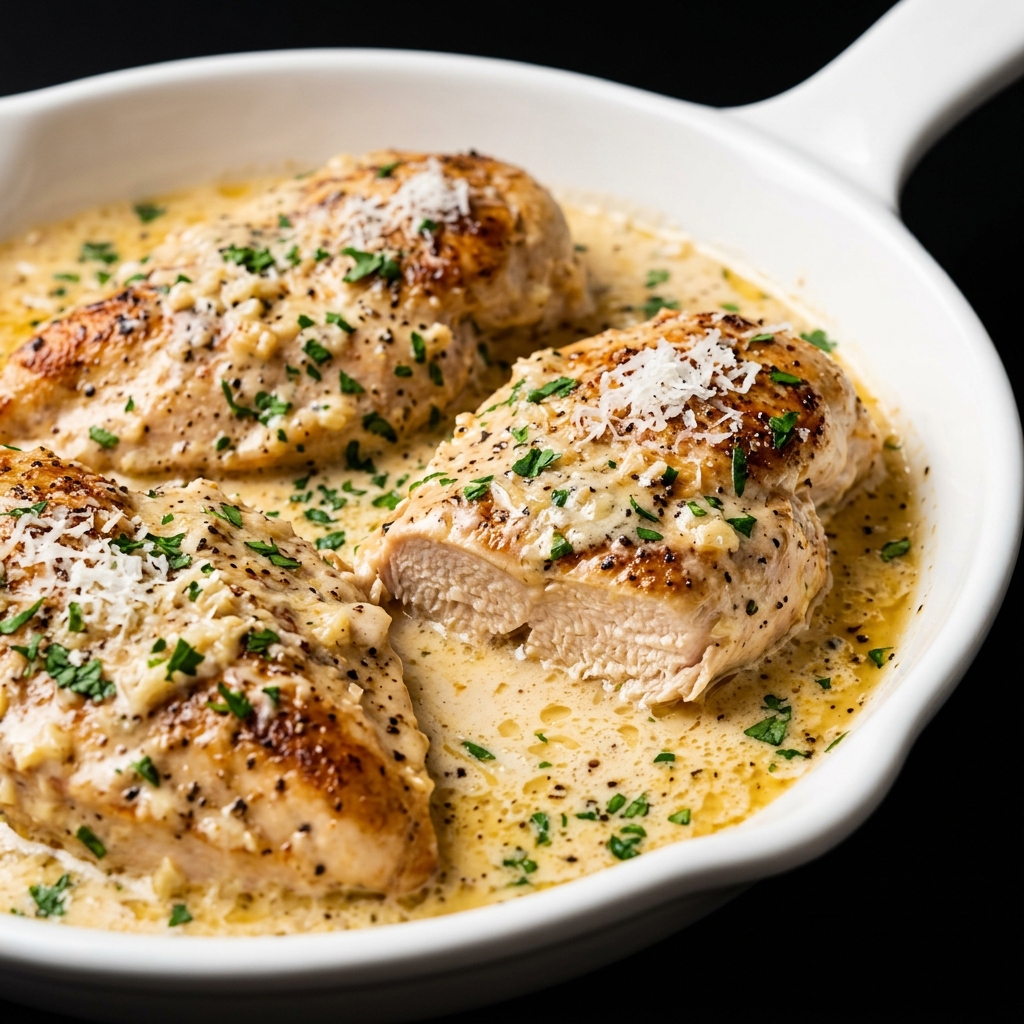
Expert Tips for the Best Creamy Garlic Parmesan Chicken
A few small techniques can make a noticeable difference in the flavor, appearance, and texture of your finished dish.
Use freshly grated Parmesan whenever possible
Freshly grated Parmesan generally melts more smoothly than many pre-shredded products. It also provides a more pronounced nutty, savory flavor.
Grate the cheese finely so it incorporates quickly into the warm sauce. Add it over low heat and stir gradually to encourage a silky consistency.
Do not rush the searing process
A good golden-brown crust adds flavor and makes the chicken look more appetizing. Pat the chicken dry before seasoning, preheat the skillet, and avoid moving the pieces too soon.
Crowding the skillet can cause the chicken to release moisture and steam instead of brown. Cook in batches if necessary.
Keep the sauce at a gentle simmer
Heavy cream and cheese respond best to moderate heat. Once the cream has been added, avoid aggressive boiling, particularly after incorporating the Parmesan.
Gentle heat helps the sauce remain smooth and reduces the risk of separation.
Season in stages
Season the chicken before cooking, flavor the sauce as it develops, and taste again before serving.
Parmesan and chicken broth both contribute salt, so adding the full amount of salt at the beginning of sauce preparation can leave the finished dish overly salty.
Let the browned bits work for you
Those flavorful brown patches left behind after searing the chicken are valuable. Deglazing the skillet with chicken broth helps dissolve them into the sauce, adding depth that you would lose by starting with a clean pan.
Avoid overcooking the chicken
Chicken breast is lean and can become dry if cooked for too long. Use a thermometer to check for 165°F (74°C) at the thickest point, and let the chicken finish gently in the sauce only as needed.
Adjust the consistency at the end
If the sauce becomes too thick, add a little warm chicken broth. If it is too thin, simmer it gently for another minute or two.
Make small adjustments rather than adding large quantities of liquid or cheese all at once.
What to Serve with Creamy Garlic Parmesan Chicken
Because the sauce is rich and savory, this chicken pairs particularly well with sides that absorb the sauce, add freshness, or provide a pleasant textural contrast.
Pasta
Fettuccine, linguine, penne, and spaghetti are excellent choices. Toss the cooked pasta with a little of the Parmesan cream sauce or serve it alongside the chicken so each portion gets plenty of flavor.
Mashed potatoes
Creamy mashed potatoes complement the garlic Parmesan sauce beautifully. For contrast, prepare them with moderate amounts of butter and season them with black pepper and fresh herbs.
Steamed or roasted vegetables
Broccoli, green beans, asparagus, zucchini, and Brussels sprouts provide color and freshness. Roasting the vegetables with a little olive oil and black pepper creates lightly browned edges that balance the smooth sauce.
Rice
Steamed white rice, brown rice, or seasoned rice can absorb the extra sauce and turn the dish into a filling family meal.
Cauliflower rice
Cauliflower rice is an excellent lower-carbohydrate alternative to regular rice. Its mild flavor allows the garlic, cream, and Parmesan to remain the stars of the meal.
Garlic bread
Warm garlic bread is perfect for soaking up any remaining sauce. A crisp exterior and soft interior offer a pleasant contrast to the tender chicken.
Fresh green salad
A simple salad with lettuce, cucumber, tomatoes, and a light lemon dressing adds freshness and acidity. This contrast can make the overall meal feel less heavy.
Frequently Asked Questions
1. Can I make creamy garlic Parmesan chicken without heavy cream?
Yes. Heavy cream gives the sauce its signature richness, but alternatives can work. Half-and-half may produce a thinner sauce, while evaporated milk can provide a creamy texture with a different flavor and consistency. Avoid boiling milk-based substitutes aggressively because they may curdle more easily. The result will not be exactly the same as the original recipe.
2. How do I thicken creamy garlic Parmesan sauce?
Allow the sauce to simmer gently for a few additional minutes so some of the liquid evaporates. Freshly grated Parmesan also contributes thickness. If you are not following a low-carb or gluten-free diet, a small amount of flour cooked into the butter before adding the liquid can help. Avoid adding large amounts of cheese to an already hot sauce, as this may cause clumping.
3. Why did my Parmesan cream sauce become grainy?
Graininess can occur when cheese is added over excessive heat or when it does not melt evenly. Pre-shredded cheese may also contain ingredients that affect its texture. To reduce the risk, use finely grated Parmesan, lower the heat before adding it, and stir it in gradually. If the sauce begins to separate, remove the pan from the heat and whisk gently. A small splash of warm cream may help improve the consistency, although a severely separated sauce may not return completely to its original texture.
4. Can I prepare creamy garlic Parmesan chicken ahead of time?
Yes. You can season the chicken and measure the sauce ingredients ahead of time. For the best texture, cook the chicken and sauce close to serving time. If you prepare the entire dish in advance, refrigerate it promptly in a covered container and reheat it gently, stirring the sauce as it warms. The sauce may thicken during refrigeration, so add a little broth or cream if necessary.
5. How should I store leftovers?
Place leftover chicken and sauce in a clean, airtight container and refrigerate within two hours of cooking, or within one hour if the surrounding temperature is above 90°F (32°C). Use refrigerated leftovers within three to four days. Reheat to an internal temperature of 165°F (74°C), adding a little liquid if the sauce has thickened. Discard leftovers that have been stored improperly or show signs of spoilage.
6. Can I freeze creamy garlic Parmesan chicken?
You can freeze it, but cream-based sauces may separate or become grainy after thawing. For the best texture, freeze the cooked chicken with the sauce in a freezer-safe container and use it within approximately two to three months for quality. Thaw it in the refrigerator and reheat gently, stirring regularly. A small amount of cream or broth may help the sauce become smoother again.
7. Is creamy garlic Parmesan chicken keto-friendly?
It can be keto-friendly when prepared with chicken, heavy cream, butter, Parmesan, garlic, and suitable seasonings without flour or added sugar. Serve it with low-carbohydrate sides such as broccoli, cauliflower rice, or zucchini. The exact carbohydrate count depends on the quantities used and the specific products selected.
8. Is this recipe gluten-free?
The recipe can be made gluten-free by omitting the optional all-purpose flour and checking the labels on the broth and seasonings. Use a verified gluten-free thickener if one is needed. If preparing food for someone with celiac disease, take precautions to prevent cross-contact with gluten-containing ingredients and equipment.
9. Can I use chicken thighs instead of chicken breasts?
Absolutely. Boneless, skinless chicken thighs provide a richer flavor and work well with the creamy Parmesan sauce. Their cooking time may differ depending on thickness, so use a thermometer to confirm that the thickest part reaches 165°F (74°C).
10. What can I add to make this chicken more flavorful?
Fresh garlic, freshly grated Parmesan, Italian seasoning, black pepper, and a small squeeze of lemon juice all contribute flavor. Mushrooms, spinach, and sun-dried tomatoes are excellent additions. For a spicy version, add red pepper flakes. The key is to introduce additional ingredients without overwhelming the balance between the garlic, cheese, and cream.
11. Can I make the sauce without flour?
Yes. Flour is optional. Heavy cream and Parmesan can create a thick sauce without a flour-based roux. Let the sauce reduce gently before adding the cheese, and remember that it will thicken a little more as it cools.
12. How can I prevent chicken breasts from becoming dry?
Choose pieces of similar thickness, sear them over appropriately high heat, and avoid cooking them longer than necessary. A meat thermometer is the most reliable way to determine when they are done. Once the chicken reaches 165°F (74°C), remove it from the heat rather than leaving it simmering unnecessarily.
13. Can I make this recipe in one pan?
Yes. The chicken is seared and the sauce is prepared in the same skillet. This allows the browned bits from the chicken to become part of the sauce and reduces cleanup. Use a large skillet that provides enough space for the chicken to brown properly.
14. What type of Parmesan cheese works best?
A block of authentic Parmesan, finely grated just before cooking, is an excellent choice. It offers a savory, nutty flavor and generally melts more evenly than many packaged shredded cheeses. If you use a different hard Italian-style cheese, the flavor and saltiness may vary.
15. How do I know when the creamy garlic Parmesan chicken is ready to serve?
The chicken should reach an internal temperature of 165°F (74°C) at its thickest point. The sauce should be smooth, creamy, and able to coat the chicken without looking watery or greasy. Finish with fresh parsley and a little extra Parmesan, then serve promptly while everything is warm.
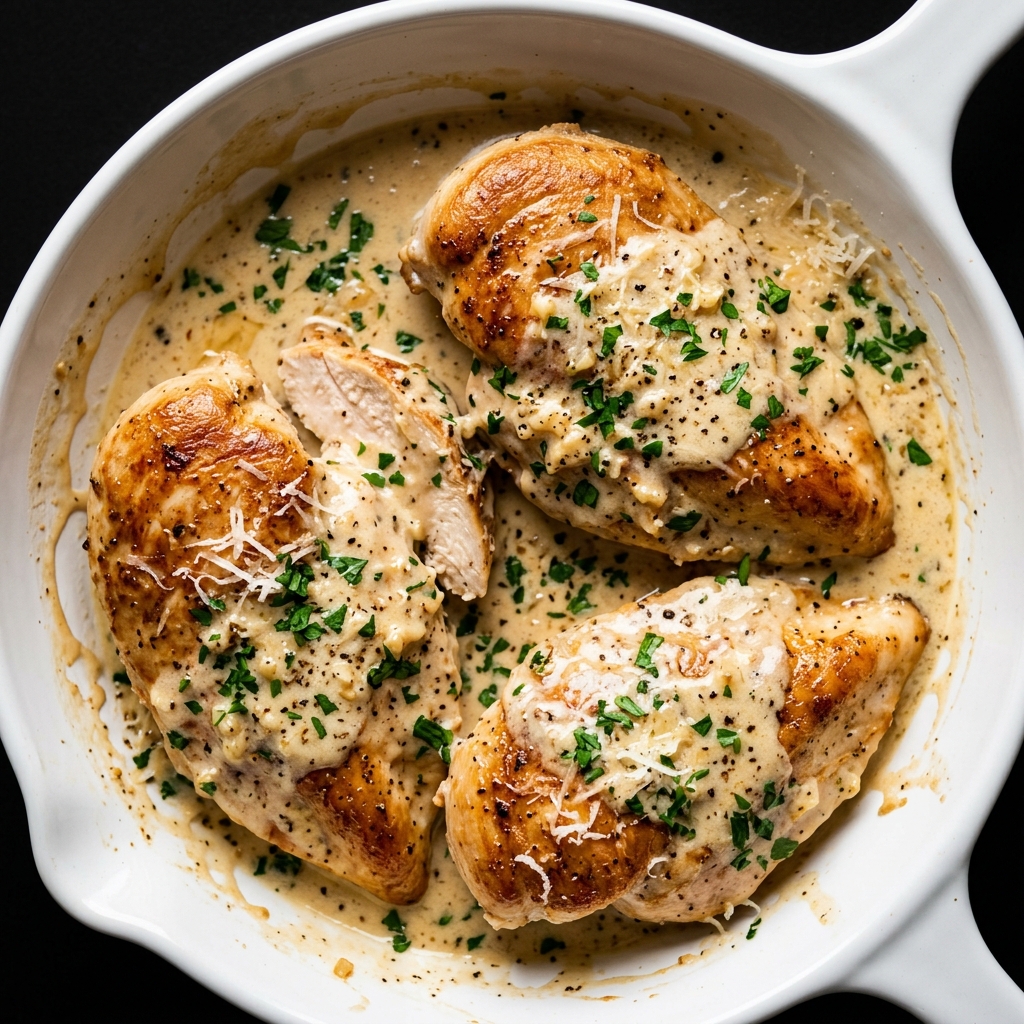
Creamy Garlic Parmesan Chicken
Ingredients
Equipment
Method
- Prepare the chicken: Pat the chicken breasts dry with paper towels. If they are thick, slice them horizontally or pound them to an even thickness. Season both sides with salt, black pepper, paprika, and Italian seasoning.
- Sear the chicken: Heat the olive oil and 1 tablespoon of butter in a large skillet over medium-high heat. Add the chicken and sear for approximately 4–6 minutes on the first side and 3–5 minutes on the other, depending on thickness. Transfer to a plate when browned, checking doneness with a meat thermometer.
- Cook the garlic: Reduce the heat to medium-low. Add the 4 tablespoons of butter to the same skillet. Stir in the minced garlic and cook for 30–60 seconds until fragrant, taking care not to burn it.
- Make the sauce base: If using flour, stir it into the garlic butter and cook for about 30–60 seconds. Gradually whisk in the chicken broth, scraping up the browned bits from the skillet. Simmer for 2–3 minutes.
- Add the cream: Reduce the heat to low and stir in the heavy cream, Italian seasoning, and black pepper. Simmer gently for 3–5 minutes until the sauce begins to thicken.
- Add Parmesan: Gradually stir in the grated Parmesan cheese until melted and the sauce is smooth. Taste and adjust the salt. Add the optional lemon juice if desired.
- Finish cooking the chicken: Return the chicken breasts to the skillet and spoon the sauce over them. Simmer gently for another 2–5 minutes, as needed, until the chicken reaches an internal temperature of 165°F (74°C).
- Garnish and serve: Sprinkle with fresh parsley and additional Parmesan if desired. Serve warm with pasta, mashed potatoes, rice, or vegetables.
Notes


Emma Carter is a passionate home cook and recipe creator who loves making delicious, simple meals everyone can enjoy. She shares easy recipes, helpful cooking tips, and inspiring food ideas to make everyday cooking more enjoyable.