Imagine tender pasta, savory ground beef, rich tomato sauce, and a generous layer of golden, bubbling cheese baked together into one irresistible dish. This Easy Ground Beef Casserole with Cheesy Topping is the kind of comforting family dinner that turns simple ingredients into something everyone will look forward to eating.
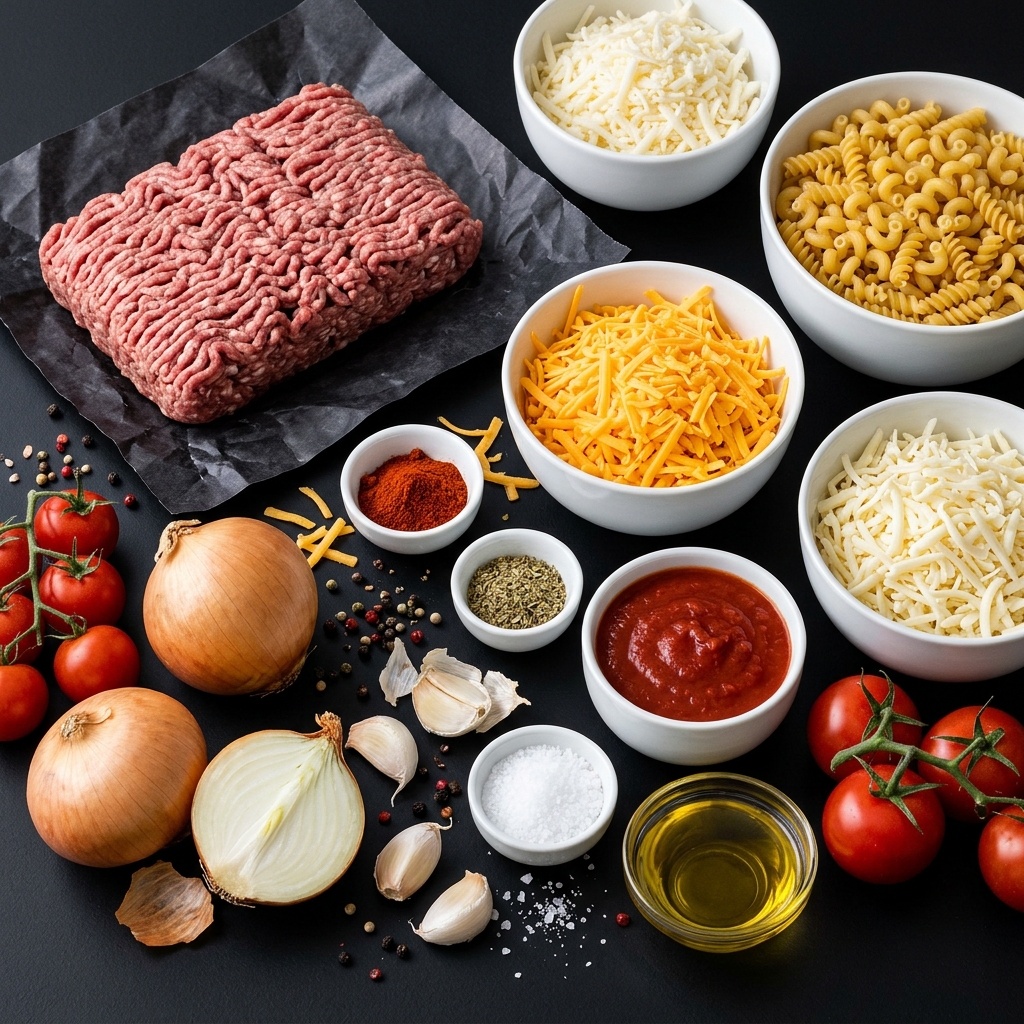
Ingredients for Easy Ground Beef Casserole with Cheesy Topping
The beauty of this casserole is that it uses familiar, affordable ingredients to create a hearty, satisfying meal. Each ingredient contributes to the flavor, texture, or cheesy finish that makes this dish so delicious.
Ground Beef
- 1 pound (450 g) lean ground beef
Ground beef is the main protein in this casserole, providing a rich, savory flavor that pairs beautifully with the tomato sauce and cheese. Lean ground beef works particularly well because it delivers plenty of flavor without leaving too much grease in the baking dish. If you use regular ground beef with a higher fat content, drain the excess fat after browning.
Pasta
- 8 ounces (225 g) uncooked elbow macaroni, rotini, or penne
Pasta makes the casserole hearty and helps absorb the flavorful sauce. Elbow macaroni gives the dish a classic, homestyle feel, while rotini and penne are excellent choices because their shapes hold onto the sauce. Choose a sturdy pasta shape that will maintain its texture during baking.
Shredded Cheddar Cheese
- 1 1/2 cups (about 170 g) shredded cheddar cheese
Cheddar provides a bold, savory flavor and a beautiful golden finish. Medium or sharp cheddar works especially well because its flavor stands out against the beef and tomato sauce.
For the smoothest melting, shred the cheese from a block when possible. Pre-shredded cheese is convenient, but its anti-caking coating can sometimes make the melted texture less smooth.
Shredded Mozzarella Cheese
- 1 cup (about 110 g) shredded mozzarella cheese
Mozzarella contributes the soft, stretchy, melted cheese texture that makes every serving look tempting. Combined with cheddar, it creates a balanced topping with both rich flavor and excellent meltability.
Tomato Sauce
- 1 can (15 ounces or 425 g) tomato sauce
- 1 can (14.5 ounces or 411 g) diced tomatoes, drained slightly if very watery
Tomato sauce gives the casserole moisture and a rich, savory base. Diced tomatoes add little bursts of tomato flavor and texture, making the filling more interesting.
If you prefer a smoother casserole, use additional tomato sauce instead of diced tomatoes. Choose plain or lightly seasoned tomato products so you can control the final flavor.
Onion and Garlic
- 1 medium yellow onion, finely diced
- 3 garlic cloves, minced
Onion adds sweetness and depth, while garlic creates an aromatic foundation for the beef filling. Cooking them with the browned beef helps their flavors blend into the sauce rather than leaving them sharp or raw-tasting.
Olive Oil
- 1 tablespoon olive oil, if needed
A small amount of olive oil helps soften the onion and garlic if the beef does not release enough fat. You may not need it when using ground beef with a higher fat content.
Italian Seasoning
- 1 teaspoon Italian seasoning
This herb blend adds a familiar savory flavor that complements the tomato sauce and cheese. If your tomato sauce is already seasoned, adjust the amount to avoid making the casserole overly herbal.
Paprika
- 1 teaspoon paprika
Paprika adds gentle warmth, color, and a subtle earthy flavor. Sweet paprika is ideal for a family-friendly version, while smoked paprika gives the casserole a deeper, smoky note.
Salt and Black Pepper
- 1 teaspoon salt, or to taste
- 1/2 teaspoon freshly ground black pepper
These basic seasonings bring out the flavor of the beef, tomatoes, and cheese. Start with the suggested amounts and adjust after tasting the sauce, especially if your canned tomatoes or cheese are already salty.
Beef Broth
- 1/2 cup (120 ml) beef broth
Beef broth adds extra savory depth and helps keep the filling moist during baking. If your tomato sauce is already quite thin, reduce the broth slightly to prevent a watery casserole.
Optional Ingredients
- 1/2 teaspoon red pepper flakes for a little heat
- 1 teaspoon Worcestershire sauce for extra savory depth
- 1/2 teaspoon onion powder for a more pronounced onion flavor
- 1/2 cup diced bell pepper for extra color and sweetness
- 2 tablespoons chopped fresh parsley for garnish
These additions are optional, so use the ones that best suit your family’s preferences.
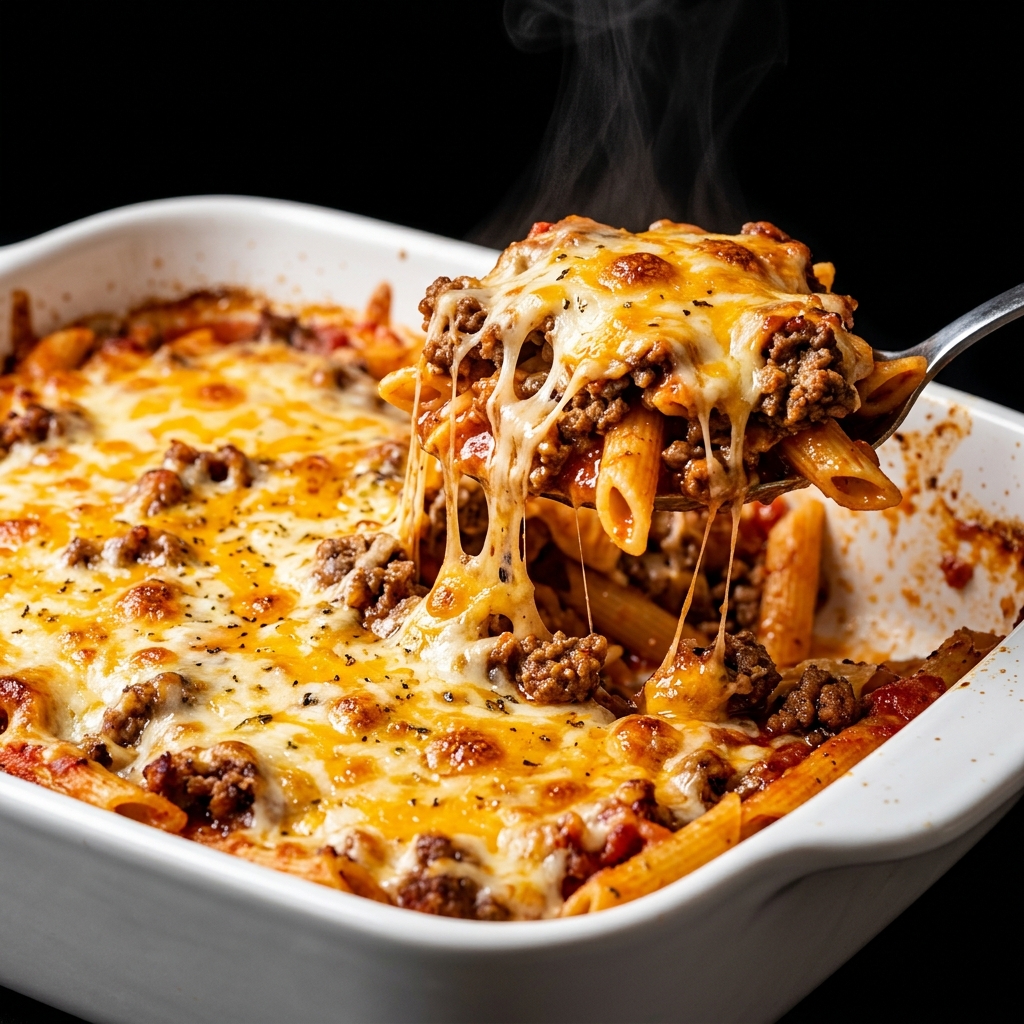
How to Make Easy Ground Beef Casserole with Cheesy Topping
Making this casserole involves a few straightforward steps: preparing the pasta, building a flavorful beef sauce, combining everything, and baking it beneath a generous layer of cheese. Taking a little care with each stage helps prevent dry pasta, greasy filling, or a watery finished dish.
Step 1: Preheat the Oven and Prepare Your Baking Dish
Preheat your oven to 375°F (190°C).
Lightly grease a medium-sized casserole dish, approximately 9 by 13 inches, with a little olive oil or nonstick cooking spray. This helps prevent the pasta and cheese from sticking to the sides and makes serving easier.
Choose a baking dish large enough to hold the entire mixture without filling it right to the rim. Leaving a little room at the top helps prevent bubbling sauce from spilling into the oven.
While the oven heats, prepare your ingredients. Dice the onion, mince the garlic, measure the seasonings, and shred the cheeses if you are using a block.
Having everything ready before you begin cooking makes the process smoother and helps prevent the beef from overcooking while you search for ingredients.
Step 2: Cook the Pasta Until Just Shy of Tender
Bring a large pot of salted water to a boil. Add the pasta and cook it according to the package instructions, reducing the cooking time by about two minutes.
The goal is to make the pasta slightly firmer than you would normally serve it. It will continue cooking in the oven as it absorbs moisture from the sauce.
Overcooked pasta can become soft and mushy after baking, particularly when combined with a warm sauce. Starting with pasta that is still slightly firm helps it retain a pleasant bite.
Once cooked, drain the pasta thoroughly. Avoid rinsing it unless your pasta package specifically recommends doing so, as rinsing can remove surface starch that helps the sauce cling to the pasta.
Set the drained pasta aside while you prepare the beef filling.
Step 3: Brown the Ground Beef
Place a large skillet over medium-high heat. Add the ground beef and break it into small pieces with a wooden spoon or spatula.
Cook for approximately 6–8 minutes, stirring occasionally, until the beef is thoroughly browned and no pink remains. For food safety, ground beef should reach an internal temperature of 160°F (71°C).
Allowing the meat to brown properly is an important step. When ground beef has enough contact with the hot skillet, it develops flavorful browned bits that give the finished casserole a deeper, more satisfying taste.
Avoid overcrowding the skillet. If your pan is too small, brown the beef in batches so it sears rather than steams.
If the beef releases a large amount of fat, carefully drain the excess before continuing. Leaving a little fat behind helps carry the flavor of the seasonings, but too much can make the casserole greasy.
Step 4: Add the Onion and Garlic
Add the diced onion to the browned beef and cook for approximately 3–4 minutes, stirring regularly, until it begins to soften.
Stir in the minced garlic and cook for another 30–60 seconds. Garlic cooks quickly, so avoid leaving it in the hot skillet for too long, as burnt garlic can make the entire sauce taste bitter.
If the skillet looks dry, add a small amount of olive oil. Otherwise, the fat remaining from the beef should be enough to cook the vegetables.
At this stage, the kitchen should begin to smell wonderfully savory, with the sweetness of the onion and aroma of garlic combining with the browned meat.
Step 5: Build the Rich Tomato and Beef Sauce
Add the tomato sauce, diced tomatoes, beef broth, Italian seasoning, paprika, salt, black pepper, and any optional Worcestershire sauce or red pepper flakes.
Stir thoroughly, scraping up the browned bits from the bottom of the skillet. Those bits contain concentrated flavor that helps make the sauce taste as though it has been cooking for much longer.
Bring the mixture to a gentle simmer, then reduce the heat to medium-low. Let it cook for approximately 5–8 minutes, stirring occasionally.
This short simmer allows the flavors to blend and gives some of the excess liquid time to evaporate. The sauce should be thick enough to coat the beef but still moist enough to combine easily with the pasta.
Taste the sauce before proceeding. Add more salt or pepper if needed, remembering that the cheese topping will contribute additional saltiness.
If the sauce looks too thick, add a small splash of broth. If it appears too thin, simmer it for a few additional minutes without a lid.
Step 6: Combine the Pasta and Beef Sauce
Add the cooked pasta to the skillet if it is large enough, or transfer both the pasta and beef sauce to a large mixing bowl.
Stir gently until the pasta is evenly coated with the sauce and the browned beef is distributed throughout the mixture.
Make sure there are no large pockets of plain pasta or clumps of ground beef. Even distribution ensures that each serving contains a satisfying combination of meat, pasta, and sauce.
If the mixture appears slightly wetter than expected, do not worry too much. The pasta will absorb some of the moisture as the casserole bakes. However, it should not be swimming in liquid.
Taste a small spoonful and adjust the seasoning if necessary.
Step 7: Transfer the Mixture to the Casserole Dish
Spoon the beef and pasta mixture into the prepared baking dish. Spread it into an even layer using the back of a spoon.
An even layer is important because it helps the casserole heat consistently. It also ensures that the cheese topping covers the entire surface instead of leaving some areas exposed.
If you notice a little sauce remaining in the skillet, scrape it over the pasta rather than leaving it behind. This extra sauce helps keep the top layer moist during baking.
Gently press down any pasta pieces sticking up above the mixture so they do not dry out before the cheese melts.
Step 8: Add the Cheesy Topping
In a small bowl, combine the shredded cheddar and mozzarella cheese.
Sprinkle the mixture evenly over the casserole, making sure to cover the surface from edge to edge. Use a little extra cheese around the edges if you enjoy the delicious golden crust that develops where the cheese meets the baking dish.
Cheddar provides the rich, savory flavor, while mozzarella contributes a stretchy, gooey texture. Together, they create a topping that is both visually appealing and delicious.
For a more pronounced cheese flavor, you can add a small amount of grated Parmesan to the mixture.
Avoid pressing the cheese firmly into the pasta. Let it sit loosely on top so it can melt into a soft, bubbling layer.
Step 9: Bake Until Hot and Golden
Place the casserole in the preheated oven and bake uncovered for approximately 20–25 minutes.
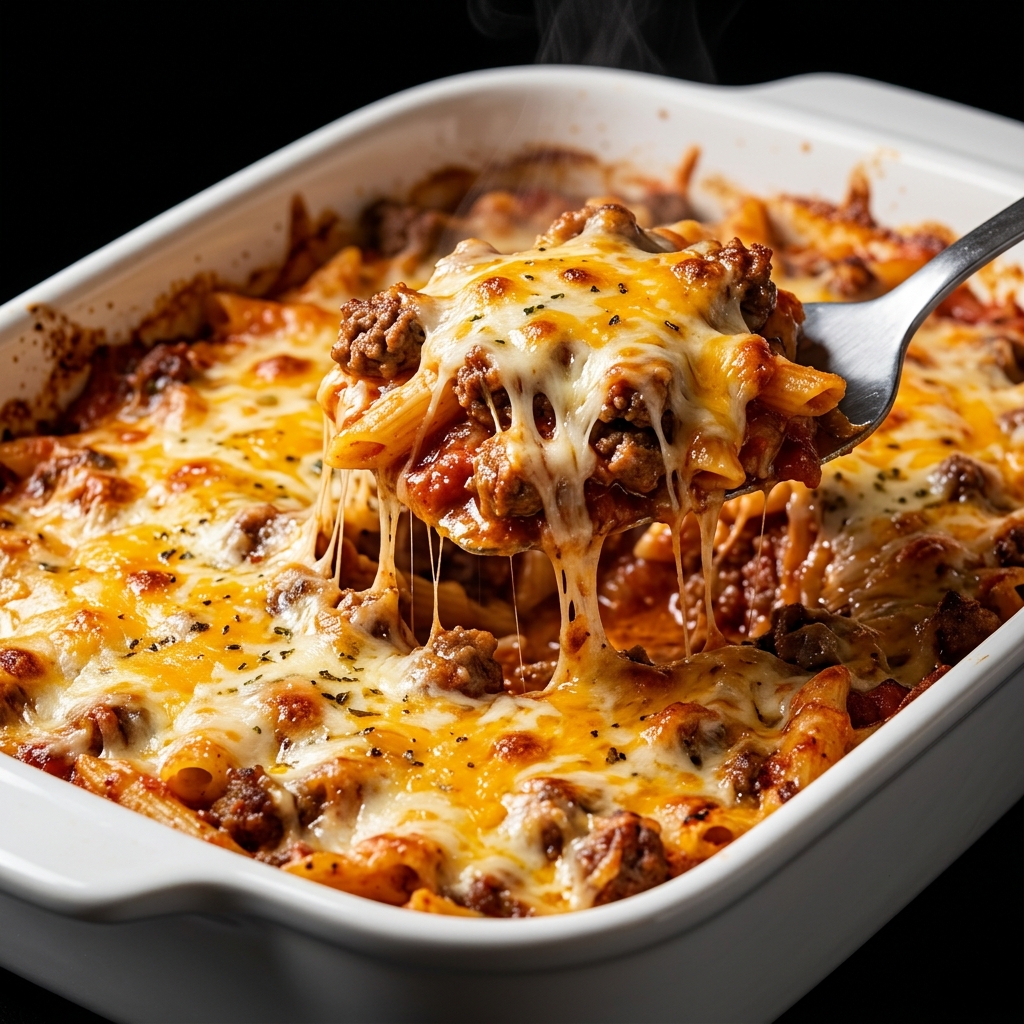
The casserole is ready when the filling is bubbling around the edges, the cheese is completely melted, and the top has developed attractive golden-brown spots.
If you prefer a more deeply browned topping, switch the oven to broil for the final 1–2 minutes, watching it carefully the entire time. Cheese can go from beautifully golden to burnt very quickly under a broiler.
If your casserole has been assembled with cold ingredients, it may require additional baking time. Check that the center is thoroughly heated before serving.
Avoid baking it for much longer than necessary. Excessive baking can dry out the filling, toughen the exposed pasta, and cause the cheese to become oily.
Step 10: Rest, Garnish, and Serve
Remove the casserole from the oven and let it rest for approximately 5–10 minutes before serving.
This resting period allows the sauce to settle and makes it easier to scoop neat portions without the filling spreading across the plate.
If desired, sprinkle chopped fresh parsley over the top for a fresh touch of color. The green herbs contrast beautifully with the golden cheese and rich red tomato sauce.
Serve the casserole while it is warm, when the cheese is still soft and stretchy and the beef filling is rich and flavorful.
For an attractive presentation, use a large serving spoon to lift portions that show the pasta, beef, sauce, and melted cheese together. That combination of textures is part of what makes this dish so appealing.
Recipe Variations to Try
One of the best things about ground beef casserole is how easily you can adapt it to different tastes, ingredients, and family preferences. The basic recipe is delicious on its own, but these variations give you several ways to make it your own.
1. Cheesy Ground Beef and Rice Casserole
Replace the pasta with cooked rice for a different texture and a slightly more compact casserole.
Use approximately 3 cups of cooked rice in place of the uncooked pasta, adjusting the amount of sauce as necessary. Since the rice is already cooked, you will not need the pasta-boiling step.
Long-grain white rice works well, while brown rice offers a nuttier flavor and firmer texture. Make sure the rice is cooked before combining it with the beef sauce.
For the best result, avoid adding too much broth, as cooked rice can become overly soft when baked in a watery mixture.
2. Ground Beef and Vegetable Casserole
Add vegetables to make the casserole more colorful and introduce extra flavor and texture.
Diced bell peppers, sliced mushrooms, grated carrots, spinach, and zucchini are all good options. Cook firmer vegetables such as carrots, peppers, and mushrooms with the onion before adding the sauce.
If using spinach, stir it into the hot beef mixture until wilted. For zucchini, remove excess moisture or cook it briefly before combining it with the other ingredients.
Vegetables can release water during baking, so avoid adding too many watery ingredients without adjusting the sauce.
3. Spicy Cheesy Ground Beef Casserole
If you enjoy a little heat, give the beef filling a spicy twist.
Add red pepper flakes, cayenne pepper, or finely diced jalapeños to the beef mixture. A small amount of chili powder can also add warmth and a deeper savory flavor.
For an even bolder topping, combine cheddar with pepper jack cheese. This variation works particularly well for adults who enjoy spicy comfort food.
Start with a modest amount of chili seasoning and adjust it to taste, especially if you are serving children or people who prefer milder meals.
4. Creamy Ground Beef Casserole
For a richer, creamier version, stir 2–4 ounces of softened cream cheese into the warm beef sauce before combining it with the pasta.
You can also add a small amount of sour cream, although it is best stirred in after the sauce has cooled slightly to reduce the chance of separation.
The result is a smoother, creamier filling that contrasts beautifully with the golden cheese topping.
Keep the sauce over low heat when incorporating dairy, and avoid boiling it vigorously after adding cream cheese.
5. Mexican-Inspired Ground Beef Casserole
Give the casserole a Mexican-inspired flavor by replacing the Italian seasoning with cumin, chili powder, and a little smoked paprika.
Add black beans, corn, and diced bell peppers if desired. You can also use a tomato-based salsa in place of some of the tomato sauce.
Top the casserole with cheddar, Monterey Jack, or a Mexican-style cheese blend. Serve it with fresh cilantro, sliced jalapeños, or a spoonful of sour cream.
This variation offers a different flavor profile while keeping the same comforting, baked-casserole format.
6. Low-Carb Ground Beef Casserole
For a lower-carbohydrate alternative, replace the regular pasta with chopped cauliflower or a suitable low-carbohydrate vegetable base.
Cook the cauliflower until just tender, then drain it thoroughly before combining it with the beef sauce. Use a moderate amount of tomato sauce and check its carbohydrate content on the label.
Finish with cheddar and mozzarella as usual.
The texture will be different from the original pasta casserole, but the beef, tomato, and cheese combination can still create a hearty meal.
To make the dish suitable for a ketogenic diet, carefully control the total carbohydrate content of the ingredients and portions. Simply replacing pasta does not automatically guarantee that the finished recipe meets your chosen keto limits.
7. Gluten-Free Ground Beef Casserole
To make this casserole gluten-free, replace the regular pasta with certified gluten-free pasta.
Check the labels on the beef broth, tomato products, Worcestershire sauce, seasoning blends, and any other packaged ingredients to confirm that they are suitable for a gluten-free diet.
Cook gluten-free pasta according to the package directions, checking it early so it does not become too soft. Some varieties break down more easily during baking, so choosing a sturdy shape can help.
Use clean cookware and utensils if the dish is being prepared for someone who must avoid gluten.
8. Extra-Cheesy Ground Beef Casserole
If the cheese topping is your favorite part, increase the total shredded cheese to approximately 3 cups.
Use a combination of cheddar, mozzarella, and a small amount of Parmesan for a rich, savory finish.
For an especially attractive top, reserve a little cheddar and sprinkle it over the mozzarella during the final few minutes of baking.
Keep in mind that adding more cheese can make the casserole richer and saltier, so adjust the seasoning and portion sizes accordingly.
Expert Tips for the Best Ground Beef Casserole
A few small details can make a noticeable difference in the flavor, texture, and appearance of your finished casserole.
Do Not Overcook the Pasta
This is one of the most important tips for a pasta-based casserole. The pasta continues absorbing moisture while baking, so cooking it fully before it enters the oven can leave you with a soft, mushy result.
Stop cooking it about two minutes before the package’s recommended time, then drain it thoroughly.
Brown the Beef Properly
Good browning develops a deeper, more savory flavor. Let the meat sit against the hot skillet for short periods before stirring so it has time to develop browned spots.
If the skillet becomes crowded and the meat begins releasing liquid, cook it in batches instead.
Keep the Sauce Moist but Not Watery
A casserole needs enough sauce to prevent the pasta from drying out, but excess liquid can make the finished dish loose and soupy.
Simmer the beef sauce until it thickens slightly before combining it with the pasta. Remember that the pasta will absorb some liquid as it bakes.
Shred Cheese Fresh When Possible
Freshly shredded cheese generally melts more smoothly than some pre-shredded varieties. A mixture of cheddar and mozzarella gives you a satisfying balance of flavor and stretch.
For the best texture, distribute the cheese evenly rather than piling it heavily into the center.
Let the Casserole Rest Before Serving
It can be tempting to scoop into the casserole immediately, especially when the cheese is bubbling and smells wonderful. However, allowing it to rest for 5–10 minutes helps the sauce settle and makes serving easier.
The short wait also helps prevent the filling from sliding apart when you lift a portion onto a plate.
Season in Layers
Season the beef as it browns, then taste the sauce before adding the pasta. This allows the flavors to develop throughout the dish rather than leaving the casserole bland in the center.
Because cheddar, broth, and packaged tomato products can contain varying amounts of sodium, add salt gradually and taste as you go.
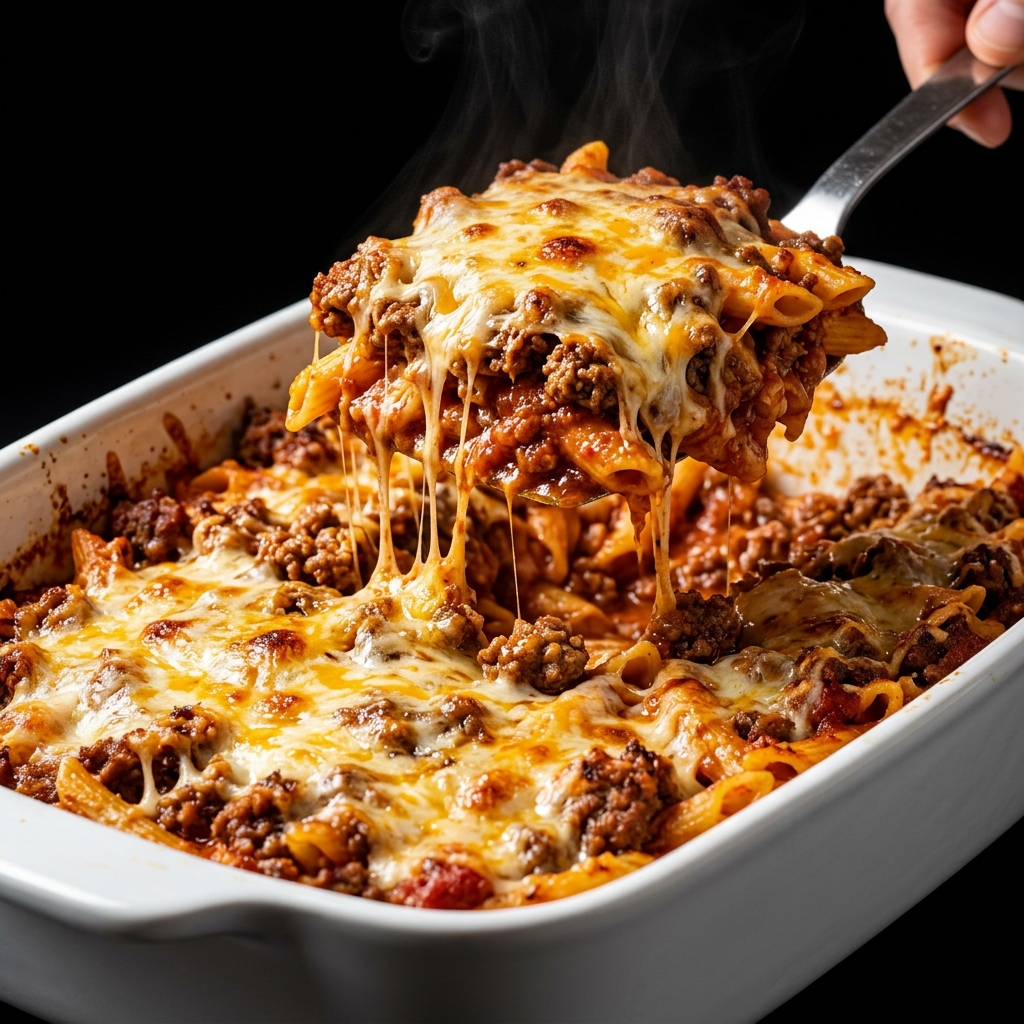
What to Serve with Easy Ground Beef Casserole with Cheesy Topping
This casserole is a filling main dish, so simple side dishes that provide freshness, crunch, or a contrasting flavor work particularly well.
1. Fresh Green Salad
A crisp green salad is one of the easiest ways to balance the richness of the beef and cheese. Combine lettuce, cucumber, tomatoes, and thinly sliced red onion, then finish with a light vinaigrette.
The fresh vegetables and slightly tangy dressing provide a refreshing contrast to the warm casserole.
2. Garlic Bread
Garlic bread is an excellent choice if you want a comforting, satisfying dinner. Its crisp edges and buttery garlic flavor pair beautifully with the tomato-based sauce.
Serve the bread warm so it can be used to scoop up any sauce left on the plate.
3. Steamed Green Beans
Lightly steamed green beans provide a simple vegetable side without competing with the main dish.
Season them with a little black pepper, olive oil, or lemon juice. Cook them until tender but still slightly crisp to maintain their texture.
4. Roasted Broccoli
Roasted broccoli develops lightly browned edges and a deeper flavor that complements the cheesy topping.
Toss broccoli florets with olive oil, salt, and pepper, then roast until tender with some crisp edges. A little lemon juice added after roasting brightens the flavor.
5. Roasted Carrots
Roasted carrots provide natural sweetness and vibrant color. Toss them with olive oil and a little black pepper, then roast until tender and lightly caramelized.
Their mild sweetness works particularly well with the savory beef and tomato sauce.
6. Steamed or Roasted Asparagus
Asparagus is a good option when you want a lighter side dish. Steam or roast it until tender, then season with black pepper and a squeeze of lemon juice.
Its fresh flavor helps balance the casserole’s rich cheese topping.
7. Sautéed Mushrooms
For mushroom lovers, sautéed mushrooms make a savory companion to the beef filling.
Cook sliced mushrooms in a skillet with a little olive oil or butter until their moisture evaporates and their edges begin to brown. Finish with garlic and black pepper for extra flavor.
8. Simple Cucumber and Tomato Salad
A quick salad of sliced cucumber, ripe tomatoes, and red onion is refreshing and easy to prepare while the casserole bakes.
Dress it with olive oil, lemon juice or vinegar, salt, and pepper. The bright, fresh flavors contrast nicely with the warm, cheesy main dish.
9. Roasted Zucchini
Roasted zucchini is another simple vegetable side that works well with this meal. Cut it into thick slices or half-moons, toss with olive oil and seasoning, and roast until tender with lightly browned edges.
Avoid overcooking it, as zucchini can become watery and soft.
Frequently Asked Questions
1. Can I Make Easy Ground Beef Casserole with Cheesy Topping Ahead of Time?
Yes. You can prepare the beef sauce, cook the pasta slightly underdone, and combine the ingredients in the baking dish ahead of time.
For the best texture, allow the mixture to cool before covering and refrigerating it. You can add the cheese topping just before baking or add it during assembly if you prefer.
Bake the refrigerated casserole until it is thoroughly heated in the center and bubbling around the edges. It will usually need more time than a freshly assembled casserole, so check the center rather than relying on the original baking time alone.
For food safety, refrigerate perishable ingredients promptly and use the prepared casserole within three to four days.
2. Can I Use Different Types of Pasta?
Absolutely. Elbow macaroni, rotini, penne, and shells are all suitable options.
Short pasta shapes are generally easier to serve in a casserole because they mix evenly with the ground beef and sauce. Choose a sturdy variety that holds its shape after baking.
If you use a different pasta shape, check its cooking time and remove it from the water before it becomes completely tender.
3. Why Is My Ground Beef Casserole Watery?
A watery casserole can result from excess broth, thin tomato sauce, or vegetables releasing too much moisture during baking.
To prevent this, simmer the sauce until it thickens slightly, drain excess fat and liquid from the beef as needed, and avoid adding too much broth.
If you use vegetables such as zucchini or mushrooms, cook them briefly before adding them to the filling so some of their moisture can evaporate.
4. How Do I Keep the Cheese Topping Golden and Delicious?
Use a combination of cheddar and mozzarella, spread it evenly over the casserole, and bake uncovered.
If you want more browning, briefly broil the casserole at the end, watching it closely. Do not leave it unattended, because the cheese can burn quickly.
Freshly shredded cheese can also help produce a smoother, more appealing melt.
5. Can I Freeze Ground Beef Casserole?
Yes. Allow the cooked casserole to cool, then divide it into suitable portions and place them in airtight, freezer-safe containers.
For best quality, use it within two to three months. Thaw it in the refrigerator before reheating, or reheat from frozen with additional time as needed.
The pasta may become slightly softer after freezing and thawing, but the casserole should still be enjoyable.
6. How Should I Store Leftovers?
Transfer leftovers to shallow, airtight containers and refrigerate them within two hours of cooking, or within one hour if the surrounding temperature is above 90°F (32°C).
Refrigerated leftovers should generally be eaten within three to four days. Reheat them until the center reaches 165°F (74°C).
For individual portions, the microwave is convenient. Add a small splash of broth or water if the pasta looks dry, cover loosely, and heat in intervals, stirring when possible.
7. Can I Make This Casserole Without Tomato Sauce?
Yes. You can replace the tomato-based sauce with a creamy sauce made from beef broth, milk or cream, and a small amount of flour or cornstarch as a thickener.
Season it with garlic, black pepper, and a little Worcestershire sauce if desired. Combine it with the cooked beef and pasta, then add the cheese topping.
If you use flour, the dish will not be gluten-free unless you choose an appropriate gluten-free alternative.
8. What Is the Best Cheese for Ground Beef Casserole?
Cheddar and mozzarella make an excellent combination. Cheddar provides a rich, pronounced flavor, while mozzarella melts into a soft, stretchy layer.
Monterey Jack is another good option for a mild, creamy topping, while Parmesan can add a salty, savory finish.
For the best results, use cheeses that melt well and adjust the combination to your taste.
9. Can I Make This Recipe Without Pasta?
Yes. You can substitute cooked rice, roasted potatoes, or cauliflower for the pasta.
Each alternative changes the cooking method and texture slightly. Cook rice or potatoes before assembling the casserole, and cook cauliflower until just tender while removing excess moisture.
If you want a lower-carbohydrate version, cauliflower is a useful alternative, but check the sauce and other ingredients to make sure the finished dish fits your dietary goals.
10. How Can I Tell When the Casserole Is Fully Cooked?
The cheese should be melted, the edges should be bubbling, and the center should be thoroughly hot.
If you assembled the casserole using warm ingredients, it may finish within the suggested baking time. A refrigerated or partially frozen casserole will need longer.
For the most reliable result, check that the center reaches at least 165°F (74°C) when reheating a previously cooked casserole. For a freshly assembled casserole, make sure all components are thoroughly heated and the ground beef was cooked safely before assembly.
11. Is Ground Beef Casserole Suitable for Meal Prep?
Yes. This casserole is convenient for meal prep because it can be portioned into individual servings and reheated throughout the week.
Pair each portion with a vegetable side or a fresh salad to create a balanced meal. If you plan to freeze portions, use freezer-safe containers and label them with the preparation date.
For the best texture, avoid overcooking the pasta during the initial preparation.
12. Can I Make This Casserole Less Greasy?
Yes. Start with lean ground beef and drain excess fat after browning. You can also blot excess grease from the skillet with a paper towel, taking care not to leave the pan unattended or handle hot fat carelessly.
Avoid adding unnecessary oil if the beef already releases enough fat to cook the onion and garlic.
Choosing a cheese combination that melts smoothly without an excessive amount of added fat can also help keep the final dish from feeling too heavy.
13. What Makes This Casserole a Good Family Dinner?
It combines familiar ingredients, offers plenty of flavor, and can be prepared in one baking dish after the pasta and sauce are cooked.
The recipe is easy to adapt to different preferences, and the ingredients are generally accessible at most grocery stores. You can also prepare the components ahead of time to make dinner more manageable on busy evenings.
Serve it with a fresh vegetable side or salad for a satisfying meal that brings comforting flavors to the table.
14. Can I Use Ground Turkey Instead of Ground Beef?
Yes. Ground turkey can replace the ground beef in the same general quantity.
Because ground turkey is often leaner, you may need a little olive oil to cook the onion and garlic. Season the filling well, since turkey has a milder flavor than beef.
Cook ground turkey to an internal temperature of 165°F (74°C), then continue with the remaining steps as directed.
15. How Can I Make the Casserole Look More Appealing for Serving?
For an attractive presentation, use a clean, modern white baking dish that contrasts with the golden cheese and red tomato sauce.
Let the casserole rest briefly before serving, then scoop portions that reveal the beef, pasta, sauce, and melted cheese in each serving. Finish with a small sprinkle of fresh parsley if desired.
If photographing the dish for a recipe blog or Pinterest, capture a close-up of the browned cheese and a serving being lifted from the casserole. This highlights the texture and makes the dish look especially inviting.
A Comforting Dinner Worth Making Again
Easy Ground Beef Casserole with Cheesy Topping proves that a satisfying homemade dinner does not need complicated ingredients or elaborate preparation. With savory ground beef, tender pasta, rich tomato sauce, and a golden blanket of melted cheese, it brings together the flavors and textures that make comfort food so appealing.
Whether you prepare it for a busy weeknight, a relaxed family dinner, or a meal you can portion for later, this casserole is practical, versatile, and full of flavor. Follow the simple steps, avoid overcooking the pasta, season the sauce carefully, and give the cheese enough time to become beautifully golden.
Serve it warm with a crisp salad or roasted vegetables, save the leftovers for another meal, and experiment with the variations to find the version your household loves most.
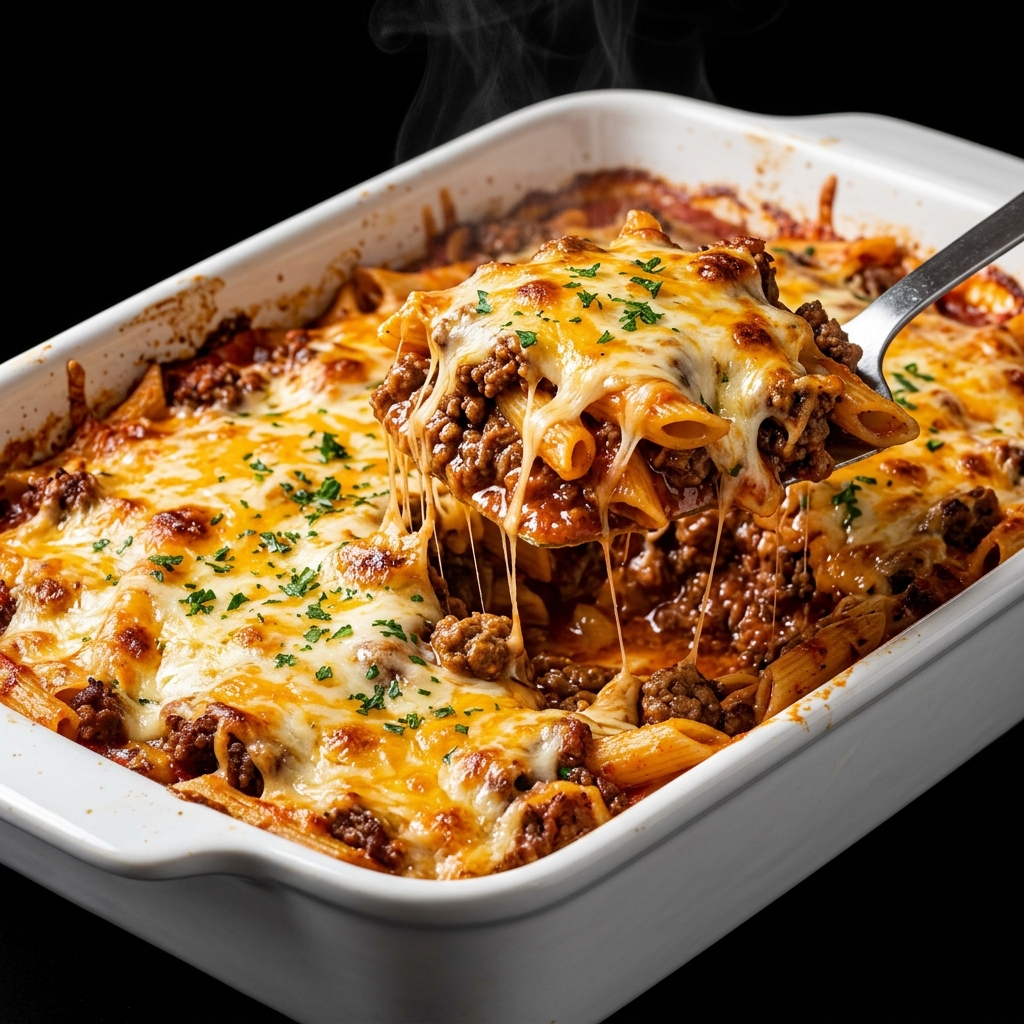
Easy Ground Beef Casserole with Cheesy Topping
Ingredients
Equipment
Method
- Preheat the oven to 375°F (190°C). Lightly grease a 9 × 13-inch casserole dish.
- Bring a large pot of salted water to a boil. Cook the pasta for about 2 minutes less than the package directions recommend. Drain and set aside.
- In a large skillet over medium-high heat, brown the ground beef for 6–8 minutes, breaking it into small pieces. Cook until no pink remains and the beef reaches 160°F (71°C). Drain excess fat if necessary.
- Add the diced onion and cook for 3–4 minutes until softened. Stir in the minced garlic and cook for another 30–60 seconds.
- Add the tomato sauce, diced tomatoes, beef broth, Italian seasoning, paprika, salt, black pepper, and optional Worcestershire sauce and red pepper flakes. Stir well.
- Simmer the beef sauce over medium-low heat for 5–8 minutes, stirring occasionally, until slightly thickened. Taste and adjust the seasonings.
- Add the drained pasta to the skillet or a large mixing bowl. Stir until the pasta is evenly coated with the beef sauce.
- Transfer the mixture to the prepared casserole dish and spread it evenly.
- Combine the shredded cheddar and mozzarella cheese, then sprinkle evenly over the casserole.
- Bake uncovered for 20–25 minutes, or until the filling is bubbling and the cheese is melted and golden. Broil for 1–2 additional minutes if desired, watching carefully.
- Remove from the oven and let the casserole rest for 5–10 minutes before serving.
- Garnish with fresh parsley if desired and serve warm.
Notes


Emma Carter is a passionate home cook and recipe creator who loves making delicious, simple meals everyone can enjoy. She shares easy recipes, helpful cooking tips, and inspiring food ideas to make everyday cooking more enjoyable.