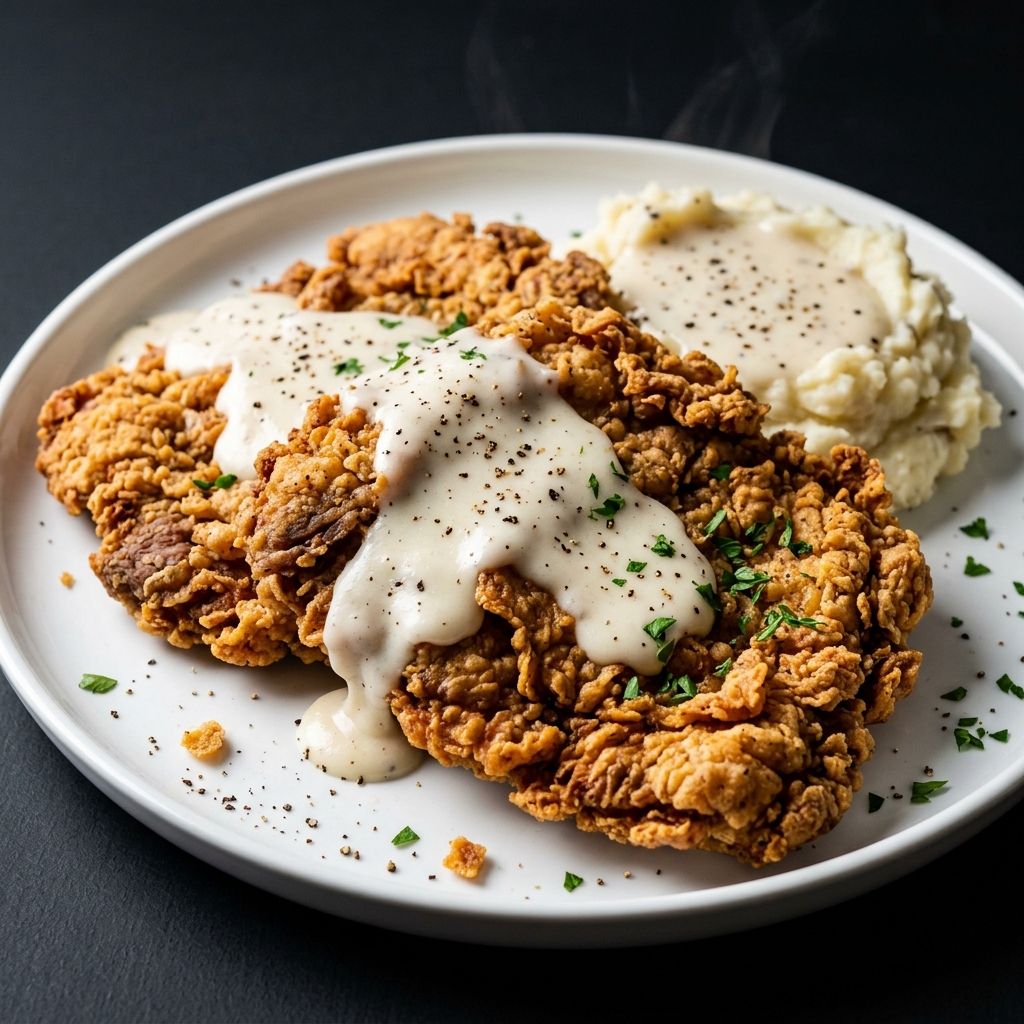
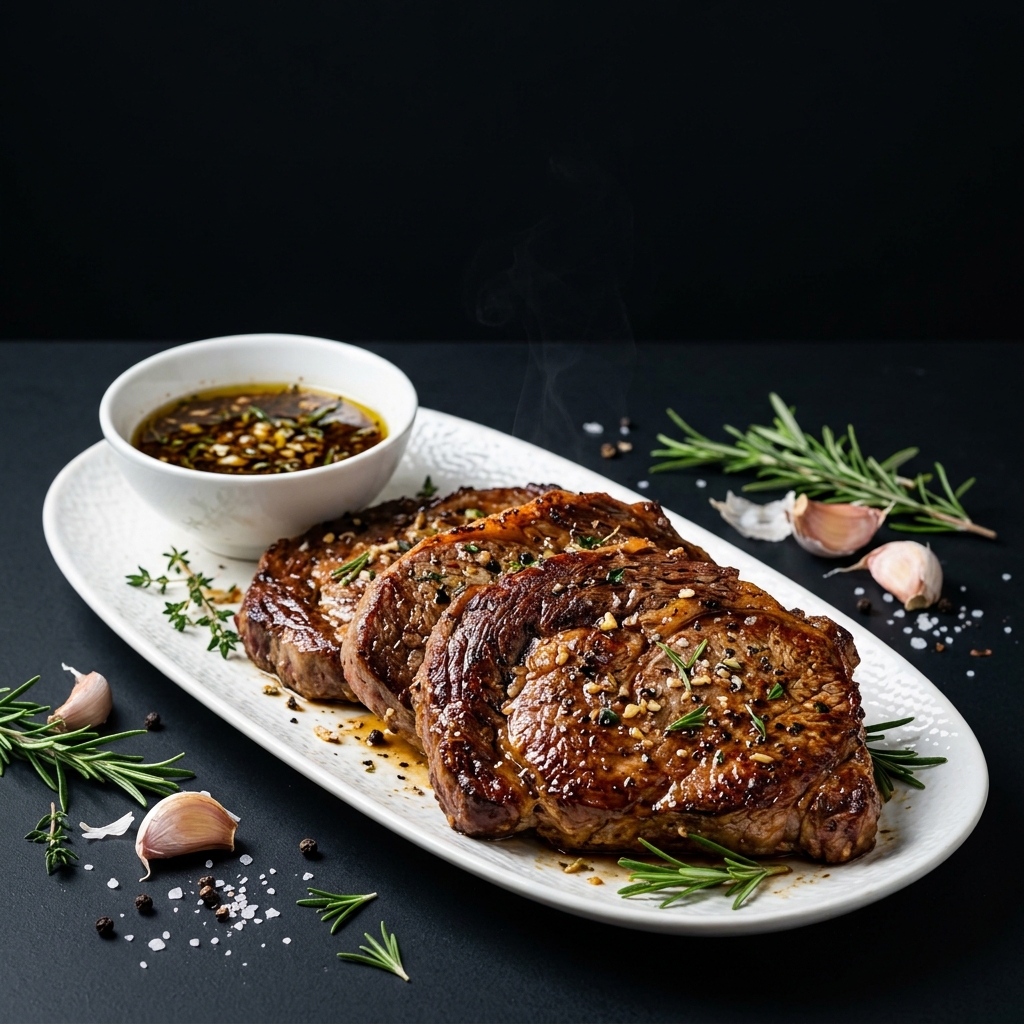
Want to turn an ordinary steak into a juicy, tender, restaurant-quality meal bursting with flavor? This easy steak marinade recipe combines olive oil, garlic, savory seasonings, and fresh herbs to give your favorite cut of beef a delicious boost. Whether you’re preparing steak for a backyard barbecue, a special dinner, or a quick weeknight meal, this simple homemade marinade will help you create flavorful steak worth making again and again.
Ingredients for Steak Marinade
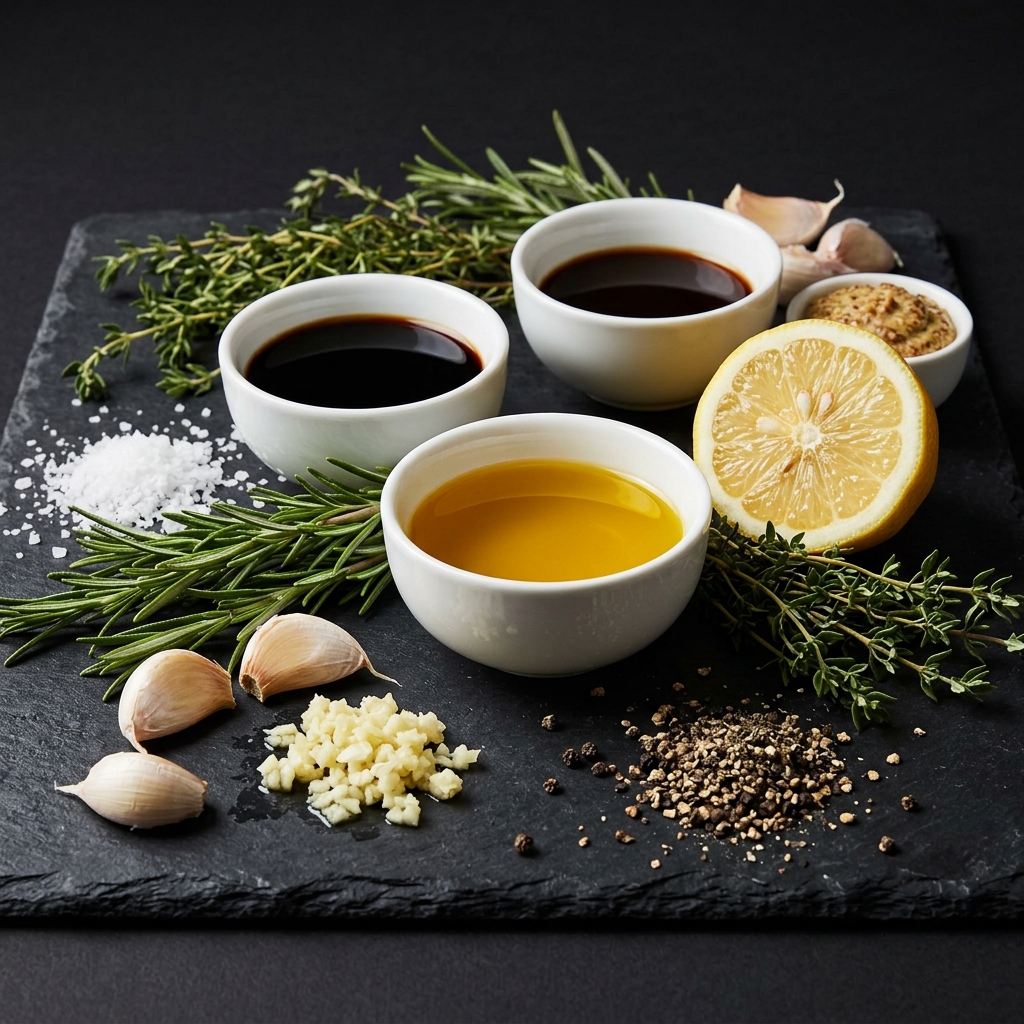
The secret to a great steak marinade is using ingredients that complement the natural flavor of beef rather than overpowering it. Each ingredient in this recipe serves a purpose, from adding moisture and savory depth to providing a fresh, aromatic finish.
1. Olive Oil
Olive oil forms the base of the marinade, helping distribute the seasonings across the surface of the steak. It also contributes a smooth texture and a subtle fruity flavor that pairs beautifully with beef.
Extra-virgin olive oil works well for this recipe, although regular olive oil is equally suitable. Choose whichever you have available in your kitchen.
2. Soy Sauce
Soy sauce adds a deep, savory flavor that makes steak taste richer and more satisfying. It contains salt and naturally occurring savory compounds that help season the meat and complement its beefy character.
Regular soy sauce is a convenient choice, but low-sodium soy sauce gives you more control over the saltiness. If you need a gluten-free marinade, choose certified gluten-free soy sauce or gluten-free tamari.
3. Fresh Garlic
Garlic is one of the most important ingredients in a flavorful steak marinade. Its distinctive aroma and savory taste work especially well with beef, olive oil, and fresh herbs.
Use freshly minced garlic for the strongest, most vibrant flavor. If you only have garlic powder, you can use a smaller amount as a substitute. Fresh garlic creates a slightly different texture, while garlic powder distributes more evenly throughout the marinade.
4. Worcestershire Sauce
Worcestershire sauce adds complexity and a tangy, savory depth that makes the marinade taste more balanced. Its concentrated flavor complements beef particularly well.
A small amount is usually enough because the sauce is already intensely flavored. Check the ingredient label if you have dietary restrictions, as some varieties contain anchovies, and many conventional versions contain ingredients derived from gluten.
5. Fresh Rosemary
Rosemary contributes a fragrant, woodsy aroma that pairs naturally with steak. Its distinctive flavor gives the marinade a classic steakhouse character without requiring complicated seasonings.
Fresh rosemary is ideal, but dried rosemary can also work. Because dried herbs are more concentrated, use less when substituting them for fresh herbs.
6. Fresh Thyme
Thyme adds a gentle herbal flavor that complements rosemary and garlic. It helps create a balanced seasoning blend that tastes aromatic rather than overpowering.
Fresh thyme leaves are particularly convenient because they release their flavor easily into the oil-based marinade.
7. Black Pepper
Freshly cracked black pepper gives the marinade a mild heat and a pleasant earthy aroma. It also balances the savory ingredients and brings out the natural flavor of the beef.
For the best results, use freshly cracked pepper rather than finely powdered pepper. The coarser texture creates a more noticeable peppery character.
8. Sea Salt
Salt enhances the natural flavor of steak and helps season the meat. However, because soy sauce and Worcestershire sauce already contain salt, additional salt should be used carefully.
If you are using regular soy sauce, you may need very little extra salt. Taste the marinade before adding more, keeping in mind that raw marinade should never be tasted after it has contacted raw meat.
9. Lemon Juice
A small amount of fresh lemon juice adds brightness and balances the richness of olive oil. Its acidity helps round out the savory flavors and prevents the marinade from tasting too heavy.
Use lemon juice in moderation. Too much acid or an excessively long marinating time can change the texture of the steak’s surface.
10. Dijon Mustard
Dijon mustard is an optional but useful addition. It contributes a subtle tang and helps the oil and other liquid ingredients combine into a more cohesive marinade.
Its flavor should support the other ingredients rather than dominate them. If you prefer a simpler marinade, you can leave it out.
Ingredient Measurements
For approximately 2 pounds (900 g) of steak, use the following measurements:
- 1/4 cup olive oil
- 1/4 cup soy sauce
- 2 tablespoons Worcestershire sauce
- 4 cloves garlic, minced
- 1 tablespoon fresh lemon juice
- 1 tablespoon Dijon mustard (optional)
- 1 tablespoon fresh rosemary, finely chopped
- 1 teaspoon fresh thyme leaves
- 1 teaspoon freshly cracked black pepper
- 1/2 teaspoon sea salt, or to taste
These quantities provide a balanced combination of savory, herbal, and tangy flavors. You can adjust the seasoning slightly to suit your preferences, especially if you are using a particularly salty soy sauce.
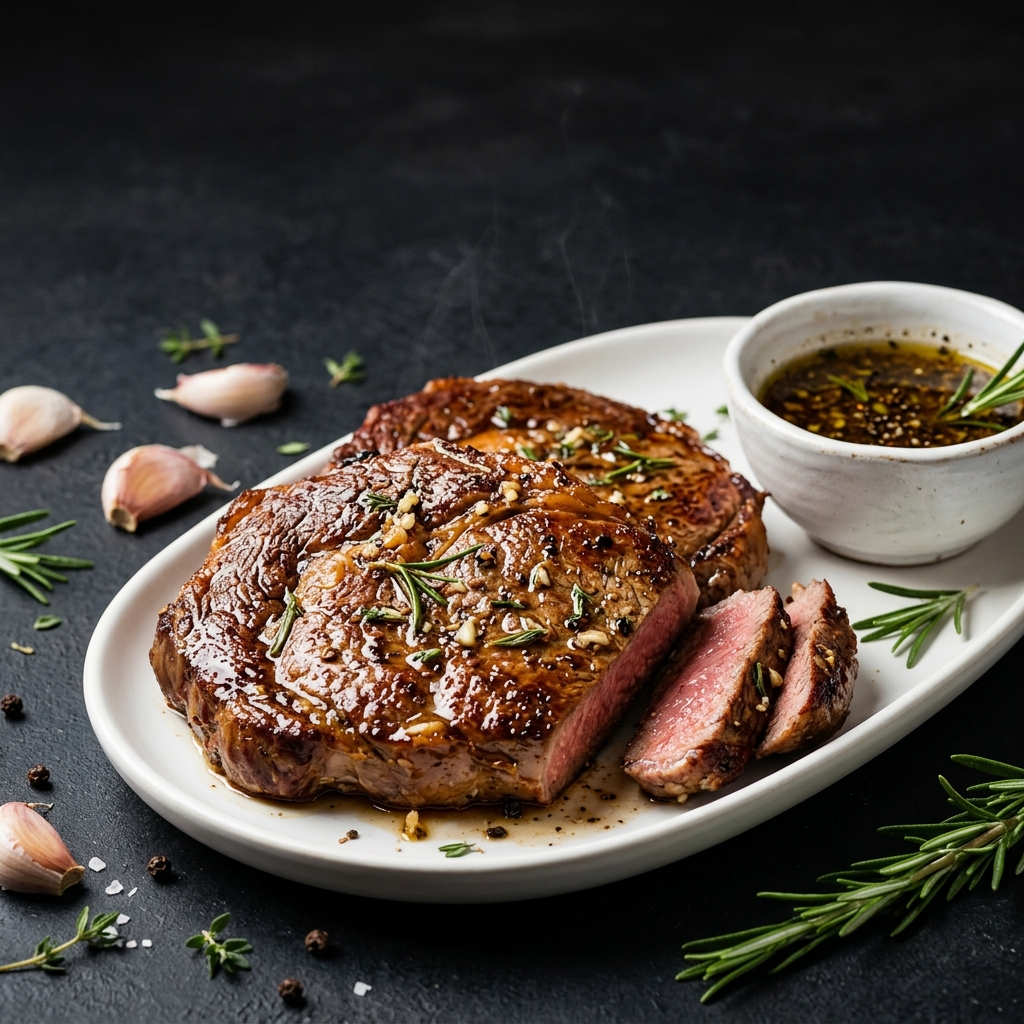
How to Make Steak Marinade
Making steak marinade from scratch is surprisingly simple. You do not need expensive equipment or a long list of specialty ingredients. A bowl, a whisk, and a few fresh ingredients are enough to prepare a flavorful mixture in minutes.
Step 1: Prepare the Ingredients
Start by peeling and mincing the garlic. Finely chop the fresh rosemary and remove the thyme leaves from their woody stems.
Measure the olive oil, soy sauce, Worcestershire sauce, lemon juice, and Dijon mustard. Having everything ready before mixing makes the process easier and helps you maintain consistent proportions.
If your herbs are wet after washing, pat them dry with a clean paper towel. This prevents unnecessary water from diluting the marinade.
Step 2: Combine the Liquid Ingredients
Add the olive oil, soy sauce, Worcestershire sauce, lemon juice, and Dijon mustard to a medium mixing bowl.
Whisk everything together until the ingredients are reasonably well combined. The mixture may separate slightly as it sits, which is normal for a homemade oil-based marinade.
The olive oil provides the rich base, while the soy sauce and Worcestershire sauce contribute savory depth. Lemon juice adds brightness, and Dijon mustard helps bring the mixture together.
Step 3: Add the Garlic and Seasonings
Stir in the minced garlic, chopped rosemary, thyme leaves, and freshly cracked black pepper.
Mix thoroughly so that the herbs and garlic are distributed throughout the liquid. This helps each steak receive a balanced coating instead of leaving most of the seasonings at the bottom of the bowl.
Add the sea salt cautiously. Since soy sauce and Worcestershire sauce are already salty, you may find that you need less than expected.
Your marinade should smell fragrant, savory, and slightly tangy, with the garlic and herbs clearly noticeable.
Step 4: Prepare the Steak
Choose your preferred cut of beef, such as sirloin, ribeye, New York strip, flank steak, or skirt steak.
Pat the steak dry with paper towels before placing it in the marinade. Removing excess surface moisture helps the marinade cling more evenly to the meat.
If you are working with a particularly thick cut, make sure the marinade reaches all sides. There is no need to pierce the steak repeatedly with a fork. Keeping the meat intact helps preserve its natural juices during cooking.
Place the steak in a shallow glass or food-safe container, or use a resealable food-storage bag. Avoid reactive containers made from materials that can react with acidic ingredients.
Step 5: Coat the Steak Evenly
Pour the prepared marinade over the steak, turning the meat so that both sides are covered.
If using a resealable bag, press out excess air before sealing it. Gently massage the bag to distribute the garlic, herbs, and liquid around the meat.
For a container, turn the steak once or twice to ensure even coverage, then cover it securely.
The goal is to coat the meat thoroughly rather than submerge it in an unnecessarily large amount of marinade.
Step 6: Refrigerate and Marinate
Place the covered steak in the refrigerator while it marinates. The appropriate duration depends on the cut and thickness.
For tender cuts such as ribeye, sirloin, and New York strip, approximately 30 minutes to 2 hours is often sufficient to add flavor. For flank or skirt steak, 2 to 6 hours can work well.
You can leave many steaks in this marinade for longer, but because it contains lemon juice, avoid assuming that a longer marinating time always produces better results. Excessive exposure to acidic ingredients may make the surface of the meat mushy.
Keep the steak refrigerated at 40°F (4°C) or below throughout the marinating process. Never leave raw steak marinating on the kitchen counter.
Step 7: Remove the Steak and Prepare for Cooking
When the steak has finished marinating, remove it from the refrigerator and lift it out of the marinade.
Let excess liquid drip away, then gently blot the surface with paper towels if necessary. Removing excess marinade is particularly important when you want a deeply browned crust.
A wet steak can steam instead of sear, preventing the rich brown exterior that makes a properly cooked steak so appealing.
Discard the used marinade that has been in contact with raw beef. If you want a sauce for serving, prepare a fresh batch separately or boil the used marinade thoroughly before using it, following safe food-handling practices.
Step 8: Cook the Steak to Your Preferred Doneness
This marinade works with several cooking methods, including grilling, pan-searing, and broiling.
For grilling: Preheat the grill and lightly oil the cooking grates if needed. Place the steak on the hot grill and cook according to its thickness and your preferred doneness, turning as appropriate.
For pan-searing: Heat a heavy skillet, preferably cast iron, over medium-high to high heat. Add a small amount of high-heat cooking oil if needed. Place the steak in the hot pan and sear until a deep brown crust develops, then turn and continue cooking.
For broiling: Preheat the broiler and position the steak at an appropriate distance from the heating element. Cook while monitoring closely to prevent the garlic and herbs on the surface from burning.
Avoid pressing down on the steak with a spatula, as this does not improve browning and may force out some of its juices.
Use a reliable instant-read thermometer to check the internal temperature. For food safety, the USDA recommends a minimum internal temperature of 145°F (63°C) for beef steaks, followed by a three-minute rest. This is particularly important when serving children, older adults, pregnant people, or anyone with a weakened immune system.
Step 9: Rest Before Slicing
Transfer the cooked steak to a clean cutting board and let it rest for at least three minutes, with additional resting time often helpful for thicker cuts.
Resting gives the meat time to settle after cooking and makes it easier to slice without immediately losing all its juices.
For flank steak and skirt steak, identify the direction of the muscle fibers and slice thinly against the grain. This shortens the muscle fibers and makes each bite easier to chew.
For ribeye, sirloin, or New York strip, slice according to the cut’s natural grain and serve immediately after resting.
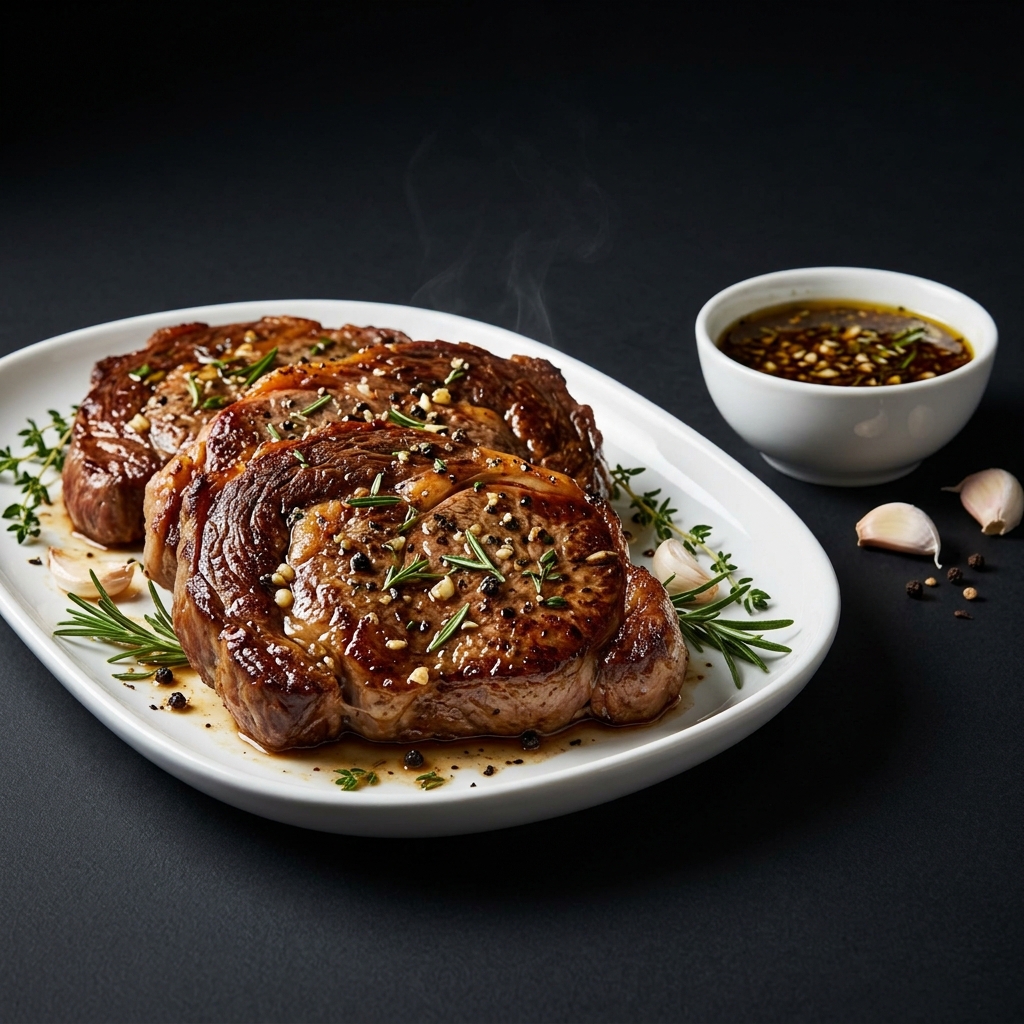
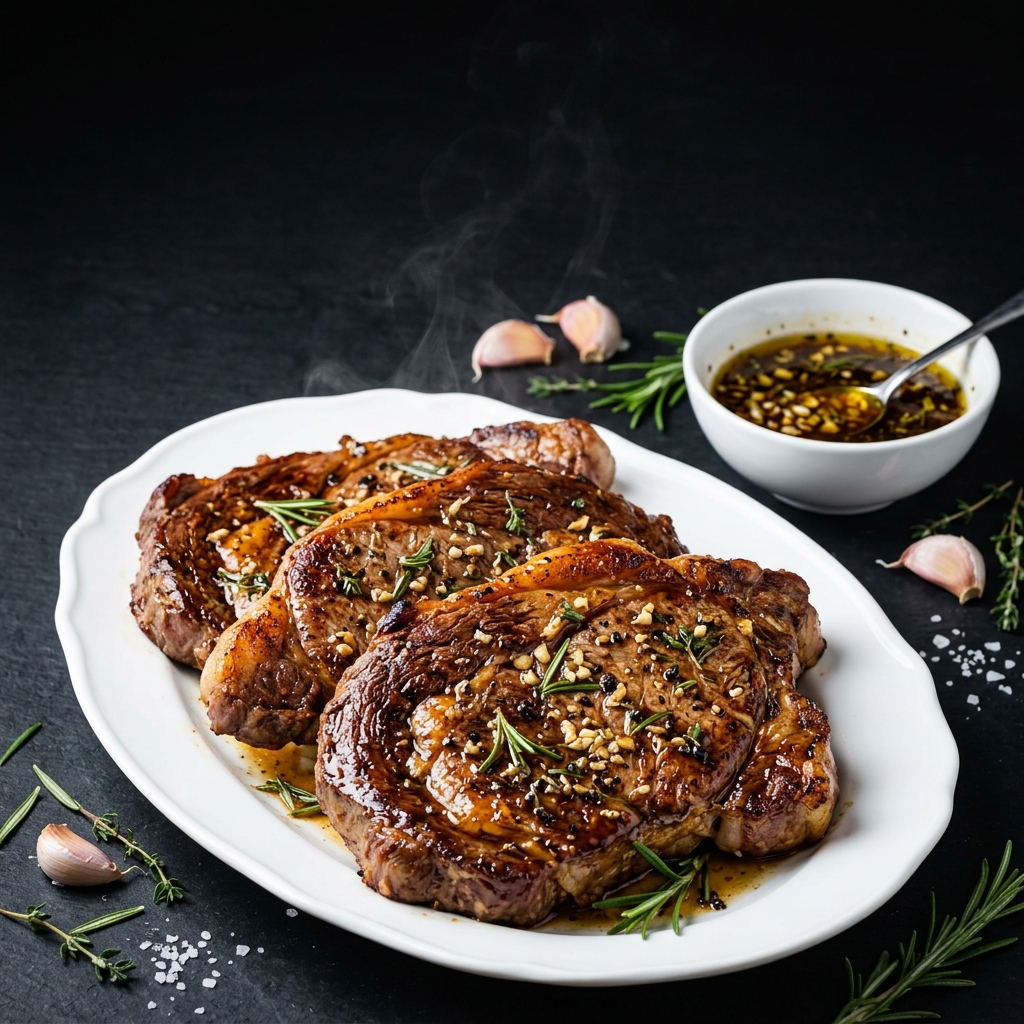
Finish with a little freshly cracked black pepper or chopped herbs if desired. The result is a beautifully browned steak with a savory, aromatic flavor that works just as well for a casual dinner as it does for a special occasion.
Variations of Steak Marinade
One of the best things about homemade steak marinade is how easily you can adapt it. Once you understand the balance between oil, savory ingredients, acidity, and seasonings, you can create different flavor profiles without changing your cooking method.
1. Garlic Butter Steak Marinade
For a richer, steakhouse-inspired flavor, add a little melted butter to a freshly prepared marinade or reserve softened butter to finish the steak after cooking.
Combine olive oil, garlic, black pepper, rosemary, and thyme as usual. After cooking, top the hot steak with a small pat of garlic herb butter and let it melt over the surface.
Adding butter at the end gives you a rich finish without relying on butter as the primary marinade ingredient, which can burn during high-heat cooking.
2. Honey Garlic Steak Marinade
If you enjoy a slightly sweet and savory flavor, add 1 to 2 teaspoons of honey to the basic marinade.
Honey balances the saltiness of soy sauce and complements the garlic. It can also encourage browning, although its sugars may burn quickly over intense heat.
For this variation, monitor the steak closely and remove excess marinade before searing. If you are following a low-carb or keto eating plan, omit the honey or use a suitable alternative that fits your dietary requirements.
3. Spicy Steak Marinade
For those who enjoy heat, add crushed red pepper flakes, a little cayenne pepper, or finely minced fresh chili.
Start with a small quantity and increase it gradually until you reach your preferred level of spiciness.
The garlic, soy sauce, and rosemary still provide the savory foundation, while the chili adds warmth. This version is especially good for grilled flank steak, skirt steak, and steak served in fajitas.
4. Balsamic Steak Marinade
Replace some of the lemon juice with balsamic vinegar for a deeper, slightly sweet tang.
Balsamic vinegar pairs nicely with olive oil, garlic, black pepper, and rosemary. However, it contains natural sugars, and some commercial varieties contain added sugar, so check the label if you are monitoring carbohydrates.
Because balsamic vinegar can contribute to browning and caramelization, keep an eye on the steak during cooking.
5. Herb-Forward Steak Marinade
If you love the taste of fresh herbs, increase the rosemary and thyme slightly and add chopped parsley.
You can also incorporate a small amount of fresh oregano for a Mediterranean-inspired flavor.
Keep the garlic and olive oil as the base, and use lemon juice sparingly. This variation works beautifully with grilled sirloin, strip steak, and other cuts that benefit from fresh, aromatic seasonings.
6. Low-Carb and Keto Steak Marinade
To make this recipe more suitable for low-carb and keto eating plans, use olive oil, garlic, rosemary, thyme, black pepper, and an appropriate amount of soy sauce or gluten-free tamari.
Avoid honey, brown sugar, sweetened sauces, and other ingredients that add significant carbohydrates.
Check the nutrition labels on your sauces because carbohydrate content varies between brands. With suitable ingredients and sensible portions, this savory marinade can fit into many low-carb meal plans.
7. Gluten-Free Steak Marinade
For a gluten-free version, replace regular soy sauce with certified gluten-free tamari or another suitable gluten-free alternative.
Check the Worcestershire sauce, mustard, and any packaged seasonings to confirm that they meet your needs. Ingredient labels and manufacturing practices can differ between brands.
The remaining ingredients, including olive oil, garlic, fresh rosemary, thyme, lemon juice, and black pepper, are naturally gluten-free when uncontaminated.
Expert Tips for the Best Steak Marinade
A good marinade can improve the flavor of steak, but the way you prepare and cook the meat matters just as much. These practical tips will help you achieve more consistent results.
Choose the Right Cut of Steak
Different cuts respond differently to marinating. Flank and skirt steak benefit from flavorful marinades because they have pronounced muscle fibers and are often sliced thinly before serving.
Sirloin offers a useful balance of flavor and versatility, while ribeye already has abundant marbling and a rich beefy taste. For ribeye, a shorter marinating time may be preferable if you want the natural flavor of the beef to remain prominent.
Do Not Assume Longer Is Always Better
A common misconception is that leaving steak in marinade overnight automatically makes it more tender. In reality, marinades primarily flavor the surface, and acidic ingredients can alter the meat’s exterior when used excessively.
Follow the recommended marinating time for your cut, especially when lemon juice or vinegar is included.
Dry the Surface Before Searing
One of the most useful professional cooking techniques is to remove excess moisture before placing steak in a hot pan or on the grill.
A dry surface browns more effectively than a wet one. Patting the steak gently with paper towels helps create a deep, flavorful crust.
Avoid Burning the Garlic
Garlic adds wonderful flavor, but small pieces can burn over very high heat and become bitter.
Remove excess garlic and herbs from the surface before cooking, especially when pan-searing. You can still enjoy their flavor in the meat, and you can add fresh herbs or garlic butter after cooking if desired.
Use a Thermometer Instead of Guesswork
Color alone is not a reliable way to determine whether steak has reached a safe internal temperature.
Insert an instant-read thermometer into the thickest part of the steak, avoiding large pockets of fat. Check the temperature before serving and allow the recommended resting period.
Slice Against the Grain When Appropriate
For cuts such as flank steak and skirt steak, slicing against the grain is one of the simplest ways to improve tenderness.
Look for the long muscle fibers running in one direction, then cut perpendicular to them. Thin slices are particularly useful for steak salads, sandwiches, fajitas, and rice bowls.
Keep Food Safety in Mind
Always marinate raw beef in the refrigerator, not at room temperature. Use clean utensils and a clean plate when handling cooked steak, and never pour raw-meat marinade directly over finished food.
If you want to use marinade as a sauce, reserve a portion before adding the raw steak or bring used marinade to a full boil before using it. Making a separate sauce is often the easiest option.
What to Serve With Steak Marinade Recipe
Once your steak is cooked, pairing it with the right sides can turn a simple meal into a memorable dinner. Because this marinade has savory, garlicky, and herbal notes, it works with a wide range of vegetables, potatoes, grains, and fresh salads.
1. Garlic Mashed Potatoes
Creamy mashed potatoes provide a comforting contrast to the steak’s browned exterior. Add roasted garlic, butter, and a little milk or cream for a smooth, flavorful side dish.
Spoon any freshly prepared steak juices over the potatoes just before serving.
2. Roasted Vegetables
Roasted broccoli, carrots, zucchini, bell peppers, and asparagus all complement marinated steak.
Toss the vegetables with olive oil, black pepper, and a little salt, then roast until tender with lightly browned edges. Their natural sweetness balances the savory steak.
3. Grilled Asparagus
Grilled asparagus is an excellent option when you want a simple side that does not compete with the main dish.
Coat the asparagus lightly with olive oil, season with salt and pepper, and grill until tender with a little char. A squeeze of lemon adds freshness.
4. Fresh Garden Salad
A crisp salad helps balance the richness of the steak. Combine lettuce, cucumber, cherry tomatoes, red onion, and a light vinaigrette for a refreshing accompaniment.
For a more substantial salad, add avocado or serve thin slices of steak over the greens.
5. Baked or Roasted Potatoes
Crispy roasted potatoes and fluffy baked potatoes are classic steakhouse sides. Season them with rosemary, garlic, and black pepper to complement the flavors in the marinade.
For an extra-special meal, serve a baked potato with a little sour cream or herb butter.
6. Rice Pilaf
Rice pilaf provides a mild, fluffy base that absorbs the savory juices from the steak.
Cook the rice with broth, a little onion, and herbs for added flavor. It is particularly suitable when serving sliced steak with vegetables or a light pan sauce.
7. Sautéed Mushrooms
Mushrooms have an earthy, savory taste that pairs naturally with beef.
Sauté sliced mushrooms with a little olive oil or butter, garlic, and thyme until browned and tender. Serve them alongside the steak or spoon them over the top.
8. Grilled Corn on the Cob
For a summer barbecue, grilled corn adds sweetness and a satisfying texture. Brush it lightly with butter or olive oil, then grill until lightly charred.
A sprinkle of black pepper and chopped herbs helps tie the corn’s flavor to the steak.
9. Cauliflower Mash
If you want a lower-carbohydrate alternative to mashed potatoes, cauliflower mash is a delicious option.
Steam cauliflower until tender, then blend it with butter or olive oil, garlic, and seasoning until smooth. Serve it with sliced steak and roasted vegetables for a satisfying meal.
10. Garlic Green Beans
Green beans sautéed with garlic make a quick, fresh side dish. Cook them until tender-crisp, then finish with black pepper and a squeeze of lemon.
They provide color and texture without overwhelming the steak’s flavor.
Frequently Asked Questions
1. What is the best marinade for steak?
A good steak marinade balances savory ingredients, oil, aromatics, and a modest amount of acidity. Olive oil, soy sauce, garlic, Worcestershire sauce, rosemary, thyme, and black pepper create a versatile mixture that works with many beef cuts.
The best combination ultimately depends on your taste preferences and the steak you are preparing.
2. How long should steak marinate?
Tender cuts such as ribeye, sirloin, and New York strip often need about 30 minutes to 2 hours for additional surface flavor. Flank and skirt steak can benefit from approximately 2 to 6 hours.
The ideal time depends on the thickness of the meat and the acidity of the marinade. Keep steak refrigerated while it marinates.
3. Can I marinate steak overnight?
Some steak marinades can be used overnight, but this particular recipe contains lemon juice, so a shorter marinating period is generally preferable.
For the best texture, follow the recommended timing for your cut rather than assuming overnight marinating will always produce a better result.
4. Does steak marinade make meat tender?
A marinade can improve flavor and may affect the texture of the meat’s surface, especially when it contains acidic ingredients. However, it generally does not penetrate deeply enough to tenderize an entire thick steak.
Choosing the right cut, cooking it appropriately, resting it, and slicing against the grain when suitable are also important for tenderness.
5. Should I poke holes in steak before marinating?
No, poking holes is generally unnecessary. The marinade will coat the surface without puncturing the meat.
Repeatedly piercing steak does not guarantee that the marinade will penetrate deeply, and it can make handling the meat more difficult.
6. Can I use this marinade for different cuts of beef?
Yes. This marinade works with sirloin, ribeye, New York strip, flank steak, skirt steak, and many other beef cuts.
Adjust the marinating time to suit the cut. Tender, well-marbled steaks usually need less time than thinner, leaner cuts that benefit from a more pronounced surface seasoning.
7. Can I use this steak marinade for grilling?
Absolutely. The combination of garlic, herbs, soy sauce, and olive oil is well suited to grilled steak.
Before grilling, remove excess marinade and loose garlic pieces to reduce flare-ups and burning. Preheat the grill and monitor the steak carefully as it cooks.
8. Can I make steak marinade without soy sauce?
Yes. You can replace soy sauce with a suitable alternative, such as coconut aminos, or create a simpler marinade using olive oil, garlic, Worcestershire sauce, herbs, lemon juice, and black pepper.
Remember that substitutions may change the flavor and saltiness. Check labels if you are following a gluten-free, low-carb, or keto eating plan.
9. Is steak marinade gluten-free?
It can be. Olive oil, garlic, fresh herbs, lemon juice, and black pepper are naturally gluten-free when uncontaminated. However, conventional soy sauce and some Worcestershire sauces may contain gluten-containing ingredients.
Choose suitable certified gluten-free products and check every packaged ingredient.
10. Is steak marinade keto-friendly?
A marinade made with olive oil, garlic, herbs, and suitable savory sauces can fit into a keto eating plan when the carbohydrate content is low enough for your individual targets.
Avoid or limit honey, sugar, and sweetened sauces, and check nutrition labels carefully.
11. Can I reuse leftover steak marinade?
Do not reuse marinade that has contacted raw beef unless it is brought to a full boil before use. The safer and more convenient option is to reserve a separate portion before adding the meat.
Discard any leftover raw-meat marinade that you do not intend to cook safely.
12. Can I freeze steak in its marinade?
Yes. You can place raw steak and freshly prepared marinade in a freezer-safe bag, seal it, and freeze it promptly. Label the bag with the cut of meat and the date.
Thaw the steak in the refrigerator, allowing it to remain contained while it defrosts. The steak will marinate as it thaws, so consider the total time spent in the marinade when planning the meal.
13. Why is my marinated steak not browning properly?
Excess moisture on the surface is a common reason steak fails to develop a good crust. Too much marinade can cause the meat to steam instead of sear.
Pat the steak dry, remove loose pieces of garlic and herbs, preheat the cooking surface, and avoid overcrowding the pan.
14. Can I prepare steak marinade ahead of time?
Yes. You can mix the marinade in advance and store it in a clean, covered container in the refrigerator. For the freshest flavor and best ingredient quality, prepare it shortly before use and follow appropriate food-storage guidance.
Keep unused marinade separate from raw meat, and never return used marinade to the original container.
Steak Marinade Recipe
Ingredients
Equipment
Method
- Prepare the ingredients: Mince the garlic, finely chop the rosemary, and remove the thyme leaves from their stems.
- Mix the liquid ingredients: In a medium bowl, whisk together the olive oil, soy sauce, Worcestershire sauce, lemon juice, and Dijon mustard until combined.
- Add the seasonings: Stir in the minced garlic, rosemary, thyme, black pepper, and sea salt. Use less salt if your soy sauce is already salty.
- Prepare the steak: Pat the steak dry with paper towels and place it in a shallow food-safe container or resealable food-storage bag.
- Coat the steak: Pour the marinade over the beef, turning the steak to coat all sides evenly. Seal the bag or cover the container.
- Marinate: Refrigerate for 30 minutes to 2 hours for tender cuts such as ribeye and sirloin, or approximately 2–6 hours for flank and skirt steak. Avoid unnecessarily long marinating times because the lemon juice can affect the meat's surface texture.
- Prepare for cooking: Remove the steak from the marinade and let excess liquid drip away. Pat the surface gently with paper towels to help it brown properly. Discard the used marinade unless you boil it thoroughly before using it as a sauce.
- Cook the steak: Grill, pan-sear, or broil the steak over appropriate heat, turning as needed. Cooking time will vary according to thickness and preferred doneness. Use a meat thermometer to check the internal temperature.
- Check for doneness: For food safety, cook beef steaks to a minimum internal temperature of 145°F (63°C), followed by a three-minute rest.
- Rest and serve: Transfer the steak to a clean cutting board and let it rest before slicing. For flank and skirt steak, slice thinly against the grain for a more tender bite.
Notes
Adjust the salt: Soy sauce and Worcestershire sauce already contain sodium. Taste and adjust the seasoning before adding the raw steak, and never taste marinade after it has contacted raw meat.
For gluten-free diets: Use certified gluten-free tamari or soy sauce and check the labels of Worcestershire sauce, mustard, and all packaged seasonings.
For keto and low-carb diets: Omit sweeteners such as honey or sugar and check the carbohydrate content of the sauces you use.
For better browning: Remove excess marinade and loose garlic pieces before cooking to prevent steaming and burning.
For food safety: Always marinate steak in the refrigerator at 40°F (4°C) or below. Do not reuse marinade that has contacted raw beef unless it is brought to a full boil.
Storage: Keep raw steak refrigerated and follow recommended food-storage limits. Freeze steak with fresh marinade in a sealed freezer-safe bag if preparing it ahead.
Serving suggestions: Serve with roasted vegetables, garlic mashed potatoes, grilled asparagus, sautéed mushrooms, a fresh garden salad, or cauliflower mash.

Emma Carter is a passionate home cook and recipe creator who loves making delicious, simple meals everyone can enjoy. She shares easy recipes, helpful cooking tips, and inspiring food ideas to make everyday cooking more enjoyable.