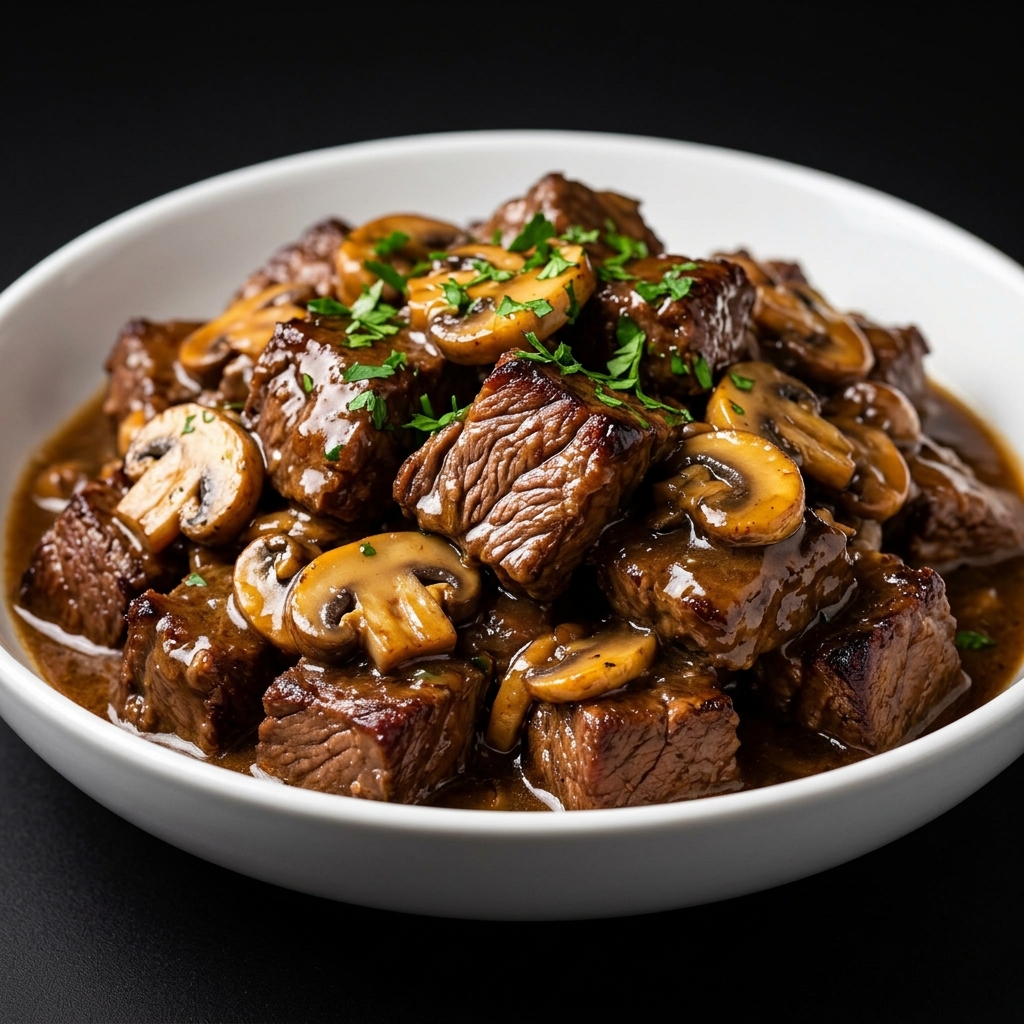
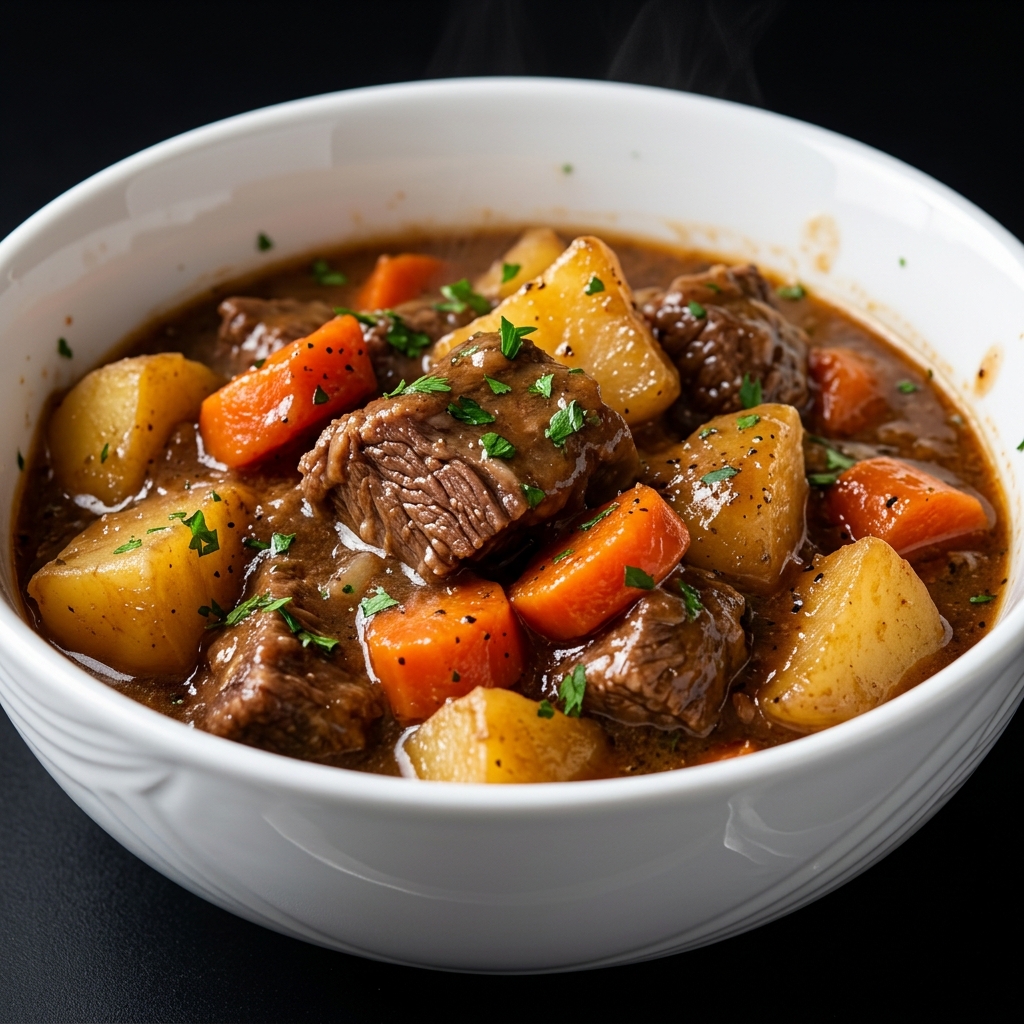
There is nothing quite like a bowl of old-fashioned beef stew with potatoes and carrots, filled with tender beef, hearty vegetables, and rich, savory gravy. This comforting homemade classic brings warmth to the dinner table and transforms simple ingredients into a satisfying meal your family will want to enjoy again and again.
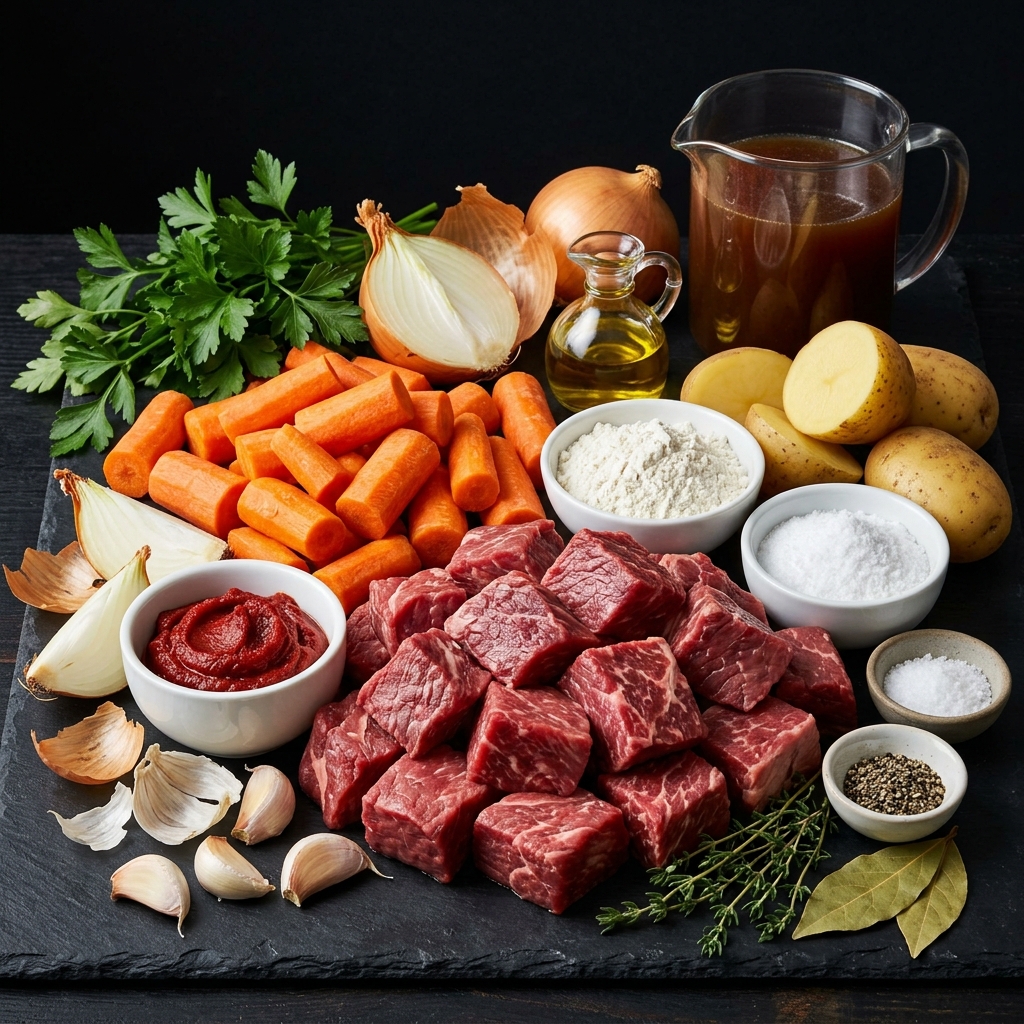
Ingredients for Old-Fashioned Beef Stew with Potatoes and Carrots
The secret to a delicious beef stew begins with choosing the right ingredients. Each ingredient contributes something important, from the deep flavor of the beef to the natural sweetness of the carrots and the satisfying texture of the potatoes.
This recipe makes approximately 6 servings.
Main Ingredients
- 2 pounds beef chuck roast: Cut into approximately 1½-inch cubes. Beef chuck is an excellent choice because its connective tissue breaks down during slow cooking, producing tender meat and a rich, flavorful broth.
- 1½ pounds potatoes: Use Yukon Gold or another waxy potato variety for potatoes that hold their shape well. Russet potatoes can also be used, although they tend to become softer and may thicken the stew more.
- 4 medium carrots: Peel and cut into thick, bite-sized pieces. Carrots add natural sweetness, vibrant color, and a pleasant texture.
- 1 large yellow onion: Dice finely to create a flavorful foundation for the gravy.
- 3 garlic cloves: Mince the garlic to provide a savory aroma and depth of flavor.
- 3 tablespoons olive oil: Use this for browning the beef and sautéing the vegetables. Another neutral cooking oil with a suitable smoke point will also work.
For the Rich Beef Gravy
- ¼ cup all-purpose flour: Helps thicken the stew and gives the gravy a satisfying consistency.
- 4 cups beef broth: Choose a good-quality broth for a deep, meaty flavor. Low-sodium broth gives you more control over the final seasoning.
- 2 tablespoons tomato paste: Adds a concentrated savory flavor, gentle acidity, and richness without making the stew taste strongly of tomatoes.
- 1 tablespoon Worcestershire sauce: Contributes a savory, slightly tangy flavor that complements the beef. Check the label if you need a gluten-free version.
- 1 teaspoon salt, or to taste: Start with less if your broth is already salted.
- ½ teaspoon freshly ground black pepper: Adds mild warmth and balances the richness of the gravy.
Herbs and Seasonings
- 1 teaspoon dried thyme: Adds a subtle earthy, herbal flavor that works beautifully with slow-cooked beef.
- 2 bay leaves: Infuse the broth with a gentle, savory aroma during simmering. Remove them before serving.
- 2 tablespoons chopped fresh parsley: Optional, but excellent for adding a fresh green finish and brightening the rich stew.
Optional Ingredients
- ½ cup frozen peas: Add near the end of cooking for a pop of color and sweetness.
- 1 celery stalk, diced: Adds another layer of traditional vegetable flavor.
- ½ cup dry red wine: Optional; use it to deglaze the pot after browning the beef for additional depth. You can replace it with extra beef broth.
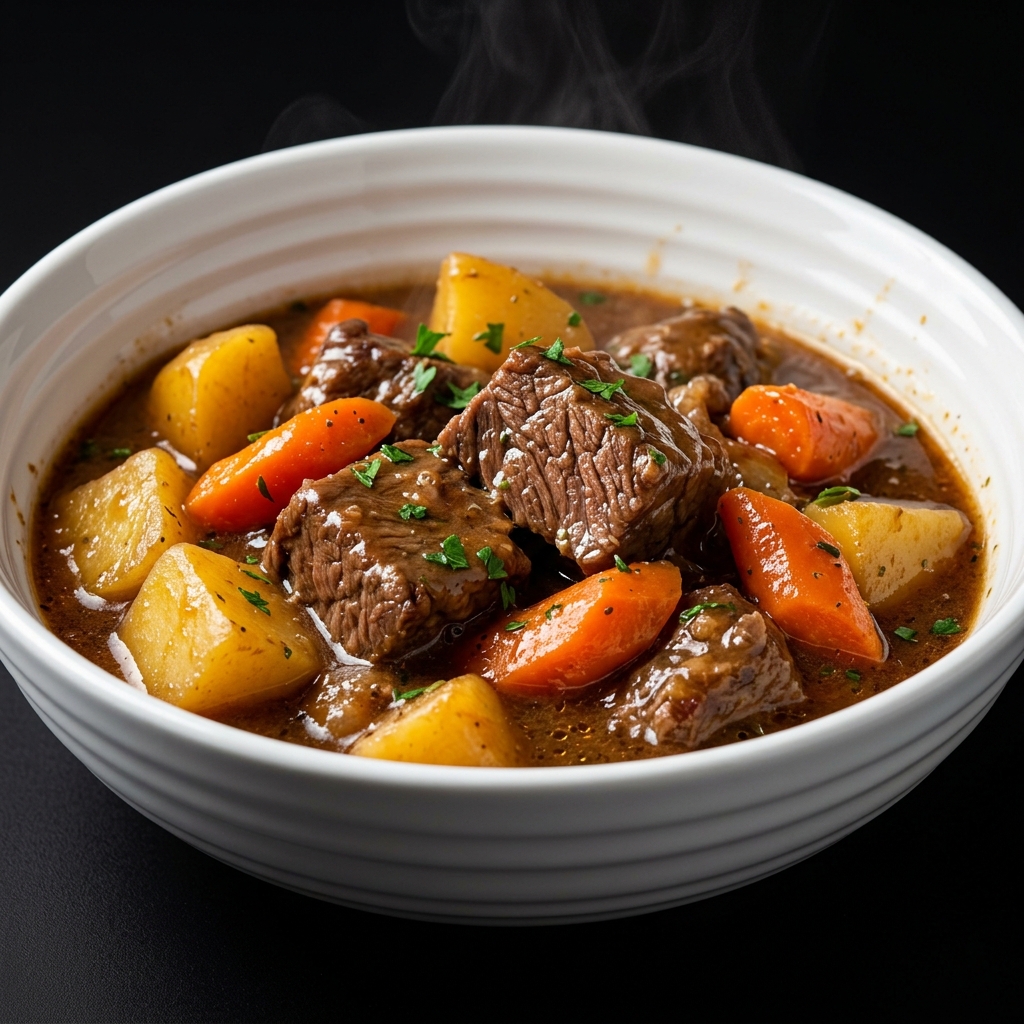
How to Make Old-Fashioned Beef Stew with Potatoes and Carrots
Making a flavorful beef stew is straightforward, but the order in which you add the ingredients matters. Browning the beef, developing flavor in the pot, and allowing the meat to simmer gently are the steps that turn an ordinary stew into a memorable homemade meal.
Follow these instructions for a thick, rich stew with tender beef and vegetables that retain their shape.
Step 1: Prepare the Beef and Vegetables
Begin by cutting the beef chuck roast into evenly sized cubes, approximately 1½ inches each. Trim away any excessively large pieces of hard fat, but leave some marbling because it helps keep the meat moist and flavorful during cooking.
Pat the beef dry with paper towels. This small step makes a significant difference because excess moisture can prevent the meat from browning properly.
Season the beef lightly with salt and black pepper.
Peel the carrots and cut them into thick slices or chunks. Peel the potatoes if desired, then cut them into pieces large enough to withstand a long simmer without falling apart. Chop the onion and mince the garlic.
Keeping the vegetables relatively similar in size helps them cook more evenly. Set everything aside before heating the pot.
Step 2: Brown the Beef in Batches
Place a large, heavy-bottomed Dutch oven or stew pot over medium-high heat. Add the olive oil and allow it to become hot.
Arrange some of the beef cubes in a single layer, leaving space between the pieces. Let them brown undisturbed for a few minutes before turning them to brown the other sides.
The goal is to develop a deep golden-brown crust rather than cook the beef completely at this stage.
Avoid overcrowding the pot. Adding too much beef at once lowers the temperature and causes the meat to release moisture, making it steam instead of brown.
Transfer the browned beef to a plate and repeat with the remaining pieces, adding a little more oil if necessary.
Those browned surfaces contribute a tremendous amount of flavor to the finished stew. The brown residue left on the bottom of the pot is equally valuable, so do not discard it.
Step 3: Cook the Onion, Garlic, and Tomato Paste
Reduce the heat to medium. Add the chopped onion to the same pot and cook for approximately 4–5 minutes, stirring occasionally until it begins to soften.
If the pot looks dry, add a small splash of beef broth to help loosen the browned bits.
Add the minced garlic and cook for about 30 seconds, stirring constantly until fragrant. Garlic can burn quickly, so avoid leaving it unattended.
Stir in the tomato paste and cook for another 1–2 minutes. Allowing the tomato paste to cook briefly helps deepen its flavor and reduces its raw, sharp taste.
At this point, the pot should smell rich and savory, with the onion, garlic, and tomato paste forming the foundation of your stew.
Step 4: Add the Flour and Build the Gravy
Sprinkle the flour over the onion mixture and stir thoroughly to coat the ingredients. Cook for approximately one minute, stirring continuously.
This step helps distribute the flour evenly and reduces the chance of lumps forming later.
Gradually pour in a small amount of beef broth while stirring and scraping the bottom of the pot. Continue adding the remaining broth in stages until the mixture is smooth.
If you are using red wine, pour it into the pot before adding the broth and allow it to simmer briefly while scraping up the browned bits. Then add the broth.
Stir in the Worcestershire sauce, dried thyme, and bay leaves.
The liquid may look thinner than the gravy you expect, but it will develop more body as the stew simmers and the flour cooks.
Step 5: Return the Beef to the Pot
Return the browned beef and any accumulated juices on the plate to the pot. Stir gently to distribute the meat throughout the liquid.
Bring the mixture to a gentle simmer, then reduce the heat to low.
Cover the pot partially or fully, depending on how quickly the liquid is evaporating. The stew should simmer gently rather than boil vigorously.
Allow the beef to cook for approximately 1½ hours before checking its tenderness. Depending on the cut and size of the beef cubes, it may need 2 hours or longer.
Stir occasionally and make sure the liquid remains at a gentle simmer. If too much liquid evaporates before the beef becomes tender, add a little extra beef broth or hot water.
The most important rule at this stage is patience. Beef chuck becomes tender as its connective tissue gradually breaks down. Increasing the heat to rush the process can leave the meat tough even when the outside appears fully cooked.
Step 6: Add the Potatoes and Carrots
Once the beef is beginning to soften but still needs additional cooking, add the potatoes and carrots to the pot.
Stir carefully so the vegetables are coated in the flavorful broth without breaking apart.
Cover the pot and continue simmering for approximately 25–35 minutes, or until the potatoes and carrots are tender when pierced with a fork.
The exact cooking time depends on the size of your vegetable pieces and the varieties you use. Check them periodically rather than relying only on the clock.
Adding the vegetables later prevents them from becoming overly soft while the beef finishes cooking.
If you are using celery, you can add it with the potatoes and carrots. If you want to include frozen peas, wait until the final 5 minutes of cooking.
Step 7: Check the Beef and Adjust the Seasoning
Test a piece of beef with a fork. It should be tender enough to separate easily without feeling chewy or rubbery.
If it is still tough, continue simmering gently and check again after 15–20 minutes. Some cuts require more time than others.
Taste the gravy and adjust the salt and black pepper as needed. If you prefer a stronger herbal flavor, add a small pinch of thyme, taking care not to overpower the natural flavor of the beef.
Remove the bay leaves before serving.
If the gravy is thinner than you would like, uncover the pot and simmer gently for a few additional minutes, stirring occasionally. Alternatively, mix one tablespoon of cornstarch with one tablespoon of cold water to create a smooth slurry. Stir it into the gently simmering stew a little at a time until the desired consistency is reached, allowing it to cook for another minute or two.
If the gravy becomes too thick, stir in a little warm beef broth until it reaches your preferred consistency.
Step 8: Garnish and Serve
Turn off the heat and allow the stew to rest for approximately 5 minutes. This gives the gravy a moment to settle and makes serving easier.
Sprinkle chopped fresh parsley over the top if desired.
Ladle generous portions into warm bowls, making sure each serving includes tender beef, potatoes, carrots, and plenty of rich gravy.
Serve immediately while hot. The result should be a hearty, beautifully colored beef stew with tender meat, satisfying vegetables, and a deeply savory sauce that brings every ingredient together.
Recipe Variations to Try
One of the advantages of homemade beef stew is how easily it can be adapted to suit different tastes, available ingredients, and cooking preferences. The traditional version is delicious on its own, but these variations offer practical ways to change the flavor while keeping the comforting character of the dish.
1. Old-Fashioned Beef Stew with Red Wine
For a deeper, more complex flavor, replace approximately ½ cup of the beef broth with dry red wine.
After browning the beef and cooking the onion, pour the wine into the pot and scrape up the browned bits. Let it simmer for a few minutes before adding the remaining broth.
The wine adds gentle acidity and depth that complement the richness of the beef. Choose a dry wine rather than a sweet variety, and omit it entirely if you prefer an alcohol-free stew.
2. Beef Stew with Mushrooms
Mushrooms bring an earthy, savory flavor that works particularly well with beef and brown gravy.
Slice approximately 8 ounces of cremini or button mushrooms. Brown them in the pot after removing the beef, then transfer them to a plate while you cook the onions and prepare the gravy.
Return the mushrooms to the pot with the potatoes and carrots, or during the final 30 minutes of cooking if you prefer them firmer.
This variation produces a particularly rich, satisfying stew without requiring complicated ingredients.
3. Garlic and Herb Beef Stew
If you enjoy a more aromatic stew, increase the garlic to four or five cloves and add a little fresh rosemary alongside the thyme.
Rosemary has a strong flavor, so use it sparingly. A small sprig is usually sufficient for a pot of this size.
Remove the woody rosemary stem before serving. The resulting stew has a fragrant, savory character that pairs especially well with crusty bread or mashed potatoes.
4. Gluten-Free Beef Stew
You can adapt this recipe for a gluten-free diet by replacing the all-purpose flour with a certified gluten-free thickener.
One easy option is to omit the flour and use a cornstarch slurry near the end of cooking. Mix one tablespoon of cornstarch with one tablespoon of cold water, then stir it into the simmering broth and allow it to thicken.
Also check the labels on your beef broth, Worcestershire sauce, and other packaged ingredients to ensure they are gluten-free.
Potatoes, carrots, beef, and the other naturally gluten-free ingredients can remain in the recipe. Use clean utensils and cooking equipment to avoid cross-contact if you are cooking for someone with celiac disease.
5. Slow Cooker Beef Stew
For a convenient hands-off version, brown the beef in a skillet before transferring it to a slow cooker. This extra step is worthwhile because it develops a deeper flavor.
Add the onion, garlic, potatoes, carrots, herbs, Worcestershire sauce, tomato paste, and beef broth. For thickening, either use a suitable flour-based mixture compatible with your slow cooker’s method or add a cornstarch slurry near the end.
Cook on LOW for approximately 7–9 hours or HIGH for about 4–5 hours, checking that the beef is fork-tender and the vegetables are cooked through. Actual times vary with the appliance and the size of the beef pieces.
For better texture, cut the potatoes and carrots into generous chunks. Avoid adding too much liquid because a slow cooker loses less moisture than a conventional pot.
6. Vegetable-Rich Beef Stew
If you want more vegetables in your meal, add celery, parsnips, or peas.
Parsnips bring a mild sweetness, while celery provides a traditional savory flavor. Add firm vegetables with the potatoes and carrots, and stir in peas near the end so they retain their color and texture.
Be careful not to overcrowd the pot. Too many ingredients can make the stew difficult to stir and may require extra cooking time.
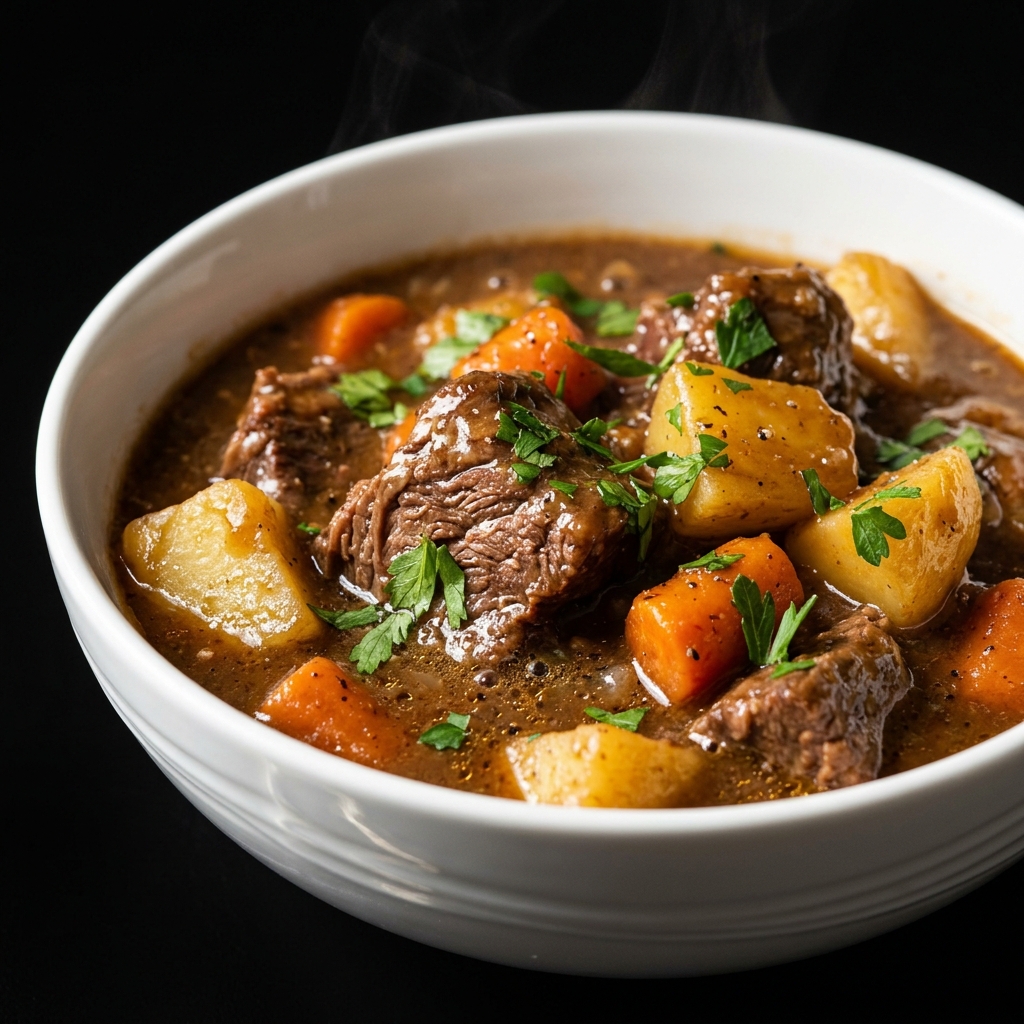
Expert Tips for the Best Homemade Beef Stew
Choose the Right Cut of Beef
Beef chuck roast is one of the best choices for a traditional stew because it contains connective tissue and marbling that respond well to slow, moist cooking.
Lean cuts intended for quick cooking may become dry or tough when simmered for a long time. If possible, buy a whole chuck roast and cut it into cubes yourself, allowing you to control the size and trim away only the excess fat.
Never Skip Browning the Beef
Browning creates deep, savory flavors through the Maillard reaction, a chemical process that occurs when the surface of food becomes sufficiently hot and dry.
Take the time to brown the meat in batches. The extra few minutes can make a noticeable difference in the finished gravy.
Keep the Simmer Gentle
A vigorous boil does not make beef tender faster in a reliable way. Instead, maintain a gentle simmer so the connective tissue has time to soften without the meat being subjected to unnecessary agitation.
If the stew is bubbling aggressively, lower the heat.
Cut the Vegetables into Generous Pieces
Small potato and carrot pieces can break down before the beef becomes tender. Cutting them into larger, reasonably uniform chunks helps them maintain their shape and makes the finished stew more attractive.
Let the Flavor Develop
Beef stew is often even more flavorful after resting overnight in the refrigerator because the ingredients have more time to exchange flavors.
If you prepare it in advance, cool and refrigerate it promptly in shallow containers. Reheat it thoroughly before serving, adding a splash of broth if the gravy has thickened during storage.
Season Gradually
Broth, Worcestershire sauce, and other ingredients may already contain salt. Begin with a moderate amount and adjust near the end of cooking, when the liquid has reduced and the flavors have concentrated.
This prevents an overly salty stew.
What to Serve with Old-Fashioned Beef Stew
This beef stew contains meat, potatoes, and carrots, making it a satisfying meal on its own. However, if you want to make dinner more substantial or serve it to guests, several side dishes pair beautifully with its rich gravy.
Crusty Bread
Freshly baked crusty bread is an excellent choice for soaking up the savory gravy. A French baguette, rustic country loaf, or homemade dinner rolls all work well.
Homemade Biscuits
Soft, buttery biscuits provide a tender contrast to the hearty stew. Split them open and use them to scoop up the beef and vegetables, or serve them alongside the bowl.
Simple Green Salad
A fresh green salad with lettuce, cucumber, tomatoes, and a light vinaigrette provides a refreshing contrast to the rich gravy.
Choose a simple dressing rather than an overly creamy one so the salad balances the meal instead of making it feel heavier.
Steamed Green Beans
Lightly steamed green beans add freshness, color, and a pleasant crisp-tender texture. Season them with a little butter, salt, and black pepper if desired.
Roasted Brussels Sprouts
Roasted Brussels sprouts offer a slightly nutty flavor and caramelized edges that complement the stew’s savory richness.
Mashed Potatoes
Although this stew already contains potatoes, a serving of creamy mashed potatoes can be wonderful if you want an especially comforting meal. Spoon the beef and gravy over the mash for a hearty variation.
Dinner Rolls
Warm dinner rolls are an easy option for family meals. Their soft texture makes them particularly good for collecting the remaining gravy at the bottom of the bowl.
Frequently Asked Questions
1. What Is the Best Beef for Old-Fashioned Beef Stew?
Beef chuck roast is generally one of the best options. It contains connective tissue and marbling that gradually break down during slow cooking, producing tender meat and a flavorful broth.
Beef stew meat can also work, but the exact cut may vary depending on what the butcher provides. Cooking time should be determined by tenderness rather than the label alone.
2. Why Is My Beef Stew Meat Tough?
The most common reason is insufficient cooking time. Beef chuck can remain chewy for a long period before its connective tissue softens enough to produce a tender texture.
Keep the stew at a gentle simmer and continue cooking until the beef separates easily with a fork. Also avoid using excessively lean cuts that are better suited to quick cooking.
3. How Do I Make Beef Stew Gravy Thicker?
You can thicken the stew by simmering it uncovered for a few minutes to reduce the liquid, using a flour-based thickening method, or adding a cornstarch slurry.
For a cornstarch slurry, combine equal amounts of cornstarch and cold water, stir until smooth, and add it gradually to the simmering stew. Allow the gravy to cook briefly before deciding whether more thickener is needed.
4. Can I Make Beef Stew Ahead of Time?
Yes. Beef stew is an excellent make-ahead meal because its flavors often develop further after refrigeration.
Prepare the stew, divide it into shallow containers, and refrigerate promptly. Reheat it thoroughly before serving. If the gravy becomes too thick, add a little beef broth or water to loosen it.
5. Can I Freeze Old-Fashioned Beef Stew?
Yes. Allow the stew to cool safely, transfer it to airtight, freezer-safe containers, and freeze it in convenient portions.
For best quality, use it within approximately 2–3 months. Potatoes may become softer or slightly grainy after freezing and thawing, but the stew should still be enjoyable.
Thaw it in the refrigerator and reheat thoroughly, stirring occasionally. Avoid leaving the stew at room temperature for extended periods.
6. Should I Peel the Potatoes Before Adding Them?
Peeling is optional. Yukon Gold potatoes have relatively thin skins that can be left on after thorough washing. Russet potatoes are usually better peeled because their skins can separate during cooking.
The most important factor is cutting the potatoes into reasonably large pieces so they do not disintegrate before the beef becomes tender.
7. Can I Make Beef Stew Without Flour?
Yes. You can omit the flour and thicken the gravy with cornstarch, arrowroot, or another suitable thickener.
Another option is to mash a few cooked potato pieces into the broth and stir them back into the pot. This creates a more naturally thickened gravy, although the texture will be less smooth than a flour-thickened sauce.
8. How Long Does Homemade Beef Stew Take to Cook?
On the stovetop, plan for approximately 2–3 hours of total cooking time, depending on the beef cut, the size of the cubes, and the simmering temperature.
The beef should be fork-tender, while the potatoes and carrots should be soft enough to eat but still hold their shape. Begin checking tenderness before the estimated cooking time is over, and allow additional time if needed.
9. Is Old-Fashioned Beef Stew Gluten-Free?
The traditional version in this recipe is not gluten-free because it uses all-purpose flour, which contains wheat gluten.
To make a gluten-free version, replace the flour with cornstarch or certified gluten-free flour, and verify that the broth, Worcestershire sauce, and any other packaged ingredients are suitable for a gluten-free diet.
10. How Should I Store Leftover Beef Stew?
Place leftover stew in shallow, airtight containers and refrigerate within two hours of cooking, or within one hour if the surrounding temperature is above 90°F (32°C).
Refrigerated leftovers are generally best used within 3–4 days. Reheat them to an internal temperature of 165°F (74°C), checking with a food thermometer.
For longer storage, freeze the stew in individual portions and thaw it safely in the refrigerator before reheating.
A Comforting Classic Worth Making Again
Old-fashioned beef stew with potatoes and carrots is a wonderful reminder that satisfying home cooking does not need to be complicated. With a good cut of beef, fresh vegetables, a flavorful broth, and enough time for everything to become tender, you can prepare a hearty meal that feels both familiar and special.
Browning the beef properly, adding the vegetables at the right time, and keeping the stew at a gentle simmer are the little details that make the biggest difference. Follow these steps, adjust the seasoning to your taste, and serve each bowl with your favorite bread or side dish.
Whether you prepare it for a quiet family dinner, a weekend gathering, or a meal you can enjoy throughout the week, this traditional beef stew is a delicious recipe to keep close at hand. Save it for your next cozy dinner and enjoy every spoonful of tender beef, potatoes, carrots, and rich homemade gravy.
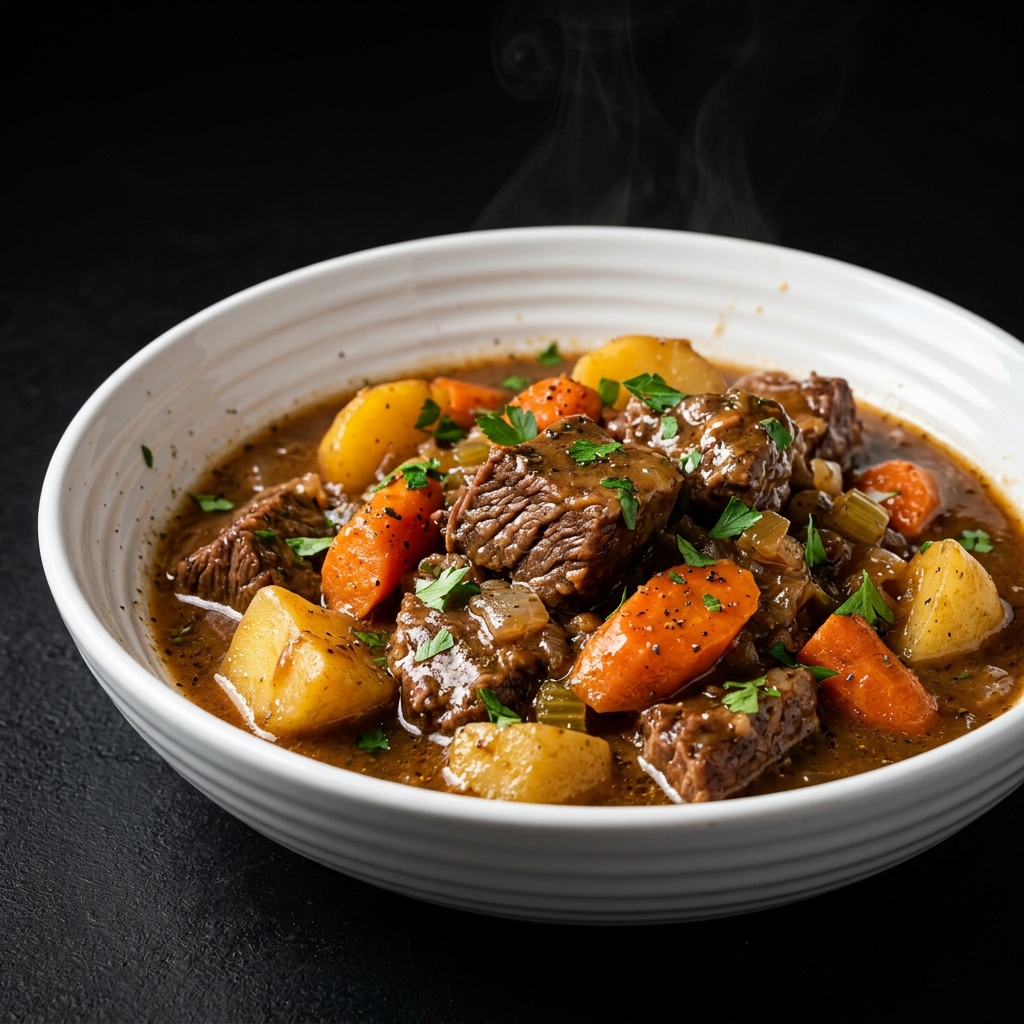
Old-Fashioned Beef Stew with Potatoes and Carrots
Ingredients
Equipment
Method
- Prepare the ingredients: Pat the beef cubes dry with paper towels and season with salt and black pepper. Chop the onion, mince the garlic, and cut the potatoes and carrots into generous, evenly sized pieces.
- Brown the beef: Heat the olive oil in a large Dutch oven over medium-high heat. Brown the beef in batches, turning to develop a golden-brown crust on multiple sides. Transfer the browned beef to a plate.
- Cook the aromatics: Reduce the heat to medium. Add the onion and cook for 4–5 minutes until softened. Add the garlic and cook for another 30 seconds. Stir in the tomato paste and cook for 1–2 minutes.
- Prepare the gravy: Sprinkle the flour over the onion mixture and stir for about 1 minute. Gradually add the beef broth, stirring continuously to create a smooth mixture. If using red wine, add it before the broth and simmer briefly while scraping up the browned bits.
- Season the stew: Stir in the Worcestershire sauce, dried thyme, and bay leaves. Return the browned beef and its accumulated juices to the pot.
- Simmer the beef: Bring the liquid to a gentle simmer, then reduce the heat to low. Cover and cook for approximately 1½ hours, stirring occasionally. Add a little extra broth or hot water if the liquid reduces too much.
- Add the vegetables: Stir in the potatoes and carrots, along with the optional celery. Cover and simmer for another 25–35 minutes, or until the vegetables are tender and the beef is fork-tender. Add frozen peas during the final 5 minutes if desired.
- Adjust the consistency: If the gravy is too thin, simmer uncovered for a few minutes or stir in a slurry made from 1 tablespoon cornstarch mixed with 1 tablespoon cold water. If it is too thick, add a little warm beef broth.
- Finish and serve: Remove the bay leaves, taste, and adjust the seasoning as needed. Allow the stew to rest for about 5 minutes, garnish with fresh parsley if desired, and serve hot.
Notes


Emma Carter is a passionate home cook and recipe creator who loves making delicious, simple meals everyone can enjoy. She shares easy recipes, helpful cooking tips, and inspiring food ideas to make everyday cooking more enjoyable.