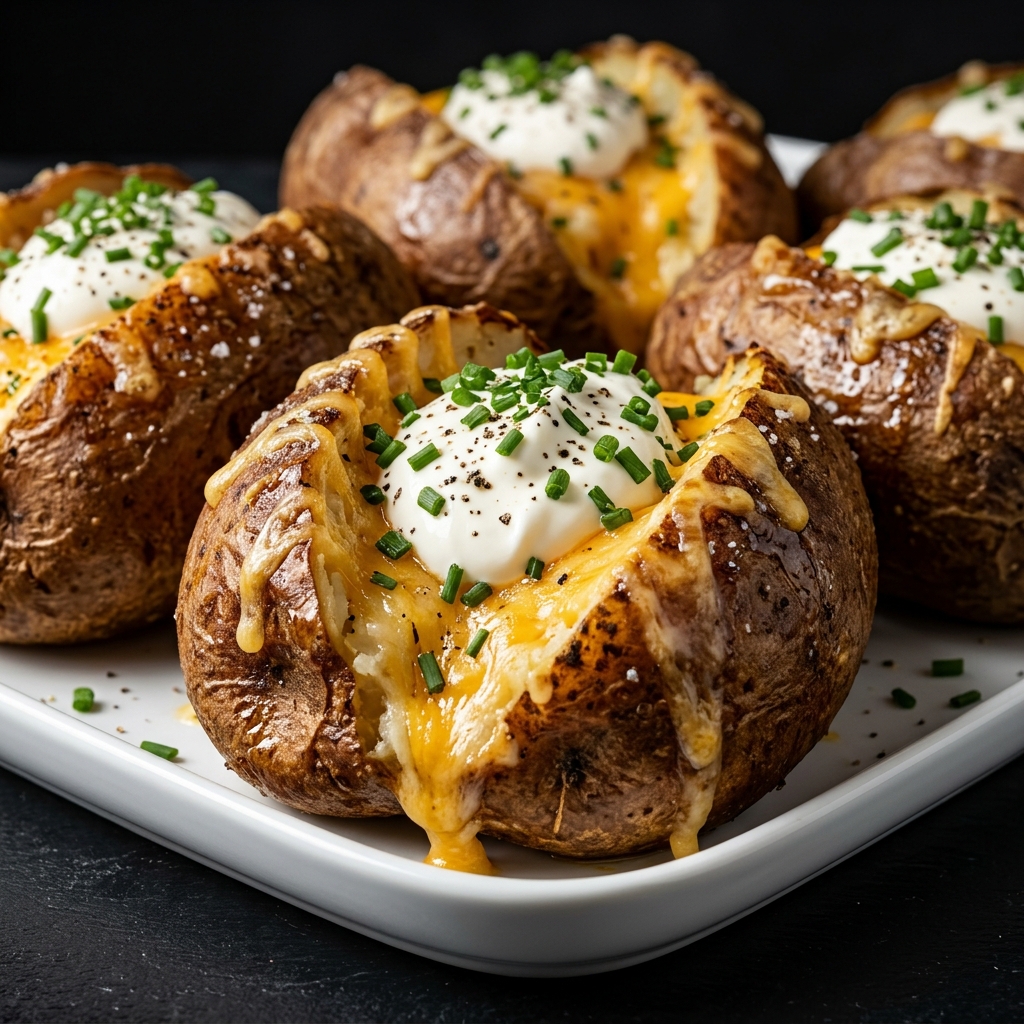
These Loaded Baked Potatoes with Cheese and Sour Cream are crispy on the outside, fluffy on the inside, and generously topped with melted cheddar cheese, cool sour cream, and fresh chives. This easy, satisfying recipe transforms simple potatoes into a delicious comfort-food favorite that works beautifully as a side dish, lunch, or hearty addition to family dinner.
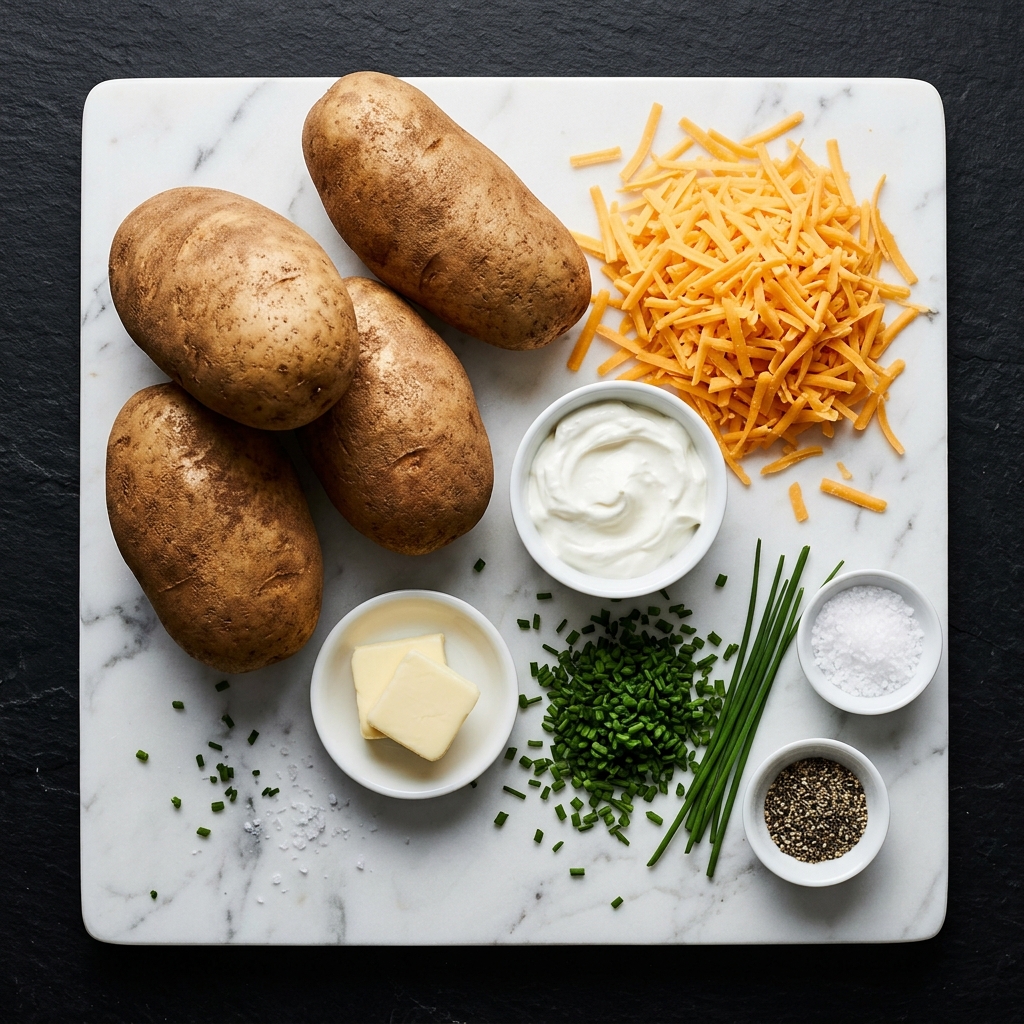
Ingredients for Loaded Baked Potatoes with Cheese and Sour Cream
The secret to making exceptional loaded baked potatoes is choosing the right potatoes, preparing their skins properly, and using toppings that complement the soft, fluffy interior. Each ingredient contributes to the flavor, texture, and appearance of the finished dish.
Main Ingredients
- 4 medium-to-large russet potatoes: Russet potatoes are ideal because their thick skins become beautifully crisp in the oven while their starchy interiors turn light and fluffy. Choose potatoes of similar size so they cook evenly.
- 2 tablespoons olive oil: Olive oil helps the skins brown and crisp while adding a subtle richness. You can substitute another neutral cooking oil if preferred.
- 1 teaspoon salt, or to taste: Salt enhances the natural flavor of the potatoes and seasons the skins. Coarse sea salt works particularly well for baked potatoes.
- 1/2 teaspoon freshly ground black pepper: Black pepper adds gentle warmth and a little savory depth.
For the Cheesy Topping
- 1 cup shredded sharp cheddar cheese: Cheddar provides a rich, savory flavor and melts beautifully over the hot potato flesh. Sharp cheddar is particularly useful because its flavor remains noticeable alongside the sour cream.
- 1/2 cup sour cream: Sour cream contributes a cool, creamy texture and a pleasant tang that balances the richness of the cheese and potato.
- 2 tablespoons unsalted butter: Butter melts into the fluffy potato interior, creating a richer and more satisfying texture.
- 2 tablespoons finely chopped fresh chives: Chives add a fresh, mild onion flavor and a vibrant green color that makes the finished potatoes especially appealing.
Optional Seasonings and Toppings
- 1/4 teaspoon garlic powder: Adds a gentle savory flavor to the potato flesh.
- A pinch of smoked paprika: Provides subtle smokiness and a warm color.
- 2 tablespoons cooked, crumbled bacon: An optional topping for anyone who enjoys a smoky, salty addition.
- Extra shredded cheddar cheese: Useful for creating a more generous cheese topping.
- Additional sour cream and chopped chives: Perfect for finishing the potatoes just before serving.
For the best results, use freshly shredded cheese when possible. Pre-shredded cheese is convenient, but it often contains anti-caking ingredients that can affect how smoothly it melts.
How to Make Loaded Baked Potatoes with Cheese and Sour Cream
Making loaded baked potatoes at home is straightforward, but a few important details determine whether the skins turn crispy and the centers become perfectly fluffy. Follow these steps for potatoes that look beautiful, taste delicious, and hold their toppings well.
Step 1: Preheat the Oven
Preheat your oven to 425°F (220°C). Allow it to reach the correct temperature before placing the potatoes inside.
A properly preheated oven helps the potato skins dry and brown while the interiors cook through. Starting with an oven that is still warming up can make the cooking time less predictable.
Prepare a rimmed baking sheet and line it with parchment paper if desired. You can also place the potatoes directly on the oven rack, with a baking sheet positioned underneath to catch any drips.
Step 2: Wash and Dry the Potatoes
Scrub the potatoes thoroughly under running water to remove dirt from their skins. Since the skins will be eaten, take particular care around any creases or rough areas.
Pat each potato completely dry with a clean kitchen towel or paper towel.
This step is more important than it might seem. Moisture on the surface can interfere with browning and leave the skins softer than desired. Dry potatoes are better prepared for the oil and seasoning that follow.
Inspect the potatoes and remove any damaged areas. Avoid potatoes with extensive green discoloration or significant sprouting.
Step 3: Pierce the Potato Skins
Use a fork to pierce each potato several times around its surface.
These small holes allow steam to escape as the potatoes bake. Although piercing does not guarantee that a potato will never split, it helps reduce pressure buildup beneath the skin.
Do not cut the potatoes open at this stage. Keeping them whole allows the interiors to cook evenly and helps preserve moisture while the skins develop their crisp texture.
Step 4: Season the Potatoes
Place the dry potatoes on your prepared baking sheet. Rub each potato with a thin, even coating of olive oil.
Sprinkle the skins with salt and black pepper, turning the potatoes as necessary to distribute the seasoning.
The oil helps the skins become golden and crisp, while the salt enhances their flavor. You do not need to drench the potatoes in oil; a light coating is enough.
For a more savory finish, mix a small amount of garlic powder into the salt and pepper before seasoning the skins.
Step 5: Bake Until the Potatoes Are Tender
Transfer the potatoes to the preheated oven and bake for approximately 50–70 minutes, depending on their size.
Smaller potatoes may finish sooner, while particularly large russet potatoes may require additional time.
Begin checking for doneness after about 50 minutes. Carefully insert a thin knife or skewer into the center of a potato. It should slide in easily without encountering a hard or resistant area.
For more consistent results, you can also use an instant-read thermometer to check the center. A fully cooked baked potato typically reaches approximately 205–210°F (96–99°C), although tenderness is the most practical indicator for this recipe.
If the potatoes are still firm in the middle, return them to the oven and continue baking in 5–10-minute intervals.
Avoid wrapping the potatoes in foil if your goal is crispy skin. Foil traps moisture and tends to produce softer skins.
Step 6: Prepare the Cheese and Other Toppings
While the potatoes bake, prepare the toppings so everything is ready when the potatoes come out of the oven.
Shred the cheddar cheese if you are using a block. Finely chop the fresh chives and set them aside.
Measure the sour cream and butter. If you are using optional bacon, make sure it is fully cooked and crumbled before serving.
Keeping the toppings ready makes assembly easier and helps the cheese melt while the potatoes are still hot.
For a particularly attractive presentation, reserve a small portion of the cheddar and chives for the final garnish. This gives the finished dish a fresh, colorful appearance.
Step 7: Open the Baked Potatoes
Once the potatoes are tender, remove them from the oven using oven mitts and allow them to cool just enough to handle safely.
Place each potato on a cutting board or serving plate. Using a sharp knife, make a lengthwise slit through the top of each potato without cutting it completely in half.
Gently press the ends toward the center to open the potato. Use a fork to fluff the interior, creating small pockets that can hold melted butter, cheese, and sour cream.
Be careful not to tear the skin excessively. The potato skin acts like a natural serving shell, helping keep the toppings in place.
Step 8: Add the Butter and Fluff the Interior
Place approximately half a tablespoon of butter inside each hot potato, adjusting the amount to your preference.
Use a fork to work the butter gently through the fluffy potato flesh. Season the interior with a little salt and black pepper if needed.
This step gives the potato its rich, comforting flavor and creates a soft base for the toppings.
For an especially creamy texture, lightly mash a small portion of the interior while keeping most of the potato flesh intact. This creates a mixture of fluffy potato pieces and a soft, buttery center.
Avoid stirring too aggressively, as the potato can become dense or pasty when overworked.
Step 9: Add the Cheddar Cheese
Divide the shredded cheddar evenly among the four potatoes, sprinkling it over the hot interiors.
The residual heat should begin melting the cheese immediately. For a more thoroughly melted topping, return the potatoes to the oven for another 3–5 minutes.
Watch them closely during this stage. You want the cheese to melt into the potato without becoming overly browned or oily.
If you prefer a slightly golden cheese topping, place the potatoes briefly under a broiler. Keep a close eye on them because cheese can brown quickly under direct heat.
The goal is a generous layer of melted cheddar that clings to the fluffy potato rather than sliding off the top.
Step 10: Finish with Sour Cream and Chives
Remove the potatoes from the oven once the cheese has melted.
Add a generous spoonful of sour cream to each potato, allowing it to settle over the cheese and into the fluffy center. Sprinkle the chopped chives over the top.
If desired, finish with a light dusting of black pepper, a pinch of smoked paprika, or some cooked, crumbled bacon.
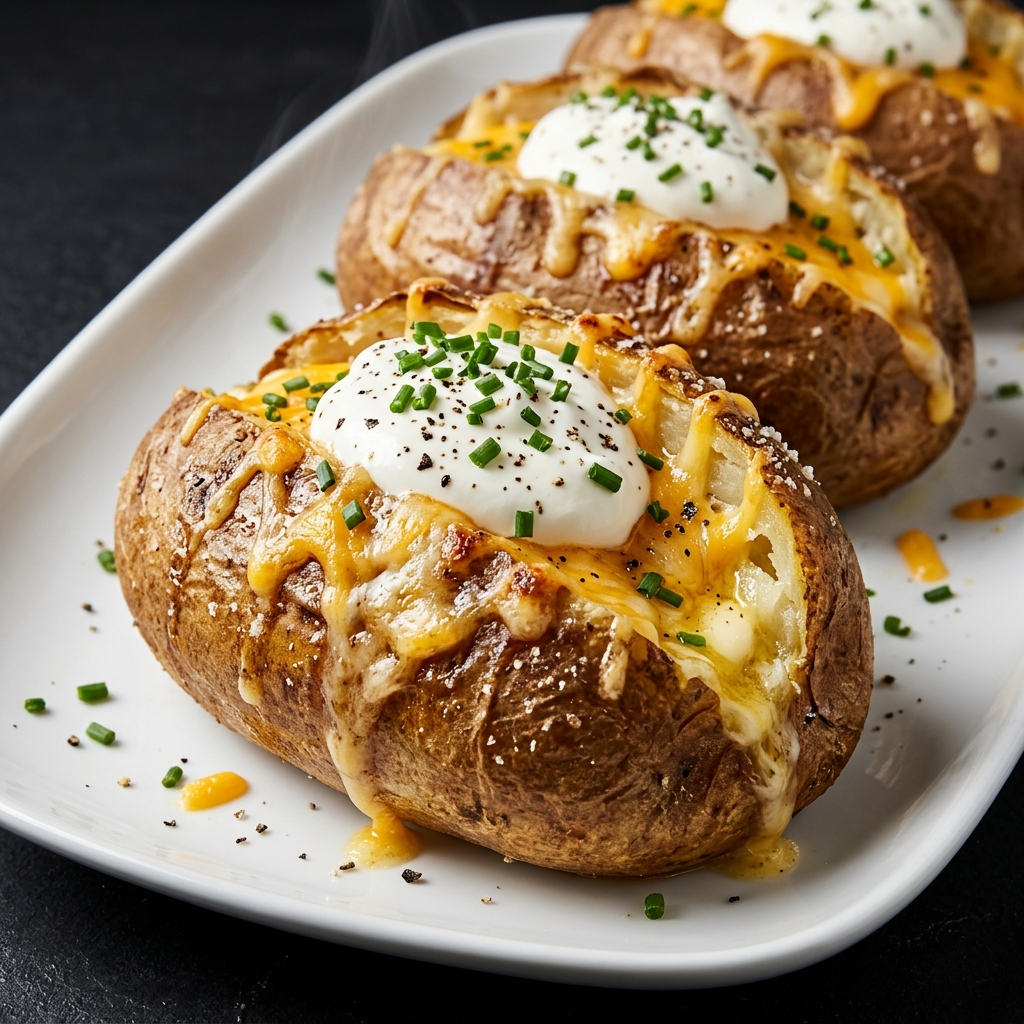
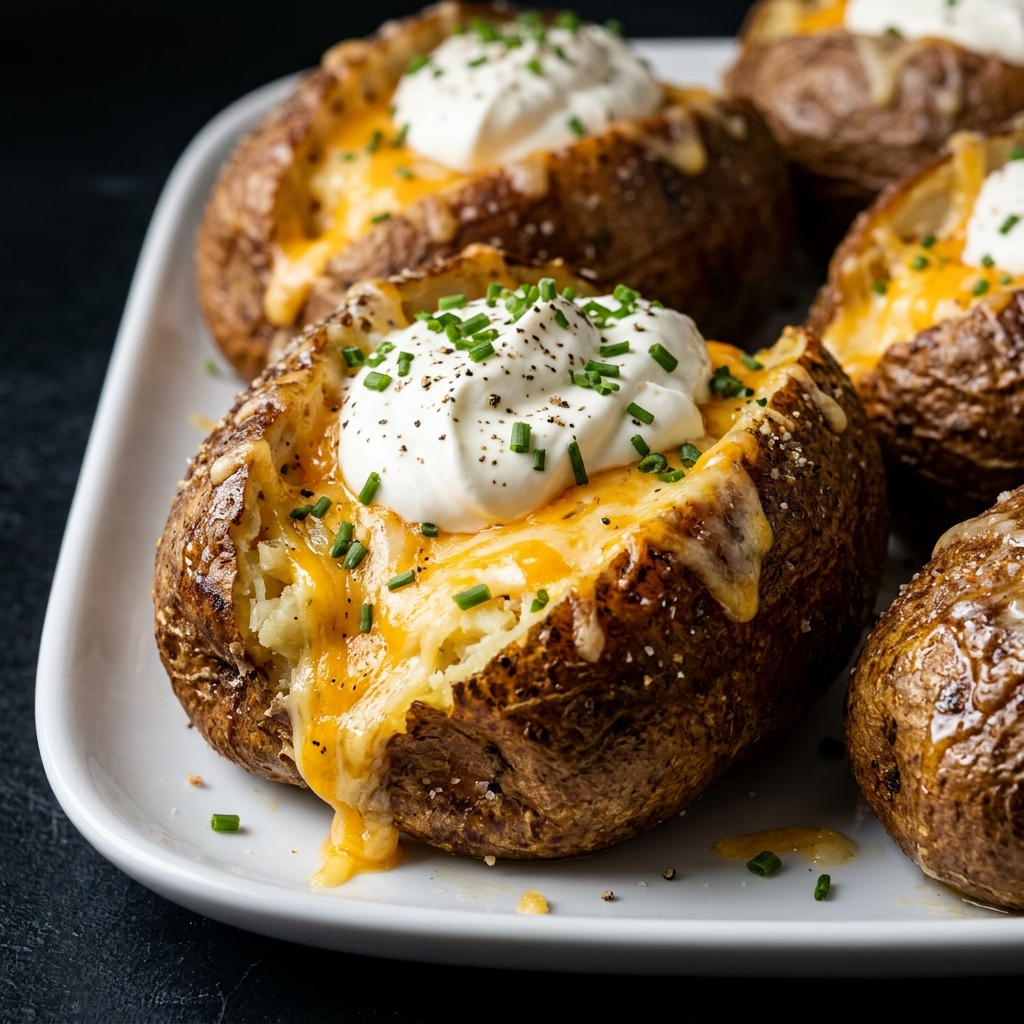
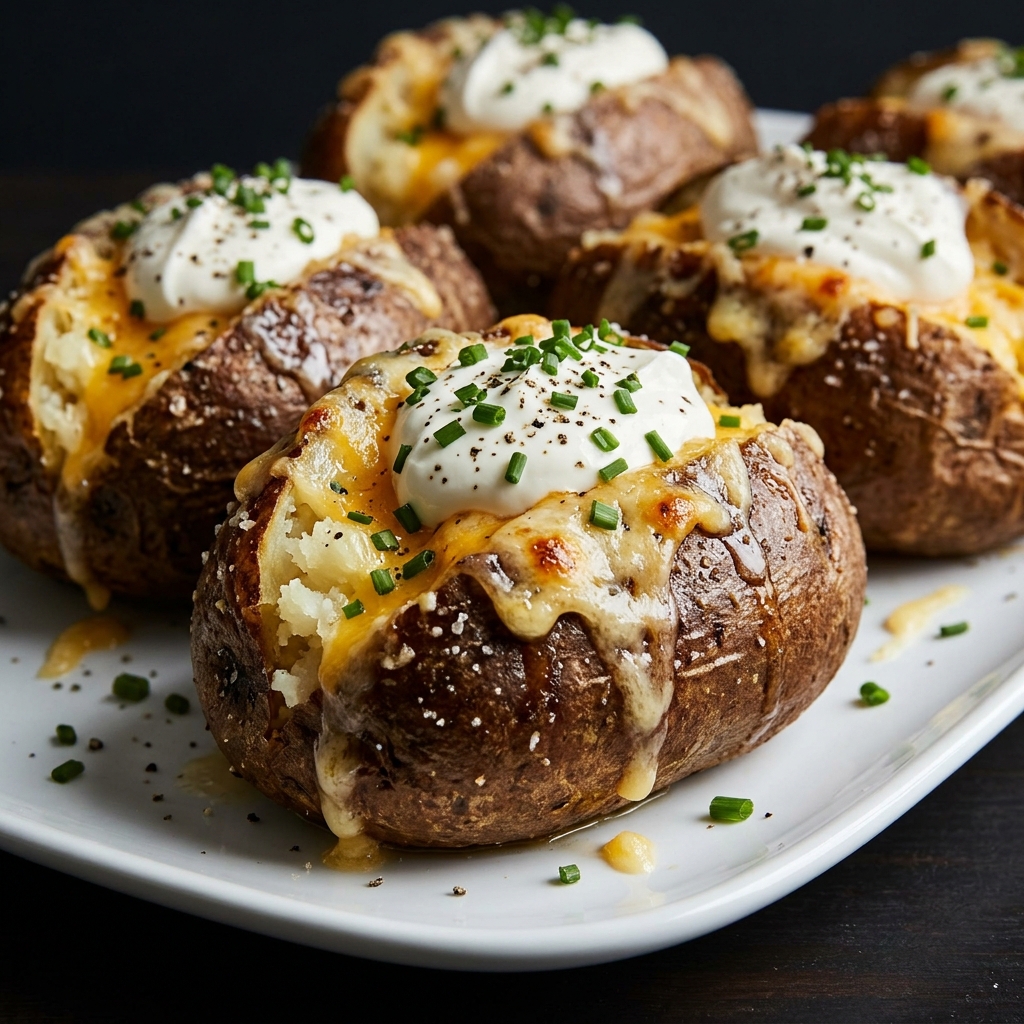
For the most attractive presentation, keep the toppings visible instead of mixing everything together. The contrast between golden potato skins, orange cheddar, white sour cream, and bright green chives creates an appetizing finish.
Serve the potatoes immediately while the skins remain crisp, the interiors are fluffy, and the cheese is warm and melted.
Variations of Loaded Baked Potatoes
One of the best things about loaded baked potatoes is how easily they can be customized. The classic combination of cheddar, sour cream, and chives is delicious on its own, but a few thoughtful additions can create different flavor profiles without complicating the recipe.
1. Loaded Baked Potatoes with Bacon and Cheese
For a smoky, savory variation, sprinkle cooked, crumbled bacon over the melted cheddar before adding the sour cream.
The bacon contributes a crisp texture that contrasts with the soft potato flesh and creamy toppings. You can also add a little extra cheddar and finish with fresh chives.
This variation is especially appealing for barbecue dinners, casual gatherings, and hearty comfort-food meals.
2. Garlic Butter Loaded Baked Potatoes
For a deeper savory flavor, combine the softened butter with a small amount of garlic powder or finely minced cooked garlic before adding it to the potato interior.
The garlic butter works beautifully with sharp cheddar and sour cream. A little chopped parsley can be used alongside or instead of chives for a fresh finish.
Keep the garlic flavor balanced so it enhances the potato without overpowering the cheese.
3. Spicy Loaded Baked Potatoes
If you enjoy a little heat, add a pinch of cayenne pepper or smoked paprika to the potato seasoning.
You can also top the finished potatoes with sliced jalapeños or a small amount of your favorite hot sauce.
The sour cream provides a cooling contrast to the spicy toppings, while the cheddar adds richness. Start with a small amount of heat and adjust according to your preference.
4. Broccoli Cheddar Loaded Baked Potatoes
For a vegetable-forward variation, add small florets of steamed broccoli before topping the potatoes with cheddar cheese.
The broccoli adds color, texture, and a mild earthy flavor that pairs naturally with cheddar. Make sure the broccoli is tender but not waterlogged, as excess moisture can make the toppings soggy.
Finish with sour cream and chives for a satisfying combination of vegetables, dairy, and fluffy potato.
5. Vegetarian Loaded Baked Potatoes
The standard cheese, sour cream, and chive combination is vegetarian when the cheese is made with vegetarian-friendly ingredients.
For extra flavor and texture, add sautéed mushrooms, sweet corn, finely diced bell peppers, or caramelized onions.
These additions can make the potatoes more substantial while preserving the comforting character of the original recipe. If serving vegetarians, check that any added cheese and seasonings meet their dietary requirements.
6. Vegan Loaded Baked Potatoes
To make a vegan version, replace the butter with plant-based butter or olive oil, use dairy-free shredded cheese, and choose an unsweetened dairy-free sour cream alternative.
Keep the potatoes, olive oil, chives, salt, and pepper as the base ingredients.
Check the labels on the plant-based toppings, as not every dairy-free product is suitable for every dietary preference. The finished dish will have a slightly different flavor depending on the alternatives used, but it can still deliver the satisfying contrast of crispy skin, fluffy potato, and creamy toppings.
7. Loaded Baked Potatoes with Caramelized Onions
For a sweeter, deeper flavor, add a spoonful of slowly caramelized onions over the melted cheddar.
Cook sliced onions over medium-low heat with a little oil or butter until they soften and turn golden brown. This process takes patience, but it develops a rich sweetness that complements the savory potato and tangy sour cream.
Finish with chives and freshly ground black pepper for a balanced, flavorful variation.
Expert Tips for the Best Loaded Baked Potatoes
A few small adjustments can make a noticeable difference in the texture, flavor, and appearance of this recipe.
Choose the Right Potato
Russet potatoes are the best choice for a classic baked potato because their high starch content produces a light, fluffy interior. Waxy varieties, such as red potatoes, tend to hold their shape more firmly and will not have quite the same fluffy texture.
Choose firm potatoes with relatively even shapes and similar sizes to encourage consistent cooking.
Dry the Skins Thoroughly
After washing, dry the potatoes completely before adding oil. This simple step helps the skins brown properly and improves their texture.
If you have time, let the washed potatoes air-dry briefly before seasoning them.
Do Not Rush the Baking Process
A potato may look golden on the outside before the center is fully tender. Always check the interior rather than relying on skin color alone.
If the center remains firm, continue baking until a knife slides in easily. Properly cooked potato flesh is essential for a fluffy, satisfying result.
Shred Your Own Cheese
Freshly shredded cheddar usually melts more smoothly than many packaged shredded cheeses. It also allows you to choose the exact type and sharpness you prefer.
Sharp cheddar provides a stronger flavor, while mild cheddar creates a gentler, creamier taste.
Add Sour Cream After Baking
For the best contrast in temperature and texture, add sour cream after the cheese has melted and the potatoes have come out of the oven.
Heating sour cream excessively can affect its texture and make it less appealing. Adding it at the end preserves its creamy consistency and tangy flavor.
Serve Immediately
Loaded baked potatoes are best served shortly after assembly. As they sit, steam softens the skins and the toppings begin to lose their ideal texture.
If you are preparing a meal for guests, have the toppings ready in advance and assemble the potatoes just before serving.
What to Serve with Loaded Baked Potatoes
Loaded baked potatoes are hearty enough to serve as a light main meal, but they also make an excellent side dish. Their creamy, cheesy flavor pairs especially well with proteins, vegetables, and fresh salads.
Grilled or Roasted Chicken
Grilled chicken breast, roasted chicken thighs, or lemon-herb chicken provide a savory protein that complements the potatoes without competing with their rich toppings.
A squeeze of lemon or a fresh herb seasoning can help balance the buttery potato and cheddar.
Steak or Beef
Grilled steak, roasted beef, and tender beef tips are excellent choices for a more substantial dinner. The potatoes pair particularly well with simply seasoned beef or dishes featuring a savory gravy.
If serving the potatoes alongside a rich beef dish, keep the remaining side dishes relatively fresh and light.
Barbecue Ribs or Pulled Pork
The smoky, savory flavors of barbecue ribs and pulled pork work naturally with loaded potatoes. The creamy sour cream and melted cheese complement the bold barbecue seasoning.
This combination is particularly suitable for weekend dinners, cookouts, and casual family gatherings.
Fresh Garden Salad
A crisp garden salad provides a refreshing contrast to the warm, rich potatoes.
Combine lettuce, cucumber, tomatoes, and thinly sliced onions with a light vinaigrette. The fresh vegetables and acidity help balance the cheese and butter.
Steamed or Roasted Vegetables
Broccoli, green beans, carrots, asparagus, and Brussels sprouts are all suitable accompaniments.
Roasted vegetables add caramelized flavor, while lightly steamed vegetables provide a simpler, fresher contrast.
Soup
A light vegetable soup or tomato soup can complement a baked potato lunch, especially during cooler weather. Choose a soup that is not excessively creamy if you want to avoid making the meal too heavy.
Frequently Asked Questions
1. What are the best potatoes for loaded baked potatoes?
Russet potatoes are generally the best choice because their thick skins crisp nicely and their starchy interiors become light and fluffy. Choose medium-to-large potatoes of similar size to help them cook evenly.
2. How long do loaded baked potatoes take to cook?
At 425°F (220°C), whole russet potatoes typically require about 50–70 minutes, depending on their size. The potatoes are ready when a knife slides easily into the center. Adding cheese and returning them to the oven usually takes another 3–5 minutes.
3. Should I wrap potatoes in foil before baking?
No, not for this recipe. Leaving the potatoes unwrapped allows their skins to become crisp. Foil traps moisture and generally produces softer skins.
4. Can I make loaded baked potatoes ahead of time?
Yes. You can bake the potatoes in advance and refrigerate them promptly once they have cooled sufficiently. Reheat them in an oven until the centers reach 165°F (74°C), then add the cheese and heat until melted. Finish with sour cream and chives just before serving for the best texture.
For food safety, refrigerate cooked potatoes within two hours of cooking, or sooner if they are sitting in a hot environment. Store them in a covered container and use them within three to four days.
5. How do I keep baked potato skins crispy?
Start with thoroughly dried potatoes, coat them lightly with oil, and bake them without foil. Serve the potatoes soon after adding the toppings. If reheating, use an oven rather than a microwave when possible, because an oven helps restore some crispness to the skins.
6. Can I use a different type of cheese?
Yes. Monterey Jack, Colby, mozzarella, and suitable cheese blends can all work. Cheddar is especially popular because it melts well and has a distinctive savory flavor. Mozzarella is milder and stretchier, while Monterey Jack provides a creamy, gentle taste.
7. Can I make this recipe without sour cream?
Absolutely. Plain Greek yogurt can provide a similar tangy flavor, although it may taste slightly different and have a firmer consistency. You can also use a suitable dairy-free sour cream alternative. Add your substitute after baking for the best texture.
8. Are loaded baked potatoes gluten-free?
The basic recipe is naturally gluten-free when prepared with plain potatoes, oil, cheese, sour cream, butter, chives, salt, and pepper. Check packaged ingredients and optional toppings for gluten-containing additives, and prevent cross-contamination during preparation.
9. Are loaded baked potatoes suitable for a keto or low-carb diet?
Traditional loaded baked potatoes are not generally suitable for ketogenic or low-carbohydrate diets because potatoes contain a substantial amount of carbohydrates. Cheese and sour cream do not remove the carbohydrates from the potato. For a lower-carb alternative, consider using a baked cauliflower base with similar toppings.
10. Can I freeze loaded baked potatoes?
You can freeze baked potatoes, but their texture may change after thawing, and sour cream does not freeze particularly well. For better results, freeze the baked potatoes without the sour cream and fresh chives. Wrap them individually, store them in a freezer-safe container, and use them within approximately two to three months for best quality. Thaw safely in the refrigerator and reheat thoroughly before adding fresh toppings.
11. How can I tell when a baked potato is fully cooked?
Insert a thin knife or skewer into the thickest part of the potato. It should slide in easily, with little resistance. A hard center means the potato needs more time in the oven. Larger potatoes often require longer baking than smaller ones.
12. How can I make the potatoes look especially attractive when serving?
Open the potatoes lengthwise, gently fluff the centers, and distribute the melted cheddar generously. Add a visible spoonful of sour cream, followed by bright green chives and a light sprinkle of black pepper. Use a clean white serving platter to create a striking contrast with the golden skins and colorful toppings.
Enjoy Your Homemade Loaded Baked Potatoes
Loaded Baked Potatoes with Cheese and Sour Cream prove that a few everyday ingredients can create something genuinely satisfying. With crispy skins, soft and fluffy centers, melted cheddar, cool sour cream, and fresh chives, this recipe brings together the flavors and textures that make comfort food so appealing.
Whether you serve them with roasted chicken, grilled steak, fresh vegetables, or simply enjoy one as a filling lunch, these potatoes are easy to customize for different occasions. Follow the baking and assembly tips, prepare the toppings just before serving, and enjoy a homemade dish that is as inviting to look at as it is delicious to eat.
Loaded Baked Potatoes with Cheese and Sour Cream
Ingredients
Equipment
Method
- Preheat the oven to 425°F (220°C). Prepare a baking sheet, lining it with parchment paper if desired.
- Scrub the potatoes thoroughly under running water and pat them completely dry.
- Pierce each potato several times with a fork to allow steam to escape during baking.
- Rub the potatoes with olive oil and season the skins with salt and black pepper.
- Arrange the potatoes on the baking sheet and bake for 50–70 minutes, or until a knife slides easily into the centers.
- Remove the potatoes from the oven and allow them to cool slightly until safe to handle.
- Cut a lengthwise slit across the top of each potato. Gently press the ends to open the potatoes and fluff the interiors with a fork.
- Add 1/2 tablespoon of butter to each potato and gently mix it into the fluffy flesh. Adjust the seasoning if needed.
- Divide the shredded cheddar cheese evenly among the potatoes.
- Return the potatoes to the oven for 3–5 minutes, or until the cheese has melted.
- Remove from the oven and top each potato with sour cream and chopped fresh chives.
- Add optional toppings if desired and serve immediately while the skins are crisp and the cheese is warm.
Notes


Emma Carter is a passionate home cook and recipe creator who loves making delicious, simple meals everyone can enjoy. She shares easy recipes, helpful cooking tips, and inspiring food ideas to make everyday cooking more enjoyable.